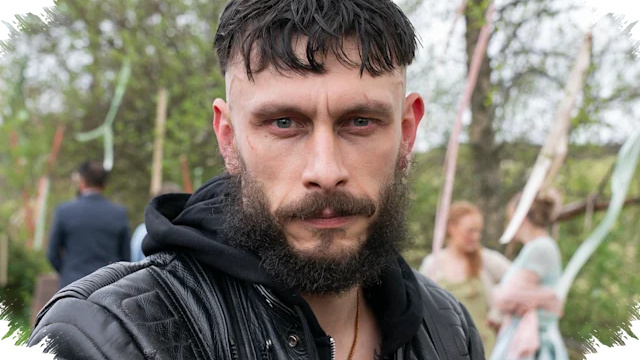
Richard Gadd’s new series Half Man has arrived with a very different frame from Baby Reindeer, even though both works spring from the writer-comedian’s long-running interest in pain, identity and survival. In the new drama, Gadd says the story is fictional, but it still draws on emotions, character traits and struggles he recognises from his own life.
That distinction matters in Half Man, where Jamie Bell plays Niall Kennedy and Gadd plays Ruben Pallister, two men who grew up as brothers without being blood relatives. The series follows a relationship that is loving, damaging and repeatedly unstable, with violence sitting alongside loyalty and grief.
A fictional story with personal echoes
Gadd has described the debate around autobiography in art as unavoidable, saying that even fiction can carry personal truth. He said all work is “autobiographical to a certain extent,” adding that Half Man is “a purely fictional world” with no characters based on anyone, while still borrowing from themes and traits he knows well.
That approach gives the series a different shape from Baby Reindeer, which came from Gadd’s Edinburgh Fringe material Monkey See Monkey Do and Baby Reindeer and later became a Netflix hit. Those earlier works drew directly from his experience of sexual abuse and his recovery, and he has said that project arrived at a time of deep unhappiness.
Two brothers in a destructive bond
Half Man centres on Niall and Ruben, with Niall written as bookish, sensitive and thoughtful, and Ruben as strong, violent and boundaryless. The contrast is clear early on, but the series does not reduce either man to a simple type.
The emotional core comes from the fact that Ruben is also fiercely loyal and protective, which complicates the darker parts of his behaviour. Gadd said he never wanted Ruben to feel like “an inhuman force,” but instead as someone “fundamentally human” who carried a great deal of pain.
Violence, love and emotional failure
The series moves toward a violent break that shapes the rest of the narrative, and Gadd has said the bond between the two men is still, in a difficult sense, a love story. He argues that viewers may see themes of male violence or toxic masculinity, but that the deeper story is about two men who struggle to love themselves and each other.
According to Gadd, the central issue is not only violence, but the gap between feeling and expression. He said the heart of Half Man lies in “the struggle around the communication of love” and in the disconnect between emotions and the ability to put them into words.
Why the show took time to return
Gadd wrote Half Man in 2019, then set it aside when he moved on to Baby Reindeer. He later returned to the project after four years, saying the timing now feels almost accidental given current discussion around the “manosphere,” toxic masculinity and wider social anxieties about male behaviour.
He has also said the show was not written as a direct response to that cultural moment. Instead, he wanted to stay close to the material itself rather than force a message onto it, because trying to write with a fixed political answer in mind would take the work away from instinct and feeling.
Behind the scenes of a difficult shoot
Gadd has also spoken about the strain of filming scenes that required intense anger and emotional collapse. As creator and showrunner, he had to step out of the performance quickly and switch back into production mode once the director called cut.
He said the aftermath could be physically draining, with adrenaline crashes affecting the next day on set. Even so, he said the emotional residue did not disappear completely, which fits a series built around the lasting impact of trauma, repression and fractured connection.
Half Man may invite comparison with Baby Reindeer, but Gadd has made clear that the two works serve different purposes. One is rooted in direct lived experience, while the other is a fictional drama that uses a different setting to examine the same difficult territory of male violence, vulnerability and the struggle to be understood.
Read more at: www.smh.com.au