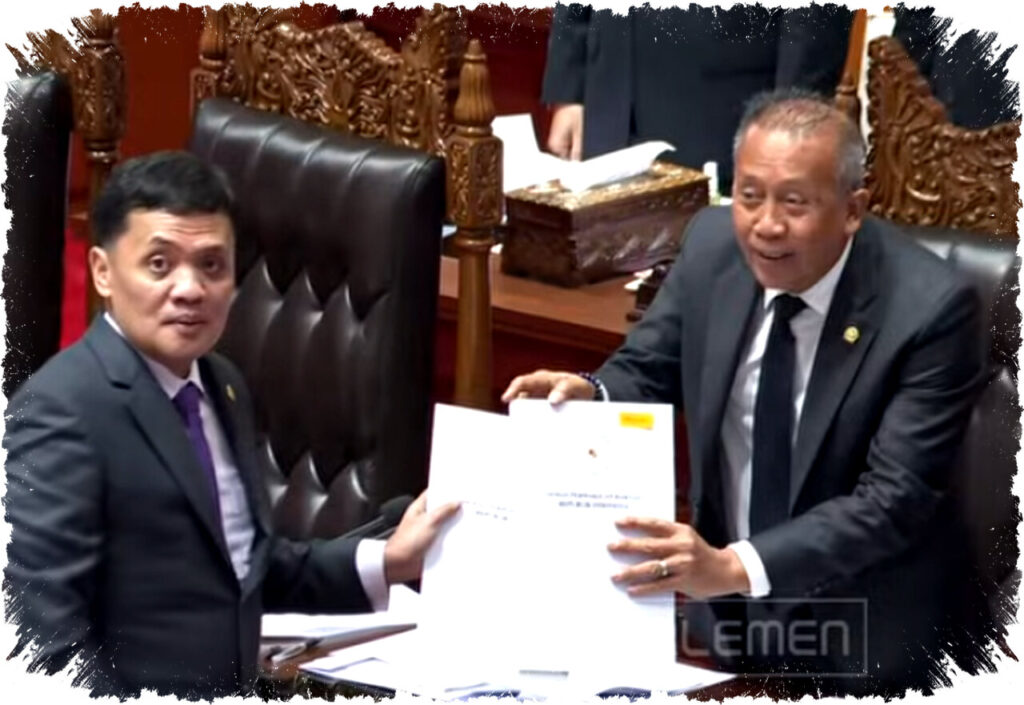
The Indonesian House of Representatives’ Commission III has outlined a series of eight key recommendations aimed at accelerating reforms within the National Police (Polri). These points were presented during a plenary session following a working meeting with National Police Chief General Listyo Sigit Prabowo. The reforms focus on structural, cultural, and technological enhancements to improve institutional trust and accountability.
Commission III emphasized that Polri must maintain its position directly under the President and not be reorganized as a ministry. The Police Chief should continue to be appointed and dismissed by the President with the approval of the House, consistent with the mandate in TAP MPR Number VII/MPR/2000 and prevailing laws.
The legislator highlighted that reform efforts need to address deep-rooted cultural issues within Polri. Evaluations based solely on law enforcement outcomes and security statistics are insufficient. Instead, institutional reform must prioritize organizational culture and officers’ behavior to boost public confidence effectively.
The call for systemic reform extends beyond regulatory updates to encompass enhanced internal and external supervision, human resource capacity building, and a shift toward a work culture centered on justice and political neutrality. Commission III affirmed its commitment to ensuring that these processes are measurable and continuous.
Key Points of Polri Reform Acceleration
- Polri must remain directly under presidential authority, not as a ministerial entity, with the Police Chief’s appointment requiring legislative approval.
- The commission supports maximizing the role of the National Police Commission (Kompolnas) to assist the President in policy direction and personnel decisions as stipulated by TAP MPR No. VII/MPR/2000.
- Police personnel assignments outside the organizational structure are permitted under Police Regulation No. 10 of 2025, aligning with Article 30(4) of the 1945 Constitution; this will be integrated into the Police Law revision.
- Oversight of Polri will be strengthened through legislative and internal bodies, improving Bureau Wasidik, Inspectorate, and Propam functions.
- The current budgeting practice, which follows a bottom-up approach from unit needs to final allocations adhering to Ministry of Finance regulations, is maintained in line with reform principles.
- Cultural reform is prioritized by enhancing police education curricula with human rights and democratic values.
- Technology adoption will be increased, including body and vehicle cameras during duties and artificial intelligence for investigative procedures.
- The drafting of a new Police Bill will proceed jointly by DPR and the government, guided by constitutional and legislative frameworks.
These recommendations represent a comprehensive strategy reflecting legislative intent to modernize and professionalize Polri. They address governance, culture, oversight, and technology to foster a law enforcement institution that aligns more closely with democratic norms and public expectations.
Commission III’s detailed approach illustrates the commitment to reforming Polri as a critical state institution. The focus on cultural change and enhanced accountability mechanisms is intended to improve service quality and restore public trust in law enforcement agencies. Ongoing monitoring and refinement will be essential to sustain these reform initiatives over time.