
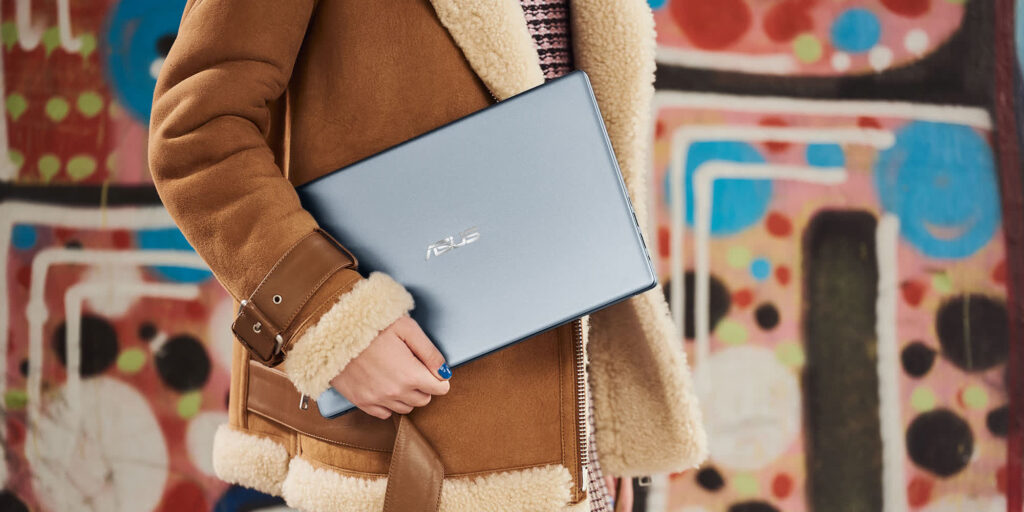
Asus has added two new thin laptops to its China lineup, and the standout model is the Vivobook 16SE 2026. Its most eye-catching feature is a higher-resolution display option that Asus positions as sharper than the Liquid Retina panel on MacBook Neo.
That display claim gives the new Vivobook a strong sales pitch in the mid-range segment. But Asus is not relying on the screen alone, as both models also share the same core hardware, slim design, and a practical set of ports for everyday work.
Two display options, one clear flagship variant
The Vivobook 16SE 2026 comes with two 16-inch IPS panel choices. Both support a 144Hz refresh rate, but the resolutions differ at 1920 x 1200 and 2560 x 1600 pixels.
The higher-end panel adds variable refresh rate support and a 400-nit brightness rating. That combination should appeal to users who want a brighter image, finer detail, and smoother motion on screen.
On paper, Asus treats that top-tier configuration as a stronger option than the Liquid Retina display used in MacBook Neo. The Apple panel is still described as solid for its price class, which makes Asus’ move look like a direct challenge in the mid-range notebook space.
Shared hardware across both Vivobook models
The Vivobook 14SE 2026 and Vivobook 16SE 2026 do not differ much outside the display size and panel choices. Both are powered by the Intel Core 5 320, a mid-range processor from the Wildcat Lake family.
Each laptop also ships with 16GB of RAM and 512GB of PCIe 4.0 storage. That setup points to a design aimed at cost-conscious buyers who still want enough performance for daily productivity.
This is not positioned as a premium spec sheet. Instead, the configuration suggests a focus on light to moderate work tasks, where efficiency and practicality matter more than high-end extras.
Slim chassis and usable connectivity
Asus keeps the two laptops identical in overall construction. The chassis measures 15.9mm thick and weighs 1.29kg, which keeps them relatively easy to carry.
Connectivity is another area where Asus avoids stripping away useful features. Both models include two USB-C 3.2 ports with Power Delivery support, two USB-A 3.2 Gen 1 ports, a 3.5mm audio jack, and one HDMI 2.1 port.
That mix should work well for users who still depend on older peripherals as well as external displays. It also helps the laptops stay flexible in office and home setups without requiring too many adapters.
Battery and launch pricing
Both Vivobook models use a 52.5Wh battery. Asus has not detailed real-world endurance, but the battery size leaves room for reasonable runtime depending on system efficiency and how the Wildcat Lake processor behaves under load.
Pricing starts at CNY 4,599 for the Vivobook 14SE 2026 and the standard Vivobook 16SE 2026. The top-screen version of the 16SE 2026 is priced higher at CNY 4,999.
Asus has not announced global availability for either model yet. The company is expected to share more details about launch timing and target markets later, which will determine how widely these Wildcat Lake laptops go beyond China.