


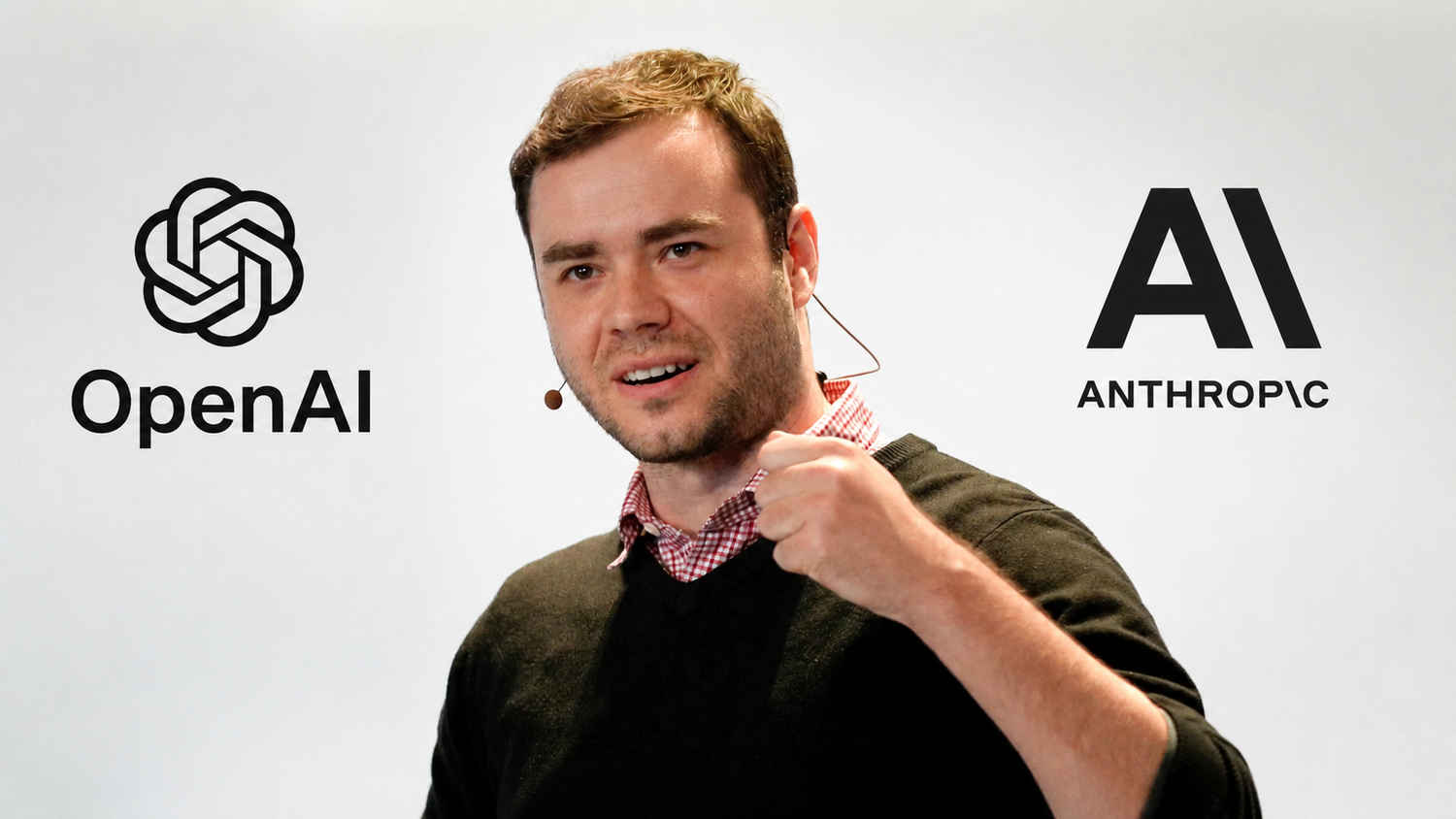
Anthropic has added one of the most recognizable names in modern AI to its ranks, and the move signals a more aggressive push to use Claude inside the research process itself. Andrej Karpathy, a co-founder of OpenAI, is now joining the company led by Dario Amodei with a mandate that reaches beyond model development and into the way research is done.
According to Nicholas Joseph, who leads the Claude pretraining team, Karpathy will work in pretraining and help build a new team that uses Claude to accelerate pretraining research. That makes the hire strategically important, because pretraining remains the foundation for core capabilities in large language models such as Claude.
Claude as both tool and subject
Anthropic is not only hiring Karpathy to advance its pretraining efforts. The company is also leaning further into the idea that its own models can speed up the work of building better models.
Joseph said there is no one better suited for the task, and he framed the new team as one designed to make pretraining research move faster with Claude as the main tool. That approach fits with Anthropic’s broader internal style, which has already emphasized using AI to accelerate engineering work.
The company previously said that Claude writes 90 percent of the code inside Anthropic. That detail gives more context to the new assignment, since the latest move extends the same philosophy into one of the most technically important areas of model development.
Why Karpathy matters
Karpathy brings a rare mix of technical depth, public influence, and hands-on experience across major AI efforts. He is widely regarded as one of the most influential AI researchers in the industry, and his name is also closely associated with the term “vibe coding,” which describes using AI to write code and then quickly gaining adoption among coding agent users.
His career path has crossed several of the most important names in AI and autonomous systems. He helped found OpenAI around a decade ago, joined Tesla in 2017 to lead the automaker’s AI team for more than five years, returned briefly to OpenAI after leaving Tesla in 2022, and later founded Eureka Labs, an AI-focused education company.
Outside formal corporate roles, Karpathy has also built a large public audience through educational content. In recent years, he has drawn significant followings on YouTube and X by explaining technical topics and sharing posts about AI progress.
A crowded race for senior talent
The hiring comes as competition for senior AI talent remains intense. Early this month, Ross Nordeen, a founding member of xAI and a former Tesla employee, also said he was joining Anthropic.
On the same day, Anthropic announced a separate agreement with Elon Musk’s SpaceX to rent computing capacity on xAI’s Colossus 1 supercomputer. Together, those moves show Anthropic strengthening both its technical team and its infrastructure at the same time.
Karpathy’s value in the talent market has long been recognized by people at the center of the AI race. In internal Elon Musk communications shown in the lawsuit against OpenAI, Musk referred to Karpathy as “arguably the #2 guy in the world in computer vision.” In another message tied to Karpathy’s recruitment, Musk wrote, “The OpenAI guys are gonna want to kill me, but it had to be done.”
That level of attention reflects how rare his combination of experience has become. He has worked inside OpenAI’s core orbit, led AI at Tesla, returned to OpenAI, and then built his own AI education venture before landing at Anthropic.
Karpathy has also recently described himself as being in a “state of AI psychosis” since December last year. He said he has been embracing “tokenmaxxing” and aggressively testing the limits of frontier models, which makes his role at Anthropic a close fit with the company’s own push to use Claude not just as a product, but as part of the research engine behind its next generation of models.