


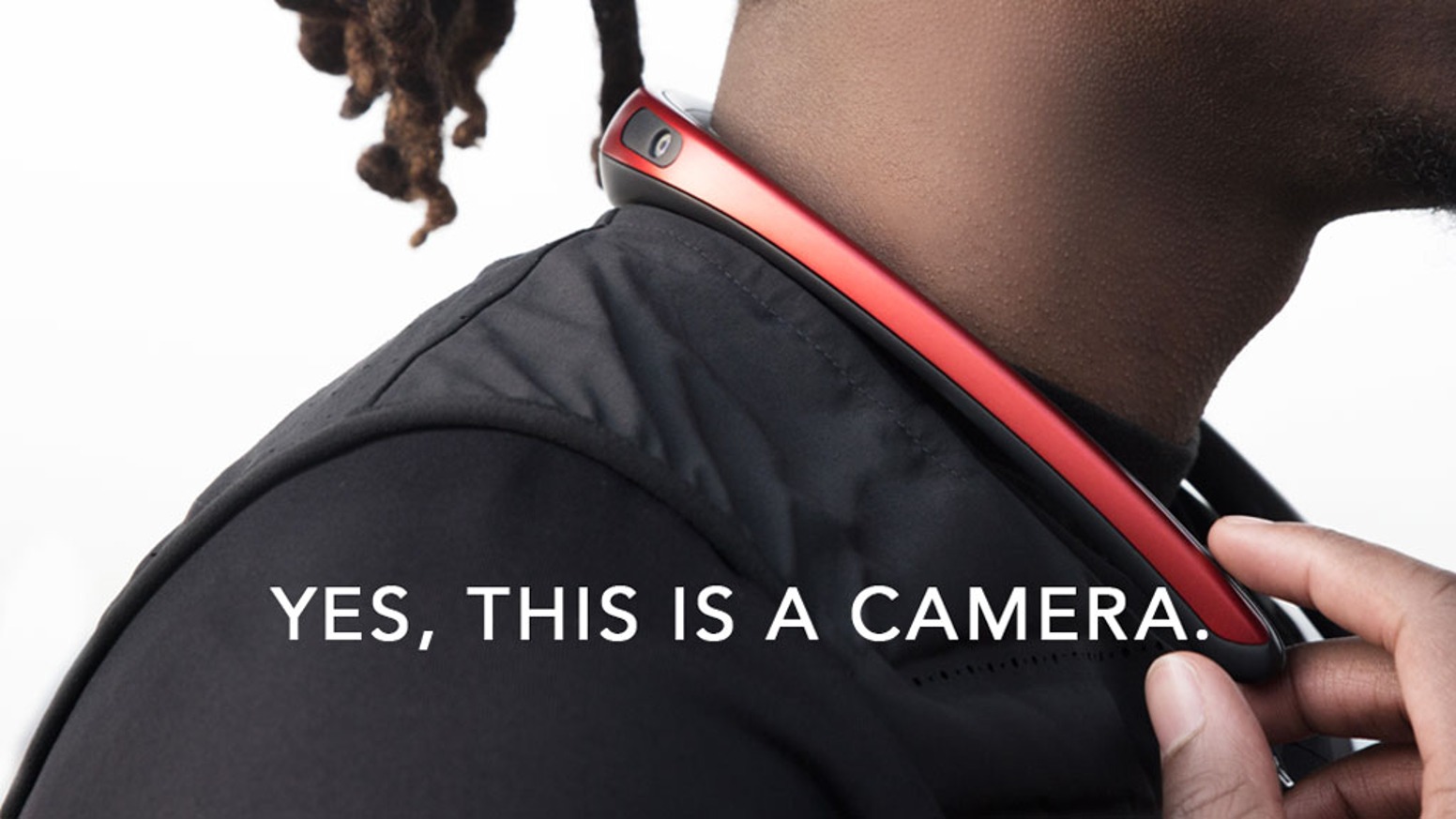
A camera that clips into the hair rather than sitting on the face may end up being easier to wear, easier to style, and less attention-grabbing than smartglasses. That is the idea behind DC Mini, a prototype from startup Computer Angel that tries to make wearable imaging feel more natural in everyday life.
The concept matters because many face-mounted camera devices still stand out too much when people wear them. Against the backdrop of products like Google Glass and Ray-Ban Meta, DC Mini takes a different route by using a hair clip so the camera can face forward without turning the whole device into a visual statement.
A different kind of wearable camera
DC Mini is still only a prototype, but it is described as the first device in its class. The project comes from Computer Angel, led by Jenny Zhang, and its core design centers on a clip that attaches to hair.
That approach changes the role of the device. Instead of being tied to smartglasses, it can blend into a person’s appearance more easily and may feel less intrusive in daily use.
Zhang has emphasized that the point is not to make technology feel more feminine. The broader goal is to design technology that fits into a user’s life in a way that feels genuinely usable, visible when needed, and aligned with personal identity.
More than a camera for hair
The clip-based design also gives DC Mini a wider possible use case than a single fashion accessory. Because it can be attached to other items, it is not limited to hair and could work more like a portable camera tool for vlogging.
That flexibility matters in a market where compact cameras have become attractive to people who want to capture moments quickly without carrying larger gear. Devices such as DJI Osmo Pocket have already shown that many users prefer small tools that make recording fast and simple.
In that context, a wearable clip camera offers another way to shoot from a different point of view. It removes the need to rely on a phone, carry a tripod, or wear smartglasses just to record.
Designed with a different audience in mind
The project has also drawn attention because it may appeal to users who are not usually targeted by wearable tech. Zhang believes the design is more likely to interest women, a segment that has often been overlooked by mainstream wearable products.
That does not mean the device is meant to be a “feminine” gadget. Rather, it reflects a design choice that treats style and utility as part of the same experience, making the device easier to carry, wear, and integrate into everyday habits.
This is one reason the form factor stands out. A device that can hang from a bag, look attractive, and reflect the user’s identity has a better chance of actually being worn.
A product that fits into the creator economy
The idea behind DC Mini also overlaps with life-logging and quick-capture camera products. Computer Angel’s project has been compared with devices such as Google Clips and Looki L1, which share the goal of making spontaneous recording easier.
That makes DC Mini relevant beyond fashion or novelty. It points toward a category of tools built for people who want to document daily life or create content without setting up a larger production workflow.
Zhang’s own background adds to that narrative. She is a filmmaker and self-taught engineer, and she has been sharing the development process on social media while building the device.
She even moved from New York to Shenzhen, China, to make the project happen. That move gives the prototype a development story that matches its purpose: a camera designed for storytelling, shaped by someone documenting the build in public.
Still early, but worth watching
There is no information yet on when DC Mini will be ready as a consumer product. For now, it remains a prototype that is more notable for its direction than for a launch timeline.
If it reaches the market, privacy will likely remain part of the conversation, just as it has for other camera-wearable products including Ray-Ban Meta. Even so, a hair-clip camera may be received differently from smartglasses because its likely users and its visual presence are not the same.
That difference could matter as much as the technology itself. A smaller, less conspicuous wearable camera may end up feeling more practical for people who want something creative, portable, and easier to live with than a camera mounted on the face.