


Indonesia is targeting average mobile internet speeds of 100 Mbps by 2029 following a spectrum selection involving three major operators. Telkomsel, Indosat, and XLSmart Telecom Sejahtera have been named winners for additional 700 MHz and 2.6 GHz spectrum.
The award comes with service obligations rather than a simple increase in network capacity for already connected areas. The operators must expand 4G availability to hundreds of villages and urban wards where signals are unavailable or remain weak.
Service Commitments Accompany the Spectrum Award
The Ministry of Communication and Digital, known as Komdigi, has tied the spectrum allocation to measurable coverage and performance targets. The commitments address 4G expansion, 5G population coverage, and average mobile broadband speed.
| Commitment | Target | Timeframe |
|---|---|---|
| 4G service expansion | 538 villages and urban wards | Mandatory for winners |
| 5G service coverage | At least 51% of the national population | Fifth year |
| Average mobile broadband speed | 100 Mbps | 2029 |
The 5G commitment requires coverage of at least 51 percent of Indonesia’s national population by the fifth year. The combination of low-band and higher-capacity spectrum is expected to help the operators meet that requirement.
The 700 MHz band is intended to extend service into remote areas and improve indoor coverage. Its use is expected to support broader reach in locations where connectivity remains limited.
The 2.6 GHz band, meanwhile, is positioned as core capacity for reliable 5G services. It is expected to support growing data demand and improve network performance where usage is heavier.
Three Operators Cleared the Selection Process
Komdigi selected PT Telekomunikasi Seluler, or Telkomsel, PT Indosat Tbk, and PT XLSmart Telecom Sejahtera Tbk as the winners. The selection process began in April 2026 and was declared complete after the objection period ended in July 2026 without objections from participants.
The outcome gives the companies access to additional radio spectrum, a key resource for mobile network deployment. It also places the expansion of public connectivity at the center of the allocation.
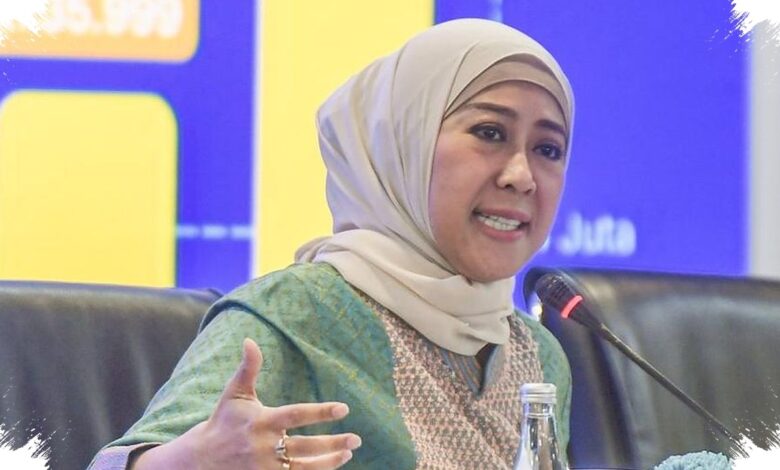
Minister of Communication and Digital Meutya Hafid said spectrum should not be viewed merely as an auctioned commodity. She described radio frequencies as fundamental infrastructure for Indonesia’s national digital transformation.
In an official statement on Tuesday (21/7), Meutya said Komdigi wanted the auction to deliver concrete and evenly distributed benefits to the public. She said the results should be felt directly by people at the grassroots level.
Potential Benefits for Users and Underserved Areas
New coverage in areas with limited connections is expected to widen access to education, healthcare, digital government services, and economic opportunities. The policy is aimed at communities that have been difficult to serve through existing connectivity infrastructure.
Additional spectrum may also improve network stability in areas that already have service. More capacity can help operators manage rising data demand while improving the quality of mobile connections.
State Revenue Could Reach Rp29.9 Trillion
Beyond service targets, the spectrum selection is projected to generate non-tax state revenue of around Rp6 trillion at the initial stage. Over a ten-year projection, total state revenue from managing the spectrum could reach Rp29.9 trillion.
Komdigi said the economic value generated from spectrum management would be used again for development. The ministry views spectrum optimization as part of a broader effort to expand internet access and strengthen the digital economy.
According to information reported by CNN Indonesia, the additional spectrum is also expected to improve the cost efficiency of operator services. That efficiency could support more competitive data tariffs for consumers.
Komdigi is also preparing the use of the 900 MHz band for connectivity needs with a direct impact on communities. The plan is intended to support more equal digital opportunities, including in frontier, outermost, and disadvantaged regions.