Google and Samsung are steering smart glasses toward a more private and everyday-friendly direction. Instead of putting a display on the lens, the first generation centers on voice conversations with AI, making the device feel closer to a daily companion than a bulky XR headset.
That approach was highlighted at Google I/O 2026, where the two companies introduced smart glasses built around Gemini and positioned them as an extension of the phone. The idea is to keep the experience light, practical, and easier to use in public without drawing attention.
Designed to look like regular eyewear
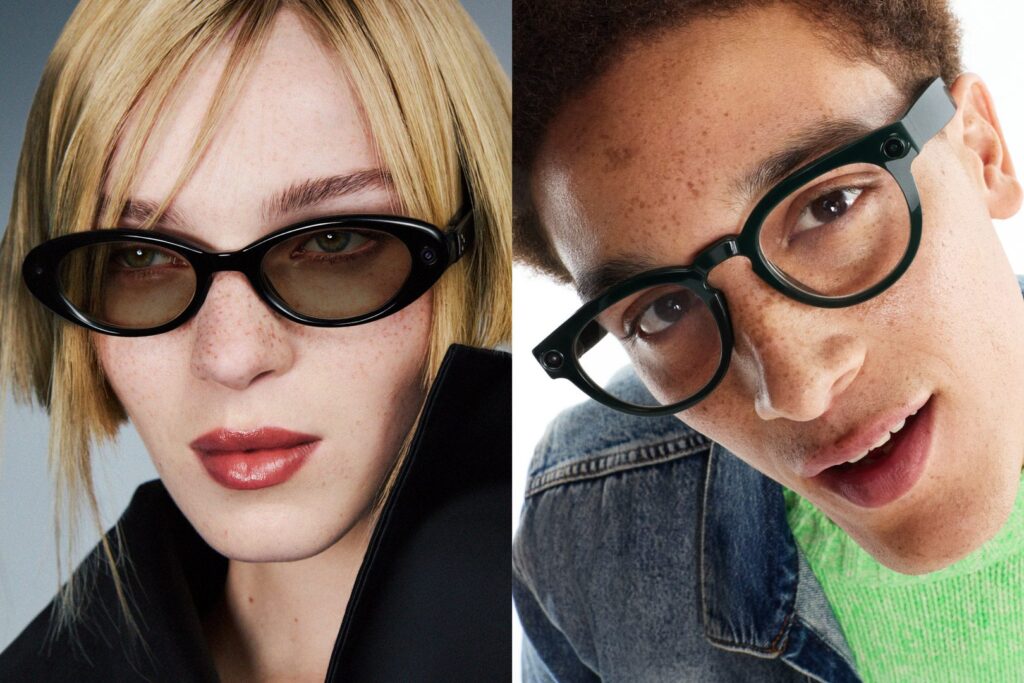
Google and Samsung are pursuing two design paths to reach different kinds of users. One version is being developed with Gentle Monster and carries a more fashion-forward, premium look.
The other version is being made with Warby Parker and follows a more classic eyeglass style. Together, the two approaches show that the product is not aimed only at tech enthusiasts, but also at people who want smart functions without giving up a normal appearance in everyday settings.
Gemini sits at the center
Gemini is the core of the experience on these glasses. Users can speak directly to the AI assistant to ask questions, request help, or understand what is happening in front of them through the built-in camera.
In demonstrations, the glasses were shown helping with step-by-step directions while walking. Gemini was also presented as a tool for checking restaurant reviews, making navigation and search feel faster without repeatedly reaching for a phone.
More than just AI chat
The glasses also support real-time translation in conversation. Google said they can translate written text as well, which could be useful when traveling in places where the language is unfamiliar.
Other shown use cases included hands-free help while cooking and contextual search that uses AI to interpret the user’s situation. The device also includes built-in speakers, microphones, and a camera, allowing the user to hear responses, talk to the assistant, and use visual input in the same device.
Beyond AI-driven features, the glasses are said to handle everyday needs such as taking photos and videos, playing music, receiving notifications, and delivering summaries of missed messages directly on the glasses.
A companion, not a phone replacement
Samsung said the glasses are meant to work as a companion device rather than replace a smartphone. That means some tasks will still rely on the connected phone, which keeps the product in an accessory role instead of turning it into a standalone replacement.
Connectivity is expected to rely on Bluetooth and Wi-Fi. The software platform is Android XR, while Samsung handles the hardware side, splitting the work between Google’s software ecosystem and Samsung’s manufacturing experience.
Google also mentioned image editing through Nano Banana. The feature is described as allowing users to edit or recreate photos taken with help from AI prompts after the image is captured through the glasses.
Rolling out in stages
The first batch of the smart glasses is scheduled to arrive in select markets in the fall. Google and Samsung have not yet revealed pricing or more specific availability details.
Even so, the announcement makes the direction of their wearable strategy clear. Both companies appear to be betting on a lighter pair of smart glasses that feels natural to wear and relies on private AI conversation as its main appeal.