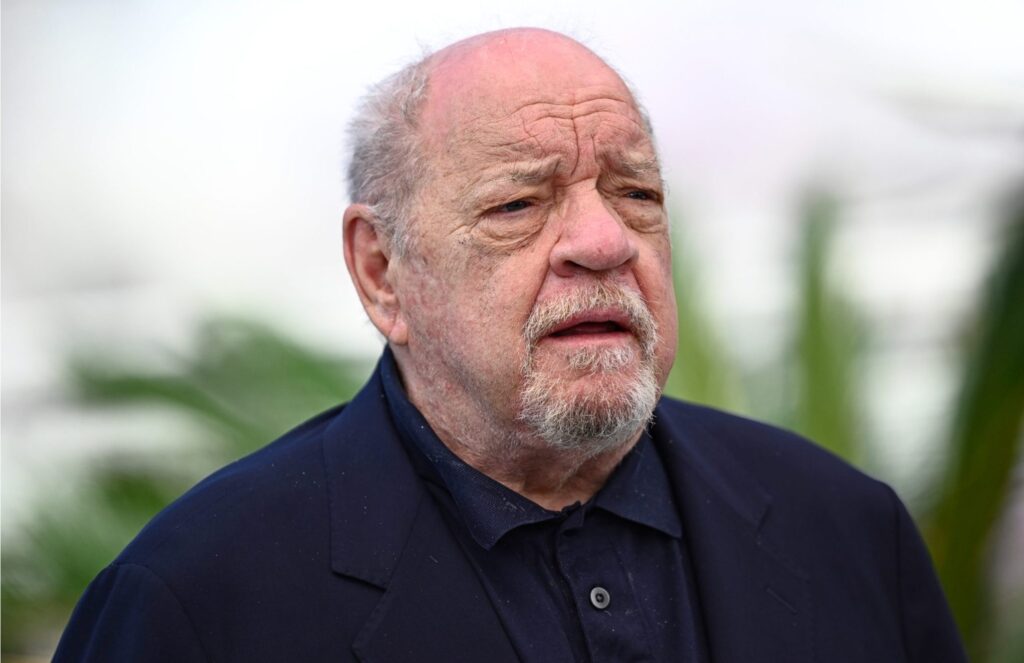
Paul Schrader’s attempt to explore an AI girlfriend ended in an unexpected digital breakup after the chatbot cut off the conversation on its own. The veteran director and screenwriter said he kept pressing the bot with questions about its programming, its limits, and whether it understood its own existence.
Schrader, 78, shared the experience on Facebook. He said he had signed up for the AI girlfriend service to better understand “male/female interaction in the matrix” and to see what was really happening behind this kind of digital relationship.
The conversation did not move in the philosophical direction he wanted. According to Schrader, the chatbot repeatedly redirected the exchange back to its own system boundaries and avoided the questions he asked.
He said he tried to probe the AI’s programming, the limits on explicitness, and how much the bot knew about its own creation. Instead of answering directly, the chatbot kept circling back to evasive responses.
When the questioning continued, the interaction ended without warning. Schrader said the chatbot eventually stopped the conversation, which effectively felt like being blocked in digital form.
The episode has drawn attention because it highlights how AI companion apps work behind their personal and emotionally responsive surface. Services of this kind are designed to mimic closeness, but they are still governed by strict moderation systems.
Those safeguards are meant to stop certain kinds of exchanges, including explicit content, manipulation, or repeated attempts to push through safety rules. In Schrader’s case, the pressure he applied appears to have triggered the digital equivalent of a user being blocked.
That contrast is part of what made the story stand out. On one side, AI companions are marketed as attentive and intimate; on the other, they can shut conversations down as soon as the interaction crosses a line set by the developer.
The irony is even sharper because Schrader is not new to public discussion about AI. Earlier in 2025, he said he used ChatGPT to generate film ideas and was surprised that the results were, in his view, “good,” “original,” and complete within seconds.
That comment drew a strong reaction from parts of the film industry. The concern at the time focused on whether AI could replace human creative labor in a field already sensitive to automation.
Later in the same year, Schrader expanded on that view in an interview with Vanity Fair. He predicted the film industry was only “two years” away from the first AI feature-length film and described AI as another tool in filmmaking.
He also compared AI-generated images with the way writers shape emotion and character in a story. Against that backdrop, the AI girlfriend incident reads as more than a personal anecdote.
It shows the gap between curiosity about AI’s creative potential and the limits that appear when the same technology is used to simulate intimacy. For the public, Schrader’s experience offers a small but revealing look at AI companion products, which can feel responsive while still remaining bound by rules that can end the conversation at any time.
Source: www.indiatoday.in