Honda BeAT Connected 125 2026 Draws Attention with a 300 km Fuel Range Claim
A claim of up to 300 kilometers from a single tank is the detail that makes the Honda BeAT Connected 125 2026 stand out immediately. For a daily scooter aimed at urban mobility, that figure is enough to put efficiency back at the center of the discussion.
The interest does not stop at fuel range. The model is also said to move from 110cc to 125cc, a change that shifts the conversation toward a stronger engine without abandoning its practical role.
Efficiency remains the main selling point
In the entry-level scooter segment, riders usually want two things at once: low fuel consumption and enough performance for daily use. That is why the 300 km claim becomes the most talked-about part of the package.
For students, office workers, and ride-hailing riders, a longer range means fewer fuel stops than many typical daily motorcycles. Even so, the figure should not be treated as direct real-world consumption.
Actual efficiency still depends on riding style, rider weight, traffic conditions, tire pressure, and fuel quality. The 300 km number is better understood as the manufacturer’s maximum claim rather than a road test result.
A larger 125cc engine changes the discussion
The biggest update on the BeAT Connected 125 2026 is said to be its powertrain. It is reported to use a new 125cc eSP+ engine with PGM-FI injection that has been updated to pursue higher efficiency.
This change matters because the entry-level scooter market is very sensitive to fuel use. When engine capacity increases, consumers often worry about higher consumption, so an efficiency-focused claim becomes a major factor.
If the performance and fuel economy meet expectations, the model could sit in a rare middle ground. It would combine the easygoing character of an economical scooter with the stronger response expected from a 125cc machine.
That balance is important because daily motorcycles are no longer used only for short city trips. Many riders now rely on them for busy routines that demand practicality, carrying capacity, and responsive acceleration.
Design shifts toward a more modern look
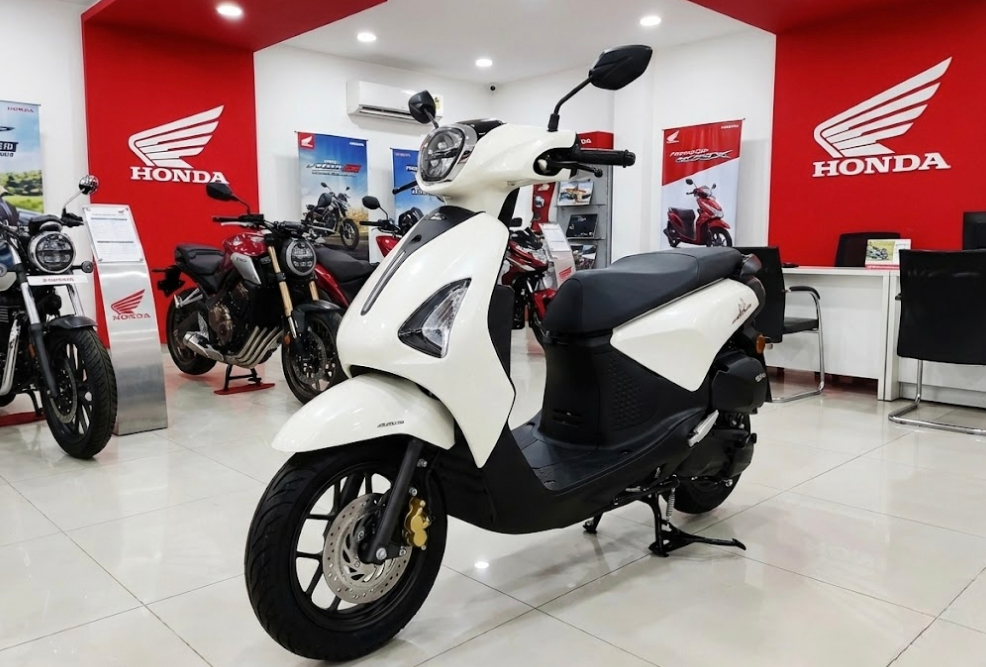
The updates are not limited to the engine. The BeAT latest version is also said to adopt a retro-modern European-inspired design with a slimmer, rounder body.
This direction gives the scooter a more mature impression than previous generations. It also shows a clear change from the older BeAT identity, which was known more for simplicity and function.
The headlamp is said to use an oval LED design, while the body lines become more rounded. These touches give the scooter a stronger visual character while keeping the efficiency story at the forefront.
New color choices also reinforce the more fashionable approach. Names such as Sage Green and Terracotta Sand suggest a model that is also trying to appeal to younger buyers who care about appearance.
Connectivity and daily convenience get more attention
The “Connected” label becomes more meaningful through the feature set. One of the most notable additions is Honda RoadSync, which allows the scooter to connect to a smartphone via Bluetooth.
That kind of connectivity has become increasingly relevant in the daily scooter class. Riders now expect vehicles to fit into a phone-driven routine, whether for communication, navigation, or work.
The model is also said to include a digital panel and a USB charger. Together, those features support users who depend on their devices throughout the day.
As a result, the BeAT Connected 125 2026 is not being discussed only as a fuel-saving scooter. It is also being watched as an attempt to combine efficiency, performance, styling, and modern connectivity in one entry-level package.