For used-bike buyers, fuel economy is not always the deciding factor. Some models remain sought after precisely because they deliver strong performance, sharp acceleration, and a riding character that feels more alive, even if the fuel bill is noticeably higher.
That trade-off is what keeps several older motorcycles attractive in the used market. Their reputations are built on power, distinctive engine behavior, and a mechanical feel that many enthusiasts still prefer over newer bikes focused mainly on efficiency.
Performance first, fuel later
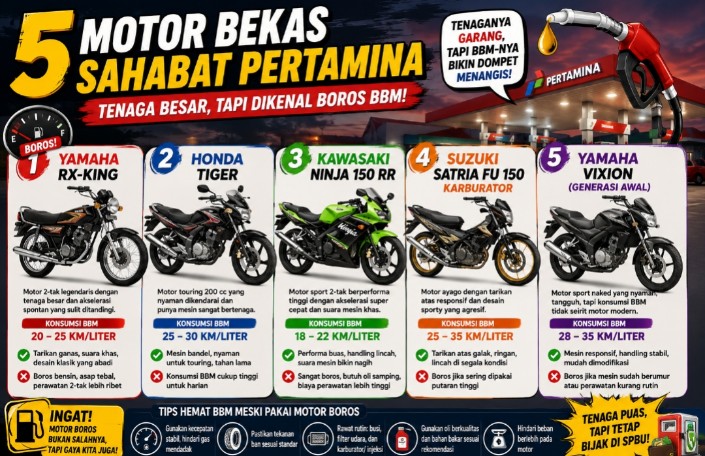
Yamaha RX-King is the name most often mentioned in discussions about thirsty used motorcycles. This two-stroke model is known for its large power output and spontaneous acceleration, while its fuel consumption sits around 20 to 25 kilometers per liter in normal use.
Even with that level of consumption, RX-King continues to draw collectors and classic-bike fans. Its distinctive exhaust note and brutal pull give it a character that is difficult to replace with more modern machines.
Kawasaki Ninja 150 RR follows a similar pattern, though in a sportier package. The two-stroke sport bike is valued for its quick acceleration and recognizable engine sound, but in certain conditions it can return only around 18 to 22 kilometers per liter.
That performance comes with extra running costs as well. The bike also requires quality premix oil, which adds to the overall expense of ownership.
Bigger engines, stronger character
Honda Tiger represents a different kind of appeal in the used market. With its 200 cc engine and long-distance touring focus, the motorcycle is known for strong power and a comfortable riding position.
Its average fuel consumption is around 25 to 30 kilometers per liter, which places it among the less efficient choices for riders who prioritize economy. Even so, the bike’s solid body, dependable reputation, and banded engine image continue to support its popularity.
Suzuki Satria FU 150 with a carburetor also earns a place on the list. This underbone sport model is known for aggressive performance and a very responsive upper-range pull, especially when the engine is pushed hard.
Fuel complaints often appear with this generation, particularly among riders who use high revs frequently. Still, its sporty design and lively character keep the carburetor version of the Satria FU in demand.
Older sport naked bikes still have a place
Yamaha Vixion from the early generation rounds out the group. As an older sport naked model, it does not match the fuel efficiency of modern injection-based motorcycles, especially as age and maintenance condition begin to affect performance.
Some owners view the older Vixion as less economical than expected, particularly when routine care is neglected. At the same time, the bike remains appealing because of its comfortable handling, responsive engine, and easy modification potential.
The common thread across these motorcycles is clear. They all offer a riding experience centered on character, acceleration, and stronger engine response rather than maximum fuel savings.
Why buyers still want them
For many enthusiasts, these motorcycles deliver something that newer, more efficient models often do not: a more engaging ride. Two-stroke machines such as the RX-King and Ninja 150 RR are especially valued for their instant power delivery and unique sound.
Honda Tiger, Satria FU 150 karburator, and early Yamaha Vixion appeal in a different way, but the logic is similar. Each model offers a recognizable strength, whether that is touring comfort, sporty urgency, or a handling feel that many riders still enjoy.
Emotional value also plays a major role in the used-bike market. Some of these models have legendary status, while others remain popular in specific communities or with collectors who appreciate their hard-to-replace traits.
That is why high fuel consumption does not automatically weaken their appeal. For buyers who understand the compromise from the start, the extra visits to the gas station are simply part of the package that comes with these used motorcycles.