


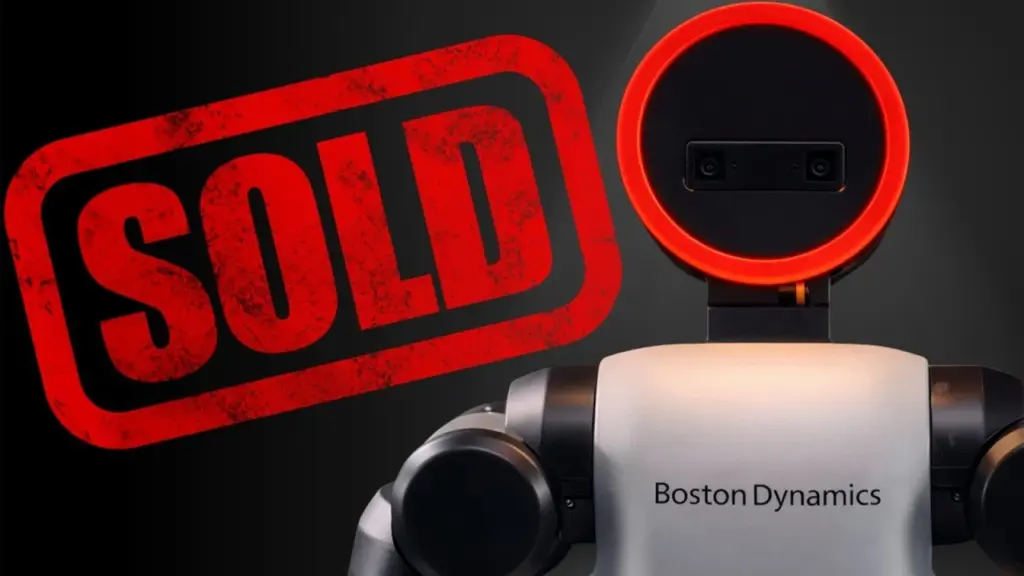
Boston Dynamics’ split from Google was never really about weak robotics. The bigger issue was that highly advanced research did not line up with a business model that needed products to reach the market quickly and clearly.
That mismatch is a familiar problem inside large technology companies. A team can build impressive prototypes and still fail to fit the commercial timeline that investors and executives expect.
A robotics company built around long-term research
Boston Dynamics was founded in 1992 by Marc Raibert and became known for dynamic locomotion, the effort to make robots move with agility, balance, and adaptability similar to animals. From the start, the company built its reputation on technical breakthroughs rather than on products designed for immediate sales.
Much of that work was shaped by deep research and support from organizations such as DARPA. The priority was to push robot capabilities forward, not to create devices that were already easy to position in a commercial market.
That approach helped Boston Dynamics become a pioneer in robotics. It also created a gap between what the company could demonstrate and what a corporate owner might want to monetize in the short term.
Impressive robots, limited commercial fit
Several early projects show why the company drew attention while still remaining difficult to commercialize. Big Dog, a quadruped developed for DARPA in 2003, was designed to move across rough terrain, but its loud gas-powered engine limited its usefulness in practical field conditions.
Petman followed as a humanoid robot built to test protective gear. It highlighted engineering capability, but it was closer to a technical demonstration than a mass-market product.
Atlas became the strongest symbol of Boston Dynamics’ ambitions. The bipedal robot displayed remarkable agility and adaptability, yet it still belonged to experimental research rather than a short-term business line.
Why Google stepped away
Google acquired Boston Dynamics in 2013 during a period when the company was investing aggressively in future technologies. At first, the deal appeared to fit Google’s broader interest in robotics and automation.
The difference in priorities became clearer over time. Google wanted robots that could address industrial needs directly, while Boston Dynamics continued to focus on advanced prototypes and long-horizon exploration.
That tension explains the 2017 sale more clearly than any idea that the robots themselves were failing. The problem was not technological weakness, but the distance between frontier research and a commercial direction that required fast, measurable market use.
A more practical phase under new owners
After SoftBank acquired Boston Dynamics in 2017, the company shifted toward more practical applications. The change was visible in Spot, a quieter electric robot designed for tasks that could be used directly in industry.
Spot was positioned for industrial inspection, security monitoring, and data collection. Its ability to move through complex environments made it relevant for sectors such as construction, energy, and manufacturing.
Boston Dynamics also strengthened its robotics capabilities through the acquisition of Kinema Systems, a company focused on robotic vision. That step helped improve autonomy and environmental adaptability.
Hyundai sharpened the commercial focus
The company’s business direction became even more commercial under Hyundai in 2021. Attention moved toward factory and warehouse automation, areas where robots can support repetitive work, inspection, and operational efficiency.
Spot continued to develop as a dependable inspection tool. Atlas, meanwhile, was increasingly viewed for repetitive work in more controlled environments.
Hyundai’s support also gave Boston Dynamics room to scale production and refine its technology for wider adoption. The company that once stood out mainly for spectacular robot demonstrations was now being shaped into a robotics business with clearer industrial use cases.
Boston Dynamics’ path shows that advanced robotics is not judged only by technical ambition. To endure in a commercial setting, innovation has to be paired with autonomy, environmental awareness, electric design, and above all, practical value that the market can use right away.
Source: www.geeky-gadgets.com