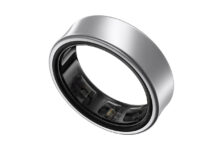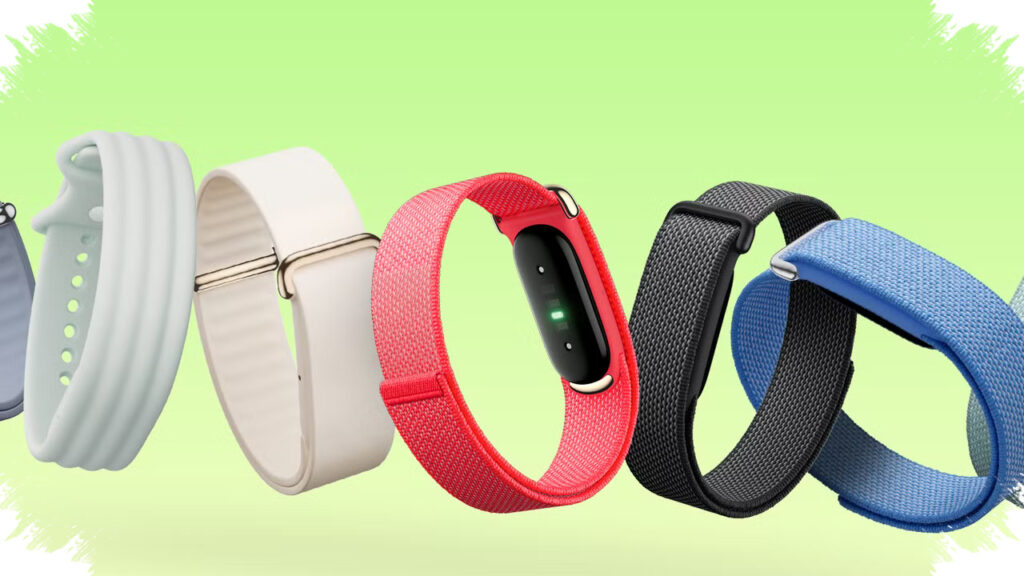
The first wave of Fitbit Air units is already revealing a practical problem that promotional materials did not make obvious: the bundled band marked as “one size fits all” does not actually fit every wrist. For a device built around continuous body tracking, that detail matters immediately because fit affects how well the sensors stay in contact with the skin.
The issue surfaced as early buyers began receiving their devices, and the first complaints quickly spread through Reddit. One of the most discussed posts came from a user named enchantress11 in r/fitbit, where shared photos showed Fitbit Air looking oversized on a small wrist.
Fit is now the main talking point
The images highlighted a problem with both of the available band options, including the standard Performance Loop Band and the more expensive Elevated Modern Band. In both cases, the device appeared to sit too loosely and failed to lie close to the skin.
That matters more than comfort alone. Wearable fitness devices depend on stable skin contact for sensors to read body data accurately and consistently, so a loose band can affect the core purpose of the product.
The phrase “one size fits all” may sound convenient, but early user feedback suggests that approach can leave some buyers without a workable fit. That concern is especially visible among people with very small wrists, who have reported difficulty finding a secure position for the device.
Reddit reactions show the problem is not isolated
Other Reddit users quickly responded to the photos with similar concerns. One commenter said the post was helpful because they also have a “very small” wrist, while another suggested wearing the device on the upper arm or trying it on the ankle.
The original poster said those ideas might be worth considering, but also made clear that more wrist-based data was still needed before making comparisons with upper-arm or ankle placement. That response reflects a broader question around the device: the issue is not only whether it can be worn elsewhere, but whether it performs as intended when moved away from its designed location.
Why placement matters for the sensor
At first glance, the upper arm or ankle may seem like a practical workaround because those areas are usually larger than the wrist. A looser band on the wrist could feel more secure there.
However, there is no indication that Fitbit Air’s sensors were calibrated for those alternative locations. If the device is moved away from its intended placement, the readings may lose their practical value.
That is why the band-size complaint has become more serious than a simple accessory issue. On a fitness wearable, the connection between sensor and skin is the foundation for reliable tracking.
A tighter wrist fit may still be the best option
For users facing the same problem, one more realistic approach is to wear the device slightly higher up the forearm, where the arm is typically a little wider. That position may create a more stable fit without moving the device to a completely different part of the body.
A third-party band could also be an option if it offers a better fit. That is presented as a more sensible route than shifting the device to the ankle or upper arm without any clear confirmation that sensor accuracy will hold.
Fitbit Air was introduced as a Google-made, Whoop-like device with a starting price of $100. Now that the units are reaching early buyers, the most basic question is getting the most attention: whether its bundled band can truly fit comfortably and securely on everyone.
Source: www.androidpolice.com