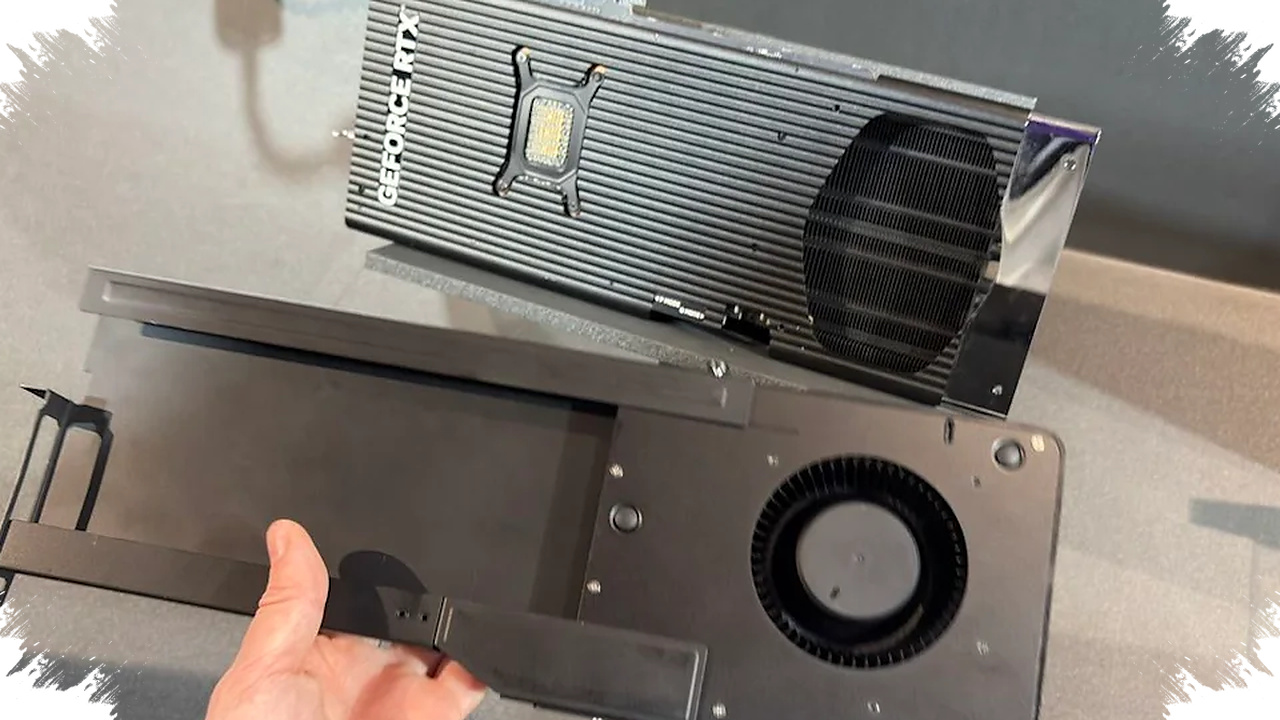
Cooler Master is taking an unusual route to solve a familiar PC problem: keeping GPU heat from spreading beyond the graphics card and into the rest of the system. Its MasterFlow accessory does not replace a graphics card cooler, but sits above the card and pushes hot air directly out of the case.
That approach matters because modern graphics cards often do a better job of cooling the GPU itself while still leaving a trail of heat inside the chassis. Cooler Master is aiming at that leftover heat path, especially the warm air that can drift toward the CPU and raise overall system temperatures.
A blower made for the expansion slots


MasterFlow uses a small radial fan and occupies an expansion slot area that is often left unused. Instead of letting hot air linger around the graphics card, the device channels it toward the slot and then out of the chassis.
Brett Buren, a Cooler Master representative, said the main goal is to reduce the flow of GPU heat that enters the CPU area. He described the accessory as a way to isolate heat before it can interact with other components in the system.
A familiar idea in a different form
The concept recalls the blower-style shrouds once seen on reference graphics cards. Nvidia GTX 10-series models, for example, used that kind of design before many GPUs moved to two- or three-fan coolers that are generally more effective for the graphics chip itself.
The problem has not disappeared, though, because many newer cards still release heat in ways that affect the rest of the build. Some current models, including cards in the 5080 and 5090 class, vent heat from the back, but that output can still interfere with CPU temperatures.
Cooler Master is treating that gap as an opportunity. Instead of changing the GPU cooler, MasterFlow tries to reshape internal airflow so heat goes straight out through the slot path rather than spreading around the processor socket.
Targeting tighter thermal margins
The company says the accessory can improve CPU temperatures by around four to six degrees. That makes it relevant for systems that already operate close to their thermal limits.
For users with compact airflow margins, even a small reduction in heat buildup can matter. Cooler Master appears to be positioning MasterFlow as a specialized tool for builds where GPU exhaust and CPU temperatures compete for the same space inside the case.
Built to fit more than one card size
MasterFlow is mounted above the graphics card and can be adjusted for different GPU lengths. A sliding mechanism lets it move forward and backward, which gives it flexibility across a wider range of card sizes.
That adjustment is important because modern graphics cards vary widely in physical length. Cooler Master is clearly trying to make the idea less rigid than older blower-style solutions, which were usually tied to specific reference designs.
For now, the device remains limited in scope. Cooler Master plans to use MasterFlow in its own premium custom systems, and there is no confirmed wide consumer release yet.
Even so, the accessory shows a different way of thinking about thermal management in modern PCs. Rather than focusing only on the graphics chip, MasterFlow tries to control where the heat goes after it leaves the GPU, and that alone may make it interesting for builders looking to protect CPU temperatures without changing their main graphics card.