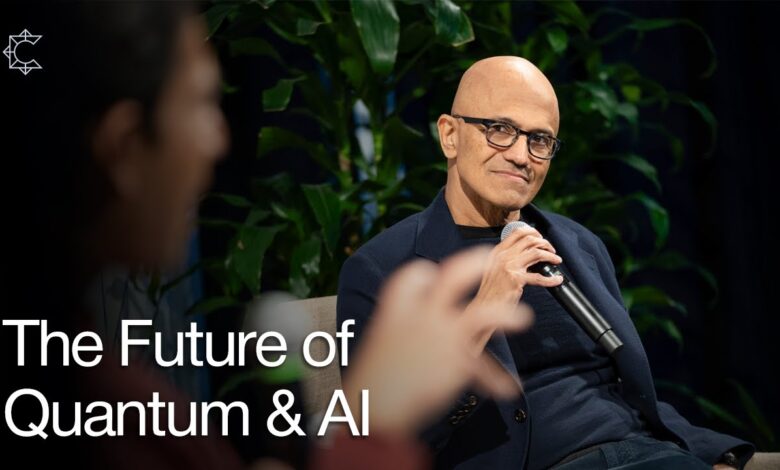
Microsoft is reframing the future of computing around AI agents, with Satya Nadella arguing that software experiences built around operating systems and traditional apps are entering a new phase. The shift, he said during Build 2026, is not about adding AI as a small feature layer, but about making agents the main interface between people and computers.
That message came alongside the introduction of Project Solara, a new platform Microsoft developed with Qualcomm. The company positions it as a foundation for “agent-first” computing, with hardware, software, and Azure cloud services tied together in one chip-to-cloud architecture.
Nadella described the change as a real platform shift in a conversation with Qualcomm President and CEO Cristiano Amon. In Microsoft’s view, the industry is moving away from a world organized around operating systems and applications and toward one centered on agents that can operate across software, devices, and workflows.
A new layer above apps
Microsoft says the next stage of computing will not be defined by a single app or even a single device. Instead, AI agents are expected to coordinate tasks across services and handle work that currently requires users to move manually from one application to another.
The company sees this as the latest step in a long evolution. Computing has moved from mainframes to PCs, then to smartphones and wearables, with each generation bringing the experience closer to the user. Microsoft now argues that the next step is an interaction model based on natural language rather than menus, icons, and fixed app flows.
To describe that transition, Microsoft outlined three levels of AI integration. In the first, AI sits beside applications as an assistant. In the second, AI is embedded inside applications and becomes central to the user experience. In the third, the most ambitious model, AI operates outside individual apps and coordinates work across multiple applications, services, and devices while keeping context intact.
Project Solara is designed for that third model. Rather than acting as another standalone AI product, it is meant to support an environment where agents can function as the primary layer of interaction.
Adaptive interfaces for different devices
One of Solara’s key ideas is “just-in-time UI.” Microsoft says this approach allows agents to shape the interface dynamically based on screen size, content, and the way a user interacts with the system.
The supported interaction modes include voice, touch, vision, and multimodal input. That means developers would not always need to create separate interfaces for every device category, which Microsoft says could reduce complexity and lower the cost of building new device classes.
The company also uses Solara to point toward a more flexible design model for future hardware. In Microsoft’s framing, the experience no longer has to be fixed around traditional app layouts, because the agent can generate the interface as needed.
A multi-agent future, not a single assistant
Microsoft does not see the future as one all-purpose AI assistant replacing everything else. Instead, it expects a more open environment with multiple specialized agents handling different kinds of work.
To support that model, Microsoft is building technologies such as an agent dispatcher and an agent task manager. These tools are intended to decide which agent should handle a request and coordinate several agents when a task spans more than one capability.
That structure matters because digital work is expected to become more complex, not less. A single user request may eventually require several services, several devices, and several AI functions working together at once.
In that vision, agents become both a new programming unit and a new way for people to interact with computers. If Microsoft’s direction from Build 2026 plays out as planned, applications will move further into the background while AI agents take the lead as the main layer of computing.