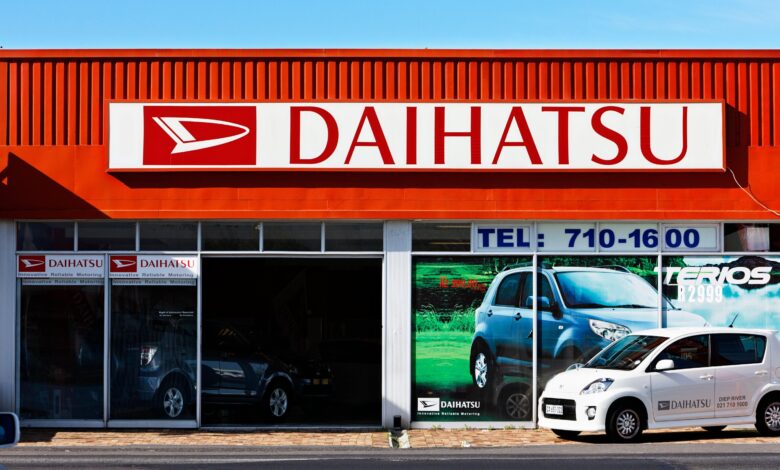
A major shift is unfolding around one of Daihatsu’s long-running dealer partners, and the most striking part is not only the closure of 11 official outlets. The broader signal is that some of those outlets are moving toward Chinese car brands, a development that reflects how quickly Indonesia’s automotive landscape is changing.
The outlets operated by Asco Automotive stopped serving customers on 1 June 2026. Their network covered DKI Jakarta and East Java, two areas that have long been important for vehicle sales and aftersales activity.
What the closure actually means
PT Astra International Tbk – Daihatsu Sales Operation has clarified that the case does not involve 11 separate dealer companies. Customer Relation Division Head AI DSO, Tri Mulyono, explained that the situation involves one dealer company that operated 11 official Daihatsu outlets.
That distinction matters because the impact of a single company stopping operations is very different from the shutdown of 11 independent dealers. For customers, however, the effect is still immediate and practical.
Many Daihatsu owners relied on Asco Automotive for regular servicing, genuine spare parts, and aftersales support. Concerns have therefore centered on warranty handling and access to service history, especially for customers who used the network regularly.
Why the market is paying close attention
The more attention-grabbing part of the story is the direction taken by some of the outlets after the change. Several networks are said to have shifted to Chinese car brands, and that has drawn interest because it points to a broader shift in dealership strategy.
Chinese brands have been expanding more aggressively in Indonesia in recent years. Their push covers sales, aftersales service, and business strategies that are often more flexible than the model long associated with established Japanese brands.
This expansion has started to challenge the long-held dominance of Japanese manufacturers in distribution networks. It also shows that the competition is no longer limited to brand recognition alone.
What is changing in consumer perception
Chinese cars are also receiving more attention from buyers than they did in the past. Modern designs, advanced technology, and competitive pricing have helped broaden their appeal in the market.
Electric vehicles and smart technology-based models are among the strongest drivers of that interest. Chinese brands have been among the most aggressive in using that momentum to strengthen their position.
That is why the move by some outlets formerly linked to Daihatsu has become more than a routine business update. It is being read as part of a wider realignment in how automotive retail is being built in Indonesia.
Daihatsu’s national operations remain in place
Even with the closure of Asco Automotive’s outlets, Daihatsu’s aftersales services across the country are still operating normally. Customers can continue to use other official Daihatsu dealers for servicing and warranty-related needs.
Consumers are also being directed to contact official Daihatsu channels for further information about service and warranty matters. The closure of one partner network does not mean Daihatsu’s national service system has stopped.
Daihatsu still has a broad dealer network in Indonesia and a large base of loyal customers. That is why its overall business is expected to remain stable despite the change affecting one major partner.
A sign of a wider transition
Industry observers see the development as a possible marker of shifting distribution trends in the domestic auto market. For years, Japanese brands have held the upper hand, but competition is now becoming more open.
The change suggests that Indonesia’s automotive sector is entering a new phase. Competition is no longer defined only by long-established networks, but also by how quickly brands respond to technology trends and changing consumer needs.
For buyers, that means more choices. It also points to a market where price and technology rivalry is likely to intensify throughout 2026 and in the years that follow.