


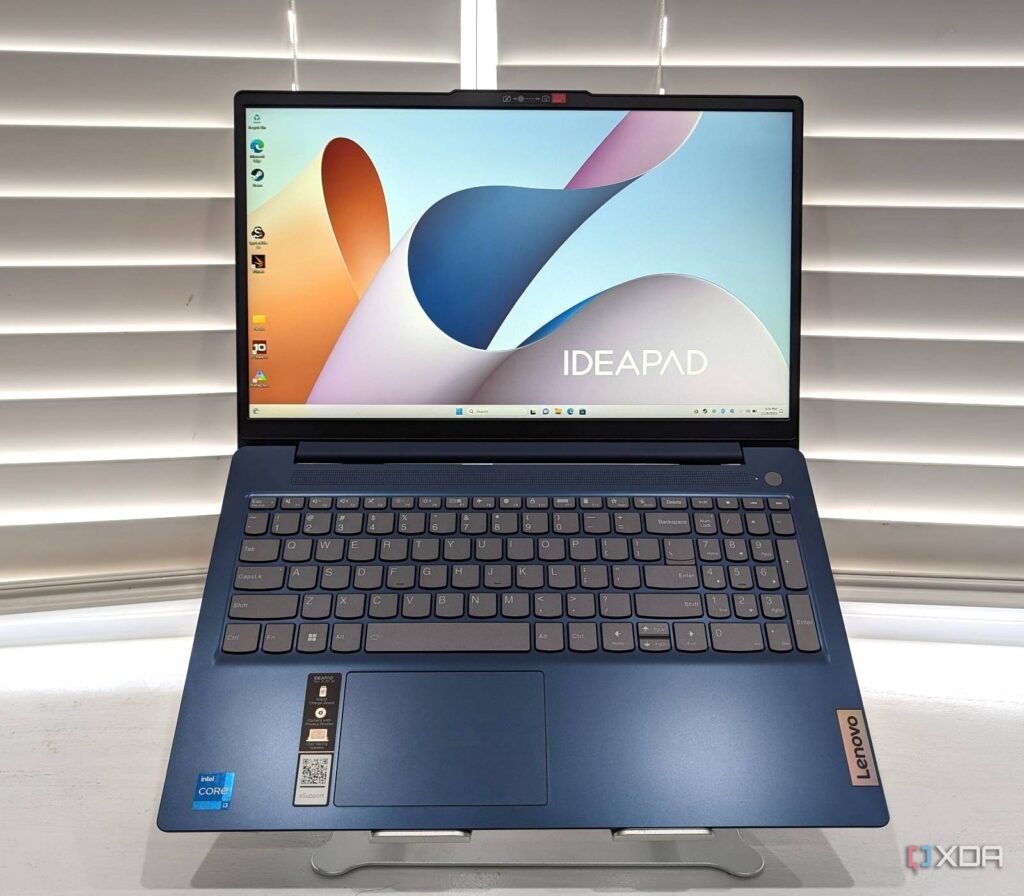
Lenovo IdeaPad Slim 3i 2026 is drawing attention because it pushes a familiar mainstream laptop line into far more serious performance territory. With RAM options reaching 32 GB, the model is positioned as a practical answer for users who need a lightweight device that can keep up with demanding multitasking.
The appeal is not only about raw memory capacity. Lenovo appears to be targeting a growing group of users who rely on AI-based apps, large browser sessions, video calls, spreadsheets, and creative workflows that can quickly overwhelm entry-level machines.
A more capable IdeaPad for modern workloads
The IdeaPad Slim 3i series has long been associated with affordable laptops for students and office workers. The 2026 version, however, is described as a clear step up, bringing the line closer to premium territory without abandoning its practical mainstream identity.
Its slim and minimal design remains one of the core strengths. The compact body is intended to support mobility, making the laptop suitable for campus use, remote work, and daily commuting.
Lenovo is also expected to use a latest-generation Intel Core processor for 2026. The chip is said to focus on better power efficiency and stronger AI processing capabilities, which are becoming increasingly important in everyday computing.
Built for multitasking without slowing down
The main headline feature is the LPDDR5x RAM configuration of up to 32 GB. That level of memory should help users run many browser tabs, design apps, large spreadsheets, and video conferencing tools at the same time with less risk of performance drops.
The laptop is also expected to support an NPU, or Neural Processing Unit. That addition would help accelerate AI-related tasks such as automatic noise cancellation, smart battery optimization, and more efficient video processing without placing the full burden on the CPU.
For storage, Lenovo is tipped to offer NVMe PCIe Gen4 SSD options ranging from 512 GB to 1 TB. This should deliver faster boot times, quicker file transfers, and shorter application loading times compared with older conventional laptops.
Display, connectivity, and expected trade-offs
Display options are expected to include 14-inch and 15.6-inch Full HD IPS panels. The screen is also said to cover 100 percent sRGB, making it more suitable for light graphic work and digital content editing.
Connectivity is another area where the model may stand out in its class. Lenovo is expected to include Wi-Fi 7, Bluetooth 5.4, and a USB-C Thunderbolt 4 port to support fast data transfer and future device compatibility.
There are still compromises to consider. The RAM is predicted to be onboard and soldered to the motherboard, which would likely prevent manual upgrades later on.
The chassis is also expected to rely on a polycarbonate material mix to keep pricing competitive. That approach fits the IdeaPad Slim line, which is still aimed at the mainstream market rather than Lenovo’s premium Yoga or Slim Pro families.
Pricing and who it is for
The Lenovo IdeaPad Slim 3i 2026 is expected to cost between Rp10.5 million and Rp13 million, depending on the processor and SSD configuration. For a laptop with 32 GB RAM, that pricing would place it in a notably competitive position.
If the reported specifications are accurate, the device could become one of the most compelling mid-range laptops of its generation. It would offer a strong balance of performance, portability, and a price that remains within reach for many buyers.
That combination should appeal most to final-year students, office workers, hybrid employees, and entry-level digital creators. For users who want a laptop that feels fast, stays portable, and avoids the lag common in lower-memory machines, the Lenovo IdeaPad Slim 3i 2026 looks like a serious contender.