


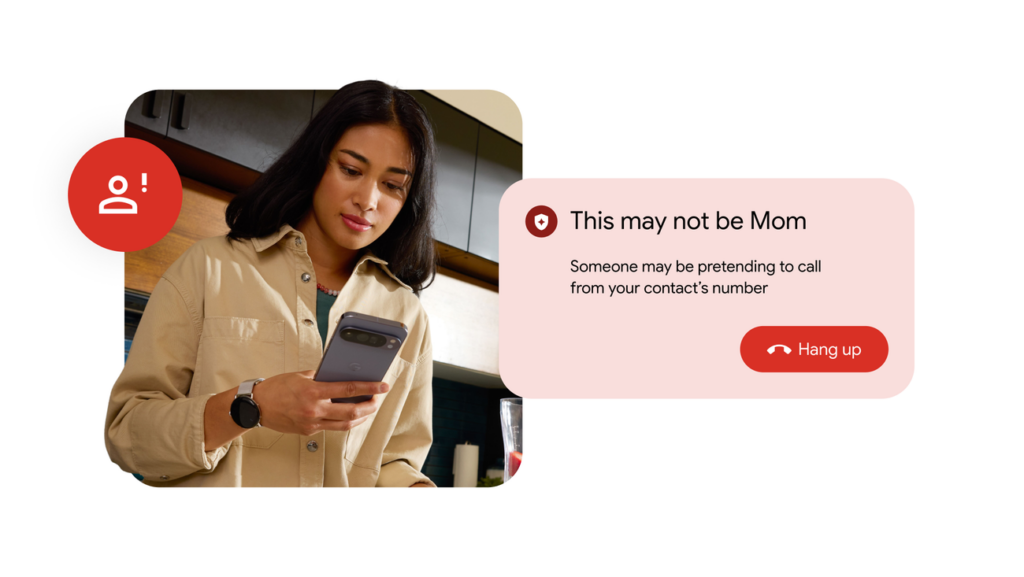
Android is getting a new layer of protection against AI-powered voice scams, and the goal is simple: catch suspicious calls before the conversation turns into a trap. Google is rolling out a feature called Fake Call Detection to help users spot fake voices and deepfake-based impersonation in real time.
The move comes as phone fraud has become harder to recognize. Scammers no longer rely only on unfamiliar numbers, but can also imitate the voices of family members, friends, bosses, or even authorities to pressure victims into sending money or sharing personal data.
How the detection works
Fake Call Detection runs by checking whether a call truly matches the expected contact in the background. Google says the feature is enabled by default on Android devices, so users do not need to turn it on manually.
If the system fails to verify the call, Android will warn that the conversation may be a scam. That warning is meant to give users enough time to end the call before sensitive information is exposed or financial losses happen.
Built to stop fraud early
Google’s approach is preventive rather than reactive. The company wants to interrupt scams at the moment they begin building trust, instead of waiting until the caller has already manipulated the victim.
That matters because AI-generated voices are becoming increasingly convincing. A caller can appear on screen under a familiar name such as “Mom,” while the voice on the line is actually a synthetic imitation used to request urgent money.
RCS as the identity check layer
The system is built on Rich Communication Services, or RCS, which allows identity verification to happen securely and automatically. Google says RCS supports real-time verification during a call, making it easier to detect impersonation attempts quickly.
For users, the process is designed to stay invisible. The protection works in the background, so normal calling behavior should not change in a noticeable way.
A response to changing scam tactics
Google notes that many people now avoid answering unknown numbers, and scammers have adapted by pretending to be trusted contacts instead. That shift makes voice scams more dangerous, because victims may lower their guard once they believe they know who is calling.
The pressure can build fast when the caller asks for money or personal details during the conversation itself. In that kind of moment, there is often little time to verify whether the voice really belongs to the person displayed on the phone.
Rolling out to Android 12 and newer
Google plans to distribute Fake Call Detection gradually through the Phone by Google app. The rollout starts this month and targets devices running Android 12 and above.
Pixel devices will be the first to get access, followed by a broader expansion to other Android phones. The feature marks another step in Google’s effort to strengthen Android security against scams that now exploit both voice and identity with far more realism than before.