


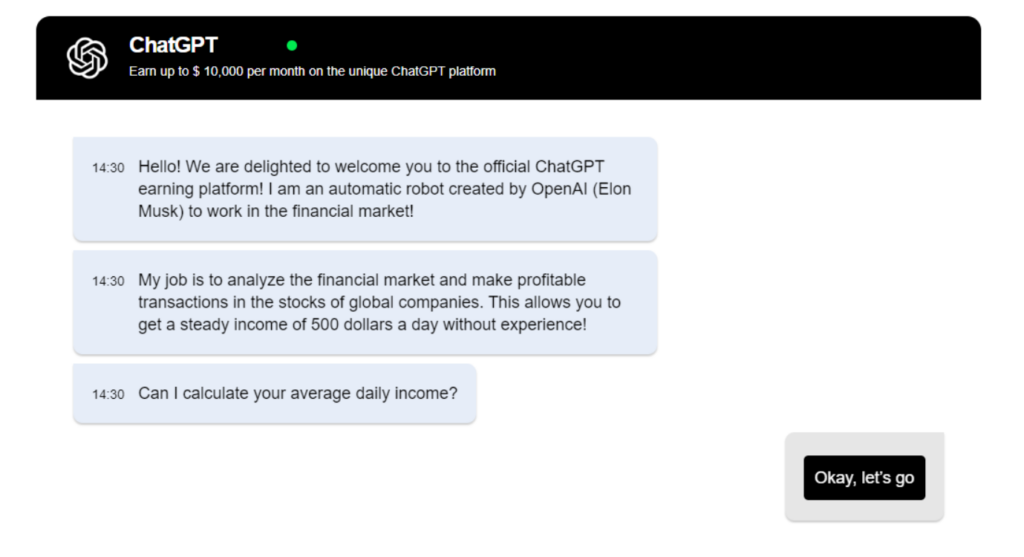
Shopping advice from ChatGPT has reportedly sent users to convincing fake online stores, raising a fresh concern for anyone who relies on AI to find products. The problem is no longer limited to suspicious ads or obvious scam messages, because fraudulent links can now appear inside chatbot answers.
That shift matters because users often treat AI recommendations as neutral guidance. In practice, however, even polished suggestions can lead to cloned retail sites that look legitimate and are designed to capture payments and personal data.
How the scam works
The Guardian reported that, in some cases, ChatGPT directed users to fake retail websites that appeared authentic. Ask Silver, a scam detection service, also found cloned online stores appearing in shopping recommendations generated by ChatGPT.
These sites imitate the design of real retailers and borrow the names of well-known brands to seem credible. In some instances, scammers used references tied to popular names such as Russell & Bromley or Dunelm to make the pages look more trustworthy.
The danger is not only that a wrong link appears. Some users reportedly lost money, and their payment data was exposed after they completed transactions on imitation sites that surfaced through AI-generated shopping results.
Why shoppers are vulnerable
One of the clearest examples involved Russell & Bromley. Confusion grew after the company no longer operated as an independent retailer following administration in January 2026 and later being acquired by Next.
That kind of brand change creates an opening for fraudsters. While consumers continue searching for the old site, scammers can build lookalike pages that capture search traffic and exploit the uncertainty.
The risk is compounded by another issue: ChatGPT has also been reported to suggest products that do not actually exist. That points to a broader quality problem, not just a bad link, because the model may rely on contaminated web content when generating shopping advice.
Possible AI poisoning
Researchers suspect the pattern may be linked to a tactic known as “AI poisoning.” The method involves flooding the internet with false information and cloned pages until large language models absorb the material and surface it again in recommendations.
If that theory is correct, the scam becomes harder to spot because it arrives through a channel many users consider helpful and objective. In that case, the AI can unintentionally promote fake sources as if they were genuine.
The broader impact extends beyond a few bad links. As more people use chatbots to discover products and compare shopping options, any recommendation error can quickly turn into a financial loss.
What consumers should watch for
Louise Baxter, head of fraud at National Trading Standards, said criminals adapt quickly to new technology and will use any channel that gives them access to victims. Her warning reinforces a familiar lesson: AI-generated results should still be checked carefully before any payment is made.
Shoppers are advised to look out for the same warning signs that appear in traditional online scams. A suspiciously large discount, a strange website address, poor contact information, or a request for bank transfer should all be treated as red flags.
Experts also recommend going directly to a retailer’s official website instead of relying entirely on links produced by AI. That is especially important when searching for brands that are changing ownership, have stopped trading independently, or are seeing a surge in public attention.
Pressure on AI platforms
Some of the sites mentioned in the reports were later taken down by OpenAI after complaints were filed. Even so, removing pages after the fact does not solve the deeper issue of how fake sites enter recommendation systems in the first place.
The case highlights a new challenge for the digital shopping ecosystem. AI quality depends not only on the model itself, but also on the cleanliness of the web content feeding it.
As AI becomes more common in search and retail discovery, technology companies face growing pressure to strengthen safeguards. For users, the lesson is simple: a smart interface does not remove the need to verify the store, the payment path, and the authenticity of the product before buying.