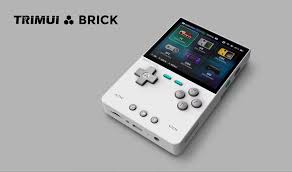
TRIMUI is taking its Brick lineup in two very different directions, and the split is hard to miss. One new model stays focused on affordability and Linux, while the other moves into premium territory with Android and much stronger hardware.
That approach stands out in a handheld market where many devices force buyers to choose between low cost and serious capability. With the Brick Pro and Brick Hammer Pro U, TRIMUI is drawing a clear line between an ultra-budget option and a far more ambitious premium model.
Two models, two very different targets
Brick Pro is the device aimed at buyers who want the lowest possible entry point. It keeps the Linux platform and uses the Allwinner A133P chip clocked at 1.8GHz, which suggests TRIMUI is not chasing a major performance jump here.
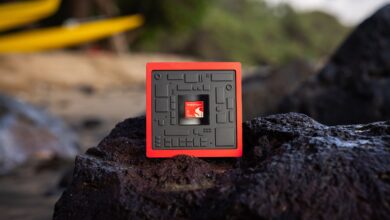
Brick Hammer Pro U takes the opposite route. It runs Android and uses Qualcomm Snapdragon G2 Gen 1, a much stronger chipset than the kind usually found in vertically oriented retro handhelds.
The premium model also stands apart in design. TRIMUI gives the Hammer Pro U an aluminum CNC body, placing it clearly above the simpler Brick Pro in both materials and positioning.
Hammer Pro U pushes performance much further
According to the published hardware details, Snapdragon G2 Gen 1 uses an eight-core Kryo setup. It combines four Cortex-A78 performance cores at 2.4GHz with four Cortex-A55 efficiency cores at 1.95GHz.
Graphics come from an Adreno A21 GPU running up to 940MHz. That puts the chip in roughly the same performance neighborhood as Snapdragon 778G, at least in broad terms.
For a handheld shaped like a classic game device, that matters a lot. Hammer Pro U should go well beyond the usual GBA and PS1 use case, with enough power for N64, Dreamcast, and a significant portion of GameCube and PlayStation 2 libraries.
Even so, real-world emulation depends on the emulator, the game, and the settings used. Performance can still vary widely from one title to another.
Display, controls, and video output
Hammer Pro U uses a 3.95-inch IPS LCD with a 60Hz refresh rate. Its 1,024 x 768 resolution is well matched to a wide range of retro systems.
The USB-C port supports DP-Alt Mode, allowing video output to an external display at up to 1920 x 1080 at 60Hz. That gives the device a more flexible role than a typical pocket handheld.
TRIMUI also includes a 6-axis gyroscope for motion-based games. Control hardware is rounded out by two hall-effect joysticks and ALPS switches.
The color options for Hammer Pro U are black, gray, and silver. Combined with the metal build and modern feature set, it is clearly positioned as the more upscale device in the lineup.
Additional details shared by Reddit user costlyclick, though not officially confirmed, point to 6GB of RAM, 128GB of internal storage, Wi-Fi 5, and Bluetooth 5.1.
Brick Pro keeps the budget formula intact
While Hammer Pro U is built to impress, Brick Pro is meant to stay lean. TRIMUI keeps it on Linux and continues with the Allwinner A133P platform, so expectations should remain modest.
The company has not released a full spec sheet for this model. Still, the same Reddit-sourced information suggests it uses a PowerVR GE8300 GPU.
Brick Pro reportedly shares the same display panel as its pricier sibling. That means a 3.95-inch 60Hz screen with a 1,024 x 768 resolution.
Memory and storage are where the cost-cutting becomes most obvious. Brick Pro is said to carry just 1GB of RAM and 8GB of storage, along with USB 2.0 over USB-C, Wi-Fi 4, and Bluetooth 4.2.
Its color options are black, white, and gray. Taken together, those details point to a device built for the ultra-budget end of the market rather than a meaningful leap in capability.
What this means for the Brick family
The original TRIMUI Brick already built a solid reputation, so a direct follow-up was expected. What is less expected is how sharply TRIMUI has separated the new direction into two distinct tiers.
Brick Pro keeps the simple, cost-conscious formula alive, while Brick Hammer Pro U pushes the same vertical handheld concept into a much more powerful and premium space.
TRIMUI has already shown official product videos for both devices, but pricing and availability remain unknown. That leaves the biggest question unanswered for now, even as the company signals that launch timing may not be far off.