


China’s humanoid robot industry is taking a more concrete step into Indonesia, and AGIBOT is positioning itself at the center of that move. The embodied AI company launched its market expansion in Jakarta on Tuesday, signaling that the country is now being treated as a serious target for robotics growth.
The timing matters because Indonesia is actively pushing industrial transformation through technology. With “Making Indonesia 4.0” and artificial intelligence listed among national priorities, the local market is becoming more attractive to global robotics players looking for a foothold in Southeast Asia.
A market entry built around services, not only hardware
AGIBOT says it plans to introduce a Robot-as-a-Service, or RaaS, model in Indonesia. That approach suggests the company wants to do more than sell machines, with a strategy focused on service-based deployment and localized solutions across multiple sectors.
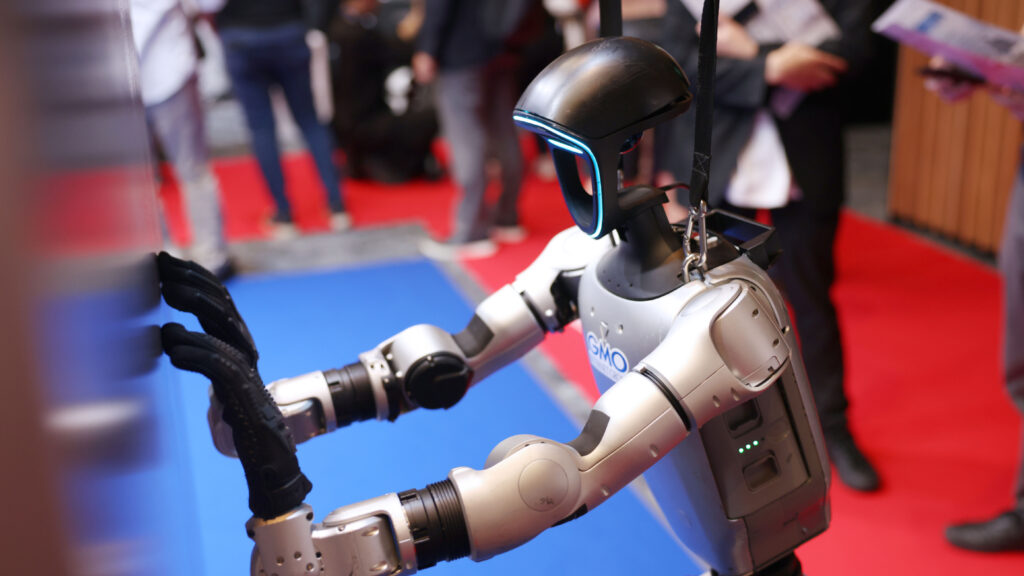
During its first partner conference in Jakarta, AGIBOT showcased several humanoid robots that demonstrated autonomous mobility, human-machine interaction, and task execution. The presentation offered an early look at the kind of systems the company wants to bring into the Indonesian market.
AGIBOT says its products are built on an integrated architecture that combines motion intelligence, interactive intelligence, and operational intelligence. The company is targeting use cases in industrial manufacturing, commercial services, scientific research, and education.
Why Indonesia is drawing attention
For AGIBOT, Indonesia is not just another overseas destination. Deng Feng, president of the company for the Middle East and Asia-Pacific region, described the country as the largest economy in ASEAN and one of the most dynamic strategic markets for global embodied AI.
That framing reflects a broader industry trend. As robotics and AI move closer to practical deployment, Indonesia is increasingly viewed as a market where adoption can grow beyond pilot projects and into real operational use.
The company’s expansion also comes with a clear local adaptation message. Rather than offering a one-size-fits-all package, AGIBOT says it wants to tailor solutions to Indonesian needs and expand applications across different fields.
Government attention points to wider ambitions
The Jakarta event also drew comments from Indonesian officials, reinforcing the idea that robotics is being treated as more than a business opportunity. Achmad Adhitya, special staff to the Vice President of the Republic of Indonesia, said the future has arrived because robotics is no longer a distant concept and is quickly becoming part of daily life.
He added that Indonesia needs to prepare for the coming era of robotics and expressed hope that AGIBOT could become one of the pioneers of the humanoid robot industry in the country. His remarks pointed to expectations that foreign entrants could contribute to both technological and social development.
Supportive views also came from the Ministry of Communication and Digital. Aju Widya Sari, Director of Artificial Intelligence and New Technology Ecosystem, said she hopes AGIBOT can help advance scientific research cooperation, talent development, and collaborative innovation between industry, academia, and government.
From the Ministry of Creative Economy, Dandy Yudha Feryawan, Director of New Digital Technology, said AGIBOT’s presence could do more than bring advanced products. In his view, it may also support knowledge transfer and talent development.
What the move could mean for industry and education
If AGIBOT succeeds in building a local presence, the impact could spread across several sectors at once. Manufacturing may be the most immediate use case, while commercial services could benefit from new forms of human-machine interaction in public and business environments.
Research and education are also part of the company’s planned application map. That aligns with the government’s interest in strengthening innovation ecosystems and expanding the talent base around AI and robotics.
The first partner conference in Indonesia therefore served a larger purpose than a product showcase. It marked the beginning of a more concrete competition for robotics growth in Indonesia, where business expansion, local adaptation, and cross-sector collaboration are starting to converge.