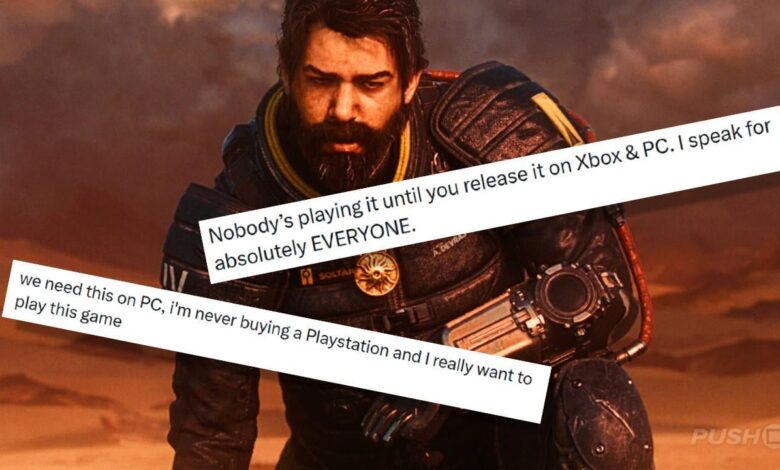
Sony is signaling a firmer line around PS5 exclusives, especially for its single-player first-party games. At the same time, the company does not appear ready to shut the door entirely on PC releases.
The split strategy matters because it defines how PlayStation will handle its biggest releases in the years ahead. For players, it also determines whether major games stay locked to PS5 or eventually arrive on PC.
Single-player games look increasingly protected
Bloomberg reported, citing Jason Schreier, that PlayStation Studios CEO Hermen Hulst told employees to expect more PS5 exclusives. That message suggests Sony wants to reinforce the value of owning a PlayStation console.
Hideaki Nishino, CEO of Sony Interactive Entertainment, gave a similar sense of direction in an interview with Famitsu. He was asked whether Sony’s stance on console exclusivity had changed, and his answer pointed to a more selective approach rather than a broad opening to every platform.
Live-service games remain the clearest exception
Nishino said Sony’s main policy is to make internal single-player games maximize the value of the PlayStation experience. By contrast, he said live-service games need to reach as many players as possible through online multiplayer, which is why PS5 and PC both remain part of that strategy.
That approach aligns with Sony’s long-standing view of service-based games. It also makes practical sense after the difficulties surrounding titles such as Concord and Marathon, where a narrow audience can increase risk.
PC ports are not gone, but they are not universal
Nishino did not rule out the possibility that some first-party games could still come to PC. His wording around “first-party developed” leaves room for interpretation, because it does not clearly cover projects developed outside Sony’s internal studios.
That means not every game released under Sony’s publishing umbrella will be treated the same way. A sequel from a PlayStation-published project such as Death Stranding 2 could still make its way to Steam, depending on the company’s future decisions.
Internal thinking appears more rigid than public wording
Some observers read Nishino’s comments as proof that Sony would decide exclusivity on a case-by-case basis. Schreier, however, pushed back on that reading and said the internal policy he heard was much firmer.
On ResetEra, Schreier said Hulst told staff that narrative single-player games would remain PlayStation only. He added that PC releases were seen as inconsistent, not profitable enough, and not aligned with the company’s own platform identity.
What the shift could mean for players
If that direction holds, Sony can use major single-player titles to strengthen PS5’s appeal against rivals such as Xbox and Switch 2. The same titles could also help build momentum for PS6 later on.
For PC players, the outlook remains mixed. Titles such as Ghost of Yōtei and Marvel’s Wolverine are still in a gray area because Sony has not made a final public call on whether they will stay exclusive or eventually move to PC.
For now, the clearest takeaway is that Sony is separating its approach by game type. Live-service releases are still headed for both PS5 and PC, while single-player first-party games are moving toward stronger PlayStation exclusivity.