


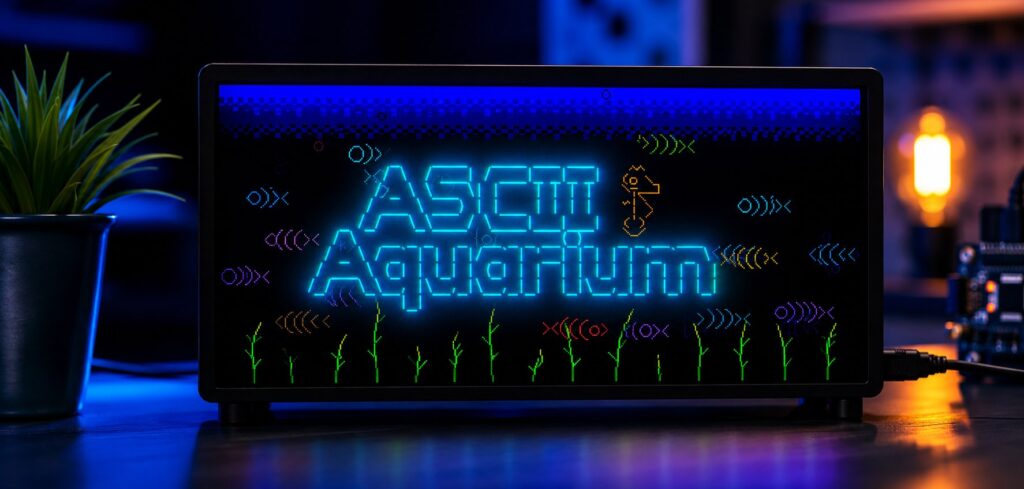
The ESP32-2432S028, better known as Cheap Yellow Display or CYD, is being used for a small aquarium project that does more than decorate a desk. It runs on its own, shows animated fish and water, and still remains useful as a clock.
That balance between playful visuals and everyday function is what makes the project stand out. When Wi-Fi is available, it can sync time automatically through NTP, but it does not depend on a constant connection to keep working.
A desk display with practical value
The project was introduced by GitHub user Lagerpun and also appeared on the ESP32 subreddit. Built around the 2.8-inch touchscreen CYD board, it turns a compact display into a self-running digital aquarium.
CYD has become popular because it combines an ESP32 microcontroller and a screen in one affordable board. That makes it suitable for projects that are meant to be flashed once and then left running with little extra setup.
In this case, the device can sit on a desk and continue showing its pixel ecosystem without needing regular interaction. The result is a display that feels decorative, but also useful in daily use.
What appears on the screen
The visual style uses pixel graphics rather than ASCII art. Fish, plants, floating food, and moving water effects work together to create the feeling of a living aquarium in miniature form.
The 2.8-inch touchscreen is central to the experience, since the entire scene runs directly on the CYD itself. No extra hardware is needed to enjoy the basic animation and the live-looking layout.
The self-running behavior is one of the key reasons the project is appealing. Once installed, it can keep moving on its own as a desk ornament that does not need constant attention.
More than a novelty project
Beyond the visuals, the aquarium includes a 12-hour clock, making it a practical desk companion rather than a pure demo. If Wi-Fi is available, the system updates time automatically through NTP.
There is also automatic backlight dimming based on the light sensor already built into the board. That detail makes the project feel more refined and better suited to everyday use.
For owners of the Cheap Yellow Display who want to try it, the code, instructions, and feature list are available on GitHub. That makes the project accessible to makers who want to load it onto the same hardware.
The project also reflects a small trend in the CYD community, where inexpensive boards are being turned into lightweight visual applications. A similar device recently ran an ASCII-style digital aquarium, but this version uses pixel graphics for a different look.
Running entirely on the ESP32-2432S028, the aquarium shows what the board can do with a stable, always-on project. Its mix of animation, timekeeping, NTP sync, and automatic dimming keeps it simple, but not trivial.
For users who already own a Cheap Yellow Display, it offers a way to give the hardware a new role without turning it into something complicated. With a small screen, optional Wi-Fi connection, and ready-to-use code, the CYD can become a living aquarium display that stays active throughout the day.