


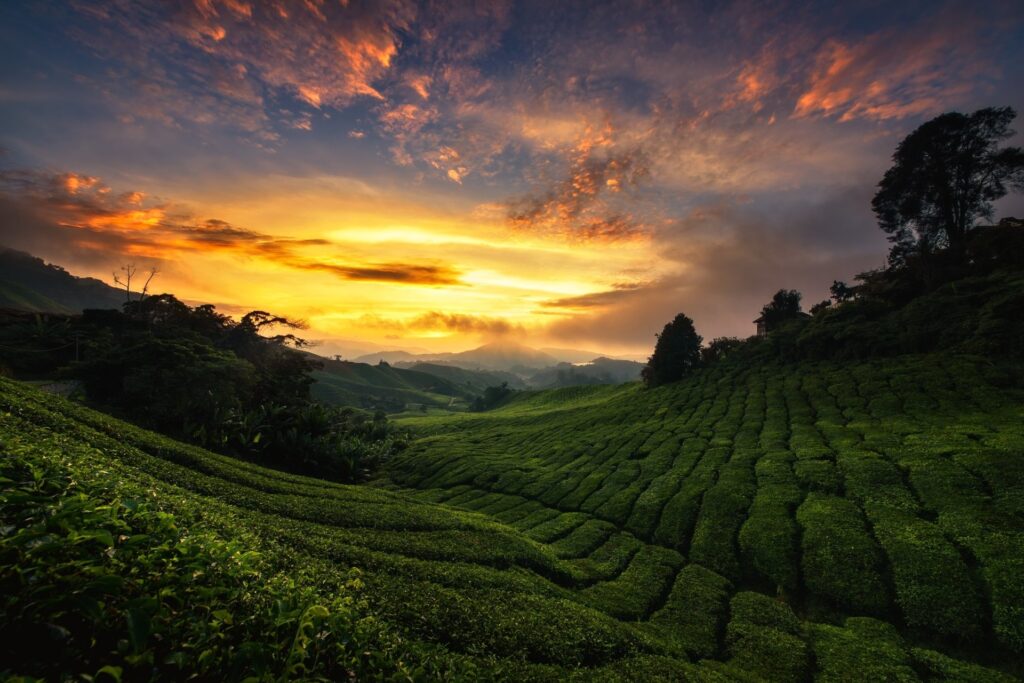
Tea plantations have become one of the most effective backdrops for Gemini AI photo edits because the landscape already carries strong visual depth. The wide green rows, rolling hills, morning mist, and angled sunlight can make a portrait feel both natural and dramatic at the same time.
That visual strength is what makes tea fields stand out for users who want more than a simple scenic background. With the right prompt, an ordinary photo can be shaped into a polished portrait that still preserves a realistic look.
Why tea plantations work so well
The structure of a tea garden gives AI a clear visual framework to build around. Neat plant patterns, layered contours, and atmospheric elements such as fog or dew can create a scene that feels rich without looking forced.
Creators are also using these landscapes to tell a story through mood, not just scenery. A subtle smile, a steady gaze, and the direction of light can change the whole tone of the image, making it feel more like a genuine travel portrait than a stylized edit.
Prompts for a relaxed and natural look
One of the safest approaches is to place the subject standing casually on a narrow path between terraced tea rows. The pose usually works best with the body slightly turned, a soft smile, and gentle morning light coming from one side of the face.
Another option is to show the subject walking slowly through the plantation. In this setup, one hand can lightly touch the tea leaves while the gaze points forward, and warm afternoon light helps keep the result soft and believable.
A third version uses a seated pose at the edge of the plantation path. The hands rest lightly on the knees, the expression stays warm and friendly, and backlighting from the morning sun gives the portrait a professional finish.
Prompts for travel mood and hillside scenery
Gemini AI can also be guided toward a wider mountain plantation scene. In that version, the subject sits calmly by the tea path with a strong gaze toward the camera, while light wind adds movement to the hair and the skin tone stays natural.
Another variation places the subject on a misty slope while holding a hat or bag from the original photo. The body faces the tea fields, the head turns slightly back toward the camera, and the expression remains calm with a sense of admiration for the landscape.
A more cinematic prompt positions the subject at the highest point of the tea hills. Warm sunset light, a natural sky gradient, and strong depth in the frame can make the final image feel dramatic without losing realism.
Visual details that shape the final result
Light is one of the most important parts of the prompt because it sets the mood immediately. Soft morning light, golden hour glow, and warm sunset tones can shift the image from neat and pleasant to emotional and cinematic.
Thin fog is also useful for creating a fresh mountain feel. Morning dew on the leaves, natural shadows, and sharp tea leaf textures help the scene look convincing and rooted in the landscape.
Facial expression and eye direction matter just as much as the background. Lively eyes, a natural smile, and a focused gaze prevent the portrait from looking stiff or artificial.
Why detailed prompts matter
Detailed prompts help the AI preserve the original face and body identity more accurately. That is why many prompts stress keeping facial shape, skin texture, and body proportions close to the starting photo.
This approach also gives more flexibility across different styles. From relaxed portraits to sunrise travel shots and cinematic hillside scenes, the tea plantation setting provides enough visual structure to support each version.
When the green landscape, lighting, and portrait instructions are combined carefully, Gemini AI can produce tea plantation photos that feel authentic and dramatic. The final image can look like a real photo shoot as long as the face, texture, and lighting stay consistent.