


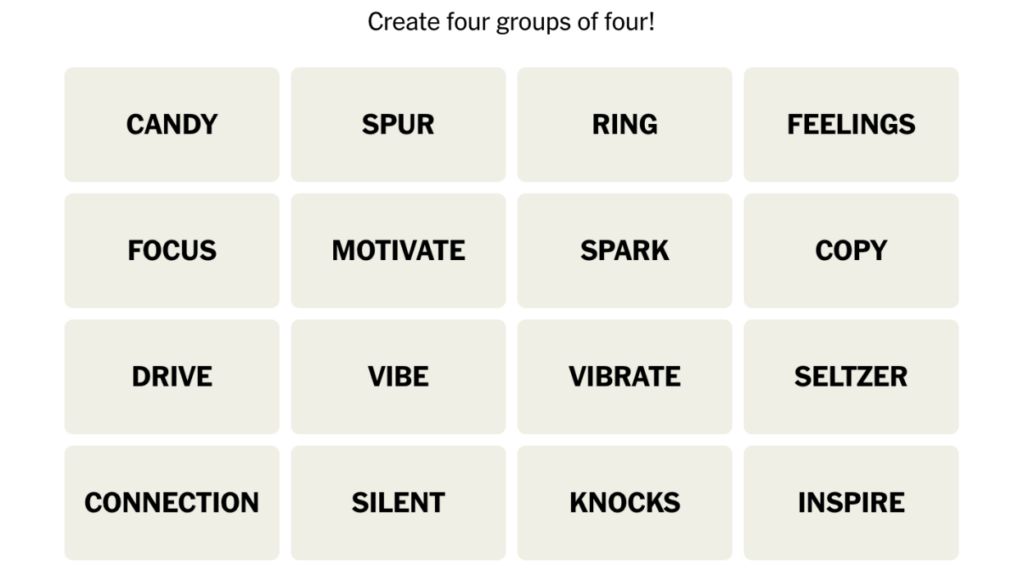
NYT Connections puzzle #1104 looked approachable at first glance, but the final grid proved deceptive in ways that reward careful pattern spotting. The strongest clue was not the theme alone, but the way several words could be pulled toward more than one category.
That is what made the Friday, June 19 edition feel harder than its early layout suggested. Players had only four mistakes to work with, so the puzzle demanded patience, elimination, and a closer look at word endings and shared structures.
Why this grid was so easy to misread
The game asks players to sort 16 words into four groups of four, with difficulty marked from Yellow to Purple. In this puzzle, the Yellow group was the most direct, while the last two categories depended on less obvious language tricks.
That balance created a grid where familiar terms sat beside words that seemed to fit elsewhere. As a result, the safest route was to identify the clearest set first and leave the more ambiguous terms for later rounds.
The category clues that mattered most
The Yellow category pointed to foods known for a strong savory flavor profile. The Green category moved into piano instruction, specifically songs or pieces a beginner might learn early on.
Blue was built around phrases that begin with magazine titles, while Purple focused on words ending with synonyms for “aggregate” or “total.” That final rule made suffixes more important than the surface meaning of the words themselves.
| Category | Theme | Words |
|---|---|---|
| Yellow | Umami-Rich Foods | Miso Paste, Parmesan, Soy Sauce, Vegemite |
| Green | Things a Beginner Might Learn on the Piano | Chopsticks, Fur Elise, Heart and Soul, The Entertainer |
| Blue | Starting With Magazines | Fortune Cookie, People Person, Spinderella, Time Machine |
| Purple | Ending in Synonyms for “Aggregate” | Coincidentally, Dim Sum, Teetotal, Viscount |
How the answer set breaks down
The Yellow group was Umami-Rich Foods, made up of Miso Paste, Parmesan, Soy Sauce, and Vegemite. That category was likely the easiest entry point for players who recognized the culinary connection quickly.
Green was Things a Beginner Might Learn on the Piano, which included Chopsticks, Fur Elise, Heart and Soul, and The Entertainer. Blue came next as Starting With Magazines, with Fortune Cookie, People Person, Spinderella, and Time Machine.
Purple was the most deceptive group, because its logic depended on endings rather than direct meanings. The final set was Coincidentally, Dim Sum, Teetotal, and Viscount.
What makes Connections keep growing
The appeal of NYT Connections comes from its mix of logic, language, and misdirection. Each day presents a fresh board, but the rules remain simple enough that the challenge comes from interpretation, not complexity.
That structure has helped the game sit alongside other daily favorites such as Wordle and The Mini. Its shareable format and short play session continue to make it a regular stop for puzzle fans.
Strategy that helps on difficult boards
Players usually benefit from finding the most obvious category first, then narrowing the remaining words through elimination. Repeated shuffling can also reveal connections that are difficult to see in the initial layout.
On a board like #1104, the best approach is to resist the first instinctive match and test how words behave at the beginning and end. That is especially important when the final category hides in word structure instead of theme alone.
Connections #1104 showed why the game remains so effective as a daily test of attention. The puzzle was not just about knowing words, but about recognizing how they can be grouped in ways that are far less direct than they first appear.