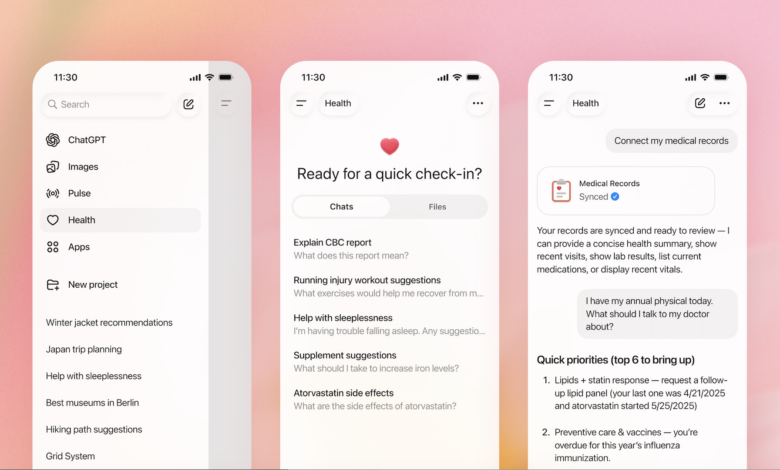
More than 230 million people worldwide are using ChatGPT every week to ask health-related questions. The scale of that habit shows how quickly AI has become a first-stop source for people who want fast answers about their bodies, symptoms, and daily wellbeing.
The appeal is easy to understand. Chatbots can be accessed quickly, respond in seconds, and explain medical topics in simpler language that feels less intimidating for many users.
Why people are turning to AI first
Questions sent to AI cover a wide range of concerns, from mild symptoms and medicine information to mental health and healthier routines. For many users, the platform now serves as an entry point before they decide whether to seek more formal medical help.
That shift reflects a broader change in how people search for health information. Where search engines and forums once dominated the first step, AI tools are increasingly being used because they feel immediate and personal.
The growing trust in chatbots is also tied to convenience. Instead of waiting for a consultation, users can ask follow-up questions right away and get explanations that are easy to digest on a phone screen.
The limits remain clear
Despite the rapid adoption, health experts continue to stress that AI has important boundaries. ChatGPT cannot perform a physical examination, which means it cannot observe many of the signs that doctors rely on in real clinical assessments.
It also cannot see a patient directly or fully understand the context behind a complaint. Medical history, related conditions, current medications, and other personal factors often shape decisions that an AI system cannot judge with certainty from a short prompt.
For that reason, AI responses should not be treated as a diagnosis. They can provide direction and help users frame a question, but they do not replace professional evaluation.
Doctors and other health workers still hold the final role
In practice, the most important medical decisions still depend on trained professionals. Doctors, nurses, and other health workers can assess a patient in a way that AI cannot, especially when symptoms require a deeper examination.
That is why direct consultation remains essential when a condition does not improve or when a clearer medical answer is needed. A professional can connect symptoms, history, and physical findings into one complete judgment.
The safest way to use AI is as a learning tool and an early information source. It can help people understand medical terms, consider possible next steps, and prepare better questions before meeting a clinician.
What this means for everyday users
The message is not that AI should be avoided, but that it should be used carefully. It is useful for orientation, especially when someone is trying to make sense of new symptoms or wants a plain-language explanation.
However, once a concern becomes persistent, uncertain, or serious, a health professional should take over. That balance allows people to benefit from fast digital information without overlooking safety.
With weekly use for health questions now reaching more than 230 million people, ChatGPT has clearly become part of modern medical information habits. The challenge ahead is not simply making AI more accessible, but making sure users understand where its help ends and medical care must begin.