


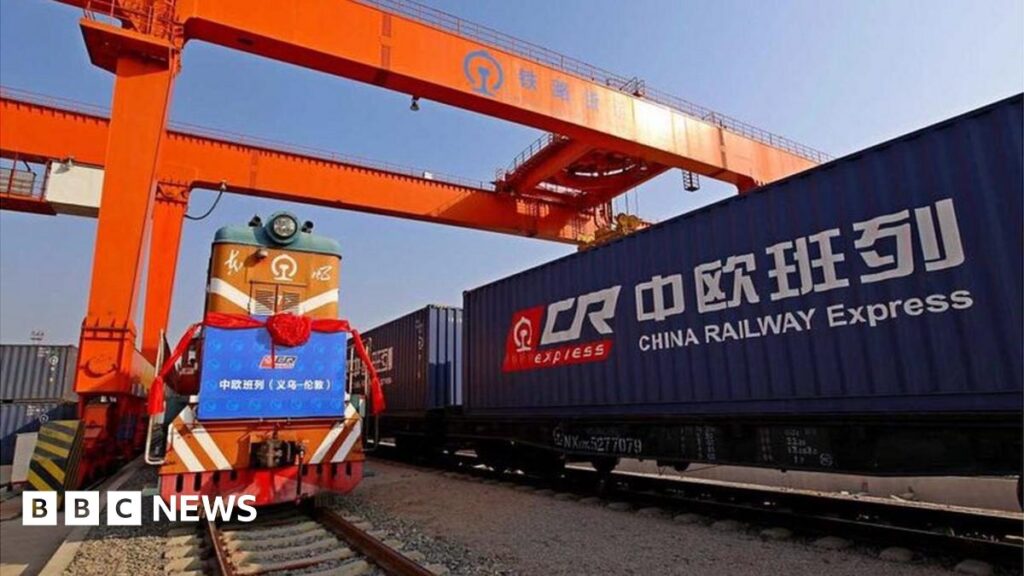
Chongqing is expanding its China-Europe freight rail capacity at a time when China’s vehicle exports are climbing fast. The move is centered on a new multi-purpose car container that was sent out from the city on Monday, carrying 182 vehicles from China Changan Automobile Group Co., Ltd.
The new format is designed to make rail transport for passenger cars more efficient, and that efficiency could translate into lower logistics costs per vehicle. For exporters, that matters because shipping expenses are a major factor in keeping overseas sales competitive.
More Cars in the Same Space
The main upgrade is a 40-foot container with a 35-ton capacity, built specifically for domestic passenger cars. According to Guan Yu, marketing department manager at China Railway Container Transport Corp., Ltd’s Chengdu branch, the container measures about 12.2 meters and was developed to meet the needs of China’s growing auto export market.
The difference is in how many cars one unit can carry. A traditional multi-purpose container can hold up to three sedans or two SUVs, while the new container can transport as many as four sedans or four SUVs.
That increase improves the use of cargo space and reduces the cost per car. It also gives rail operators along the China-Europe corridor a way to move more vehicles without expanding the number of containers used.
Built for Rail, Road, and Sea
The new container is also compatible with rail, road, and sea transport. Huang Man, deputy general manager of Yuxinou (Chongqing) Logistics Co., Ltd., said that this flexibility gives logistics companies a more adaptable equipment option for building an efficient multimodal transport network.
That design matters because vehicle exports often pass through more than one mode of transport. A more standardized container can help reduce operational friction when cars move from factories to terminals, then to rail lines, and on to other transport links.
The growing demand for exported domestic vehicles has pushed logistics providers to focus not only on capacity, but also on smoother transfer systems. In that setting, the new container is aimed at making the whole process more practical for large-scale shipments.
Chongqing’s Role Keeps Growing
Chongqing has become an important logistics hub for vehicle exports through the China-Europe freight rail network. As one of China’s major automotive manufacturing centers, the city is using the corridor to support outbound shipments from local factories.
The train carrying 182 Changan vehicles is a clear example of how manufacturing and logistics are becoming more closely linked there. As producers increase deliveries to overseas markets, rail capacity and container design are becoming more important to export performance.
The new container also shows that Chongqing is upgrading its logistics tools, not just increasing volume. For automakers and freight operators, that could mean a more efficient path from western China to international trade routes.