


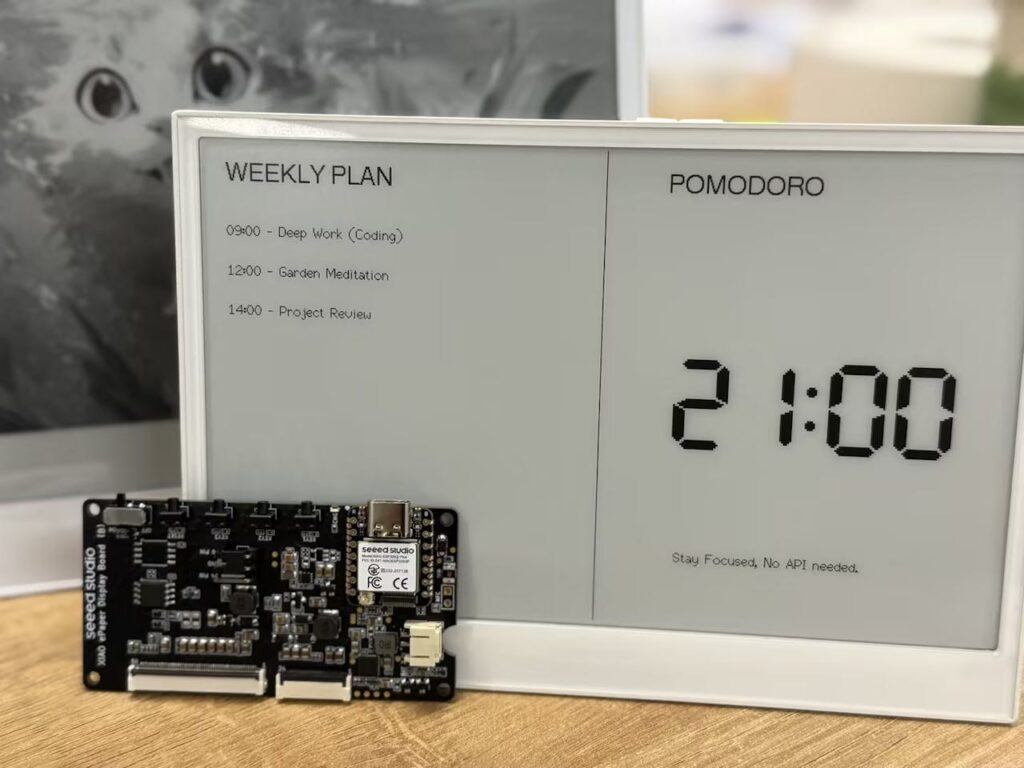
Tomato32 stands out because it takes a familiar productivity idea and turns it into a compact hardware project for the desk. Built around ESP32, the device is designed as a low-profile Pomodoro timer with a clean look and a level of customization that many simple timers do not offer.
Rather than relying on a phone app or a basic countdown gadget, Tomato32 gives users a dedicated tool for focus sessions and breaks. That separation can matter for people who want to keep work management away from the distractions that come with a phone screen.
What makes Tomato32 different
The project includes a touchscreen interface, which makes interaction more direct than the button-heavy layout found on many similar builds. It also ships with three built-in timer profiles that can be adjusted to fit different routines.
Users can change the focus duration, short break length, long break length, and the number of focus sessions before a long break begins. That flexibility makes the device suitable not only for standard Pomodoro use, but also for modified workflows that need different timing patterns.
Tomato32 also supports custom backgrounds and other settings that let the device adapt to the user’s preferences. The result is a timer that is practical on the desk while still leaving room for personal styling.
How the project is being shared
The project came from the ESP32 community on Reddit, where GitHub user einoko shared the schematics for the build. Code, schematics, and setup guidance are available on GitHub, making the project accessible to makers who want to assemble it themselves.
That open approach is part of the appeal. The core function is easy to understand, but the build still offers enough depth to interest hobbyists who want to experiment with ESP32 in a project they can use every day.
Because the timer is meant to sit on a work surface, the physical design matters as much as the software side. Its thin profile and clean shape help it blend into a modern workspace without drawing too much attention.
Why a dedicated Pomodoro timer still matters
Pomodoro timers remain popular because the method is simple: work in focused blocks, then take short breaks. The best-known format uses 25 minutes of work followed by 5 minutes of rest, a structure that has made the technique easy to adopt for many people.
The name Pomodoro itself comes from Francesco Cirillo, who used a tomato-shaped kitchen timer while developing the method. Tomato32 fits neatly into that history, while giving the idea a more modern and customizable hardware form.
For users who prefer a physical device over a software timer, Tomato32 offers a more focused experience. It keeps the time management task separate from the rest of the digital clutter on a phone or computer.
The project is also attractive because it is easy to modify further. Makers can use the shared materials as a starting point for changing the display, adjusting the timer behavior, or shaping the device around their own working habits.
For anyone interested in building a Pomodoro timer with ESP32, Tomato32 is a clear example of how a simple productivity tool can also become a polished maker project. Its open documentation, customizable timing, and desk-friendly design give it a practical edge that should appeal to both productivity-minded users and electronics hobbyists.