


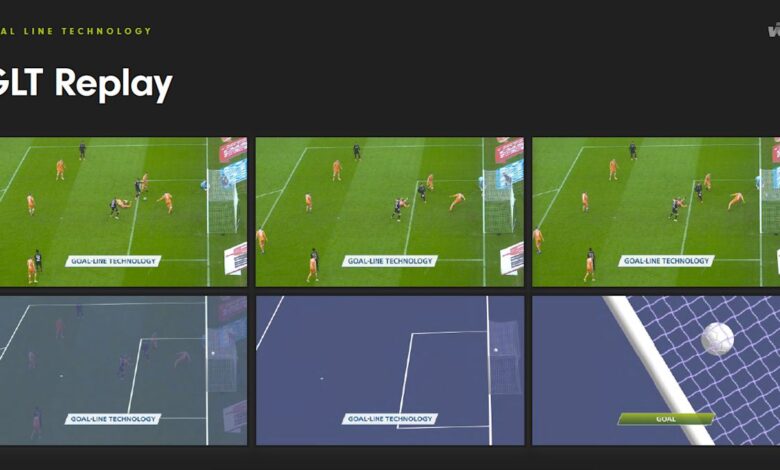
At the center of the 2026 FIFA World Cup’s officiating upgrade is not only the video room, but the ball itself. Adidas Trionda is designed with three technologies that can make refereeing faster, sharper, and less prone to error.
The setup connects directly to VAR and Semi-Automated Offside Technology, creating a system in which the ball’s movement is tracked in real time and turned into data within seconds. That shift matters most in the kinds of incidents that usually take the longest to settle.
500Hz sensor tracking inside the ball
Trionda contains an inertial measurement unit, or IMU, placed in the center of the ball. The sensor can capture and send motion data up to 500 times per second.
That frequency allows the system to record fine details with millisecond-level precision. It tracks speed, spin, flight trajectory, and even the smallest contact on the pitch.
Because the sensor works at that pace, the ball needs a special charging process before matches so the power supply remains stable throughout play.
Direct integration with VAR
The sensor is also linked directly to the Video Assistant Referee system. This connection is useful when officials need to review unclear handball incidents or determine which player last touched the ball before a goal.
Any physical contact on the ball surface triggers a distinct vibration signal. That signal is sent straight to the match computer room and converted into a data graph that can serve as technical evidence.
By reducing reliance on replay alone, the integration helps shorten review time and lowers the chance of human error in key decisions.
Support for Semi-Automated Offside Technology
Trionda also supports Semi-Automated Offside Technology, or SAOT. In offside reviews, the hardest part is often identifying the exact moment a pass is released, and the 500Hz sensor helps lock in the millisecond when a player first strikes the ball.
Once that kick time is recorded digitally, computer systems combine it with 3D positional data from players. The visual tracking data is collected by cameras installed around the stadium.
Artificial intelligence then processes both data sets at the same time. Within seconds, the system can draw a virtual offside line to assist the referee’s decision.
Those three functions turn Trionda into more than a standard match ball. Adidas has positioned the official 2026 World Cup ball as part of the modern officiating infrastructure rather than just a piece of equipment for play.
With high-frequency motion sensing, VAR integration, and SAOT support, the ball is built to make critical moments easier to read. At a tournament level as large as the World Cup, that kind of precision can shape both the speed and the quality of the match review process.