


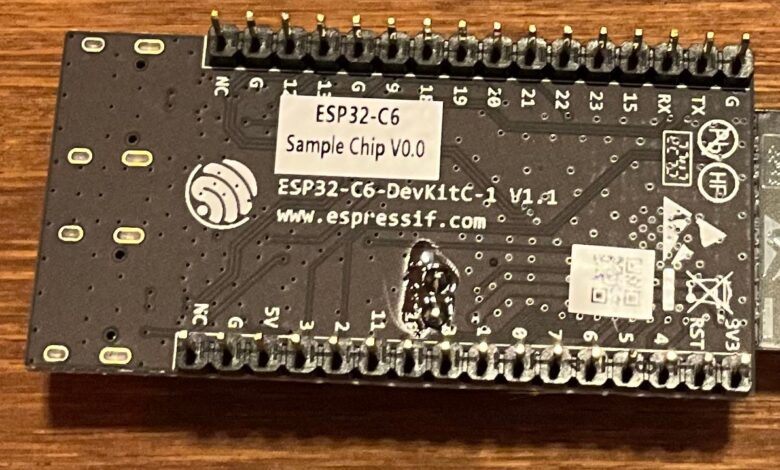
An open-source project called OpenC6 BIOS is giving the ESP32-C6 a role that feels unusual for a $2 chip. Instead of behaving like a typical microcontroller firmware setup, it introduces a PC and server-like platform model.
The project has drawn attention because it does more than recreate a retro BIOS screen. OpenC6 is built to prepare hardware, manage systems out of band, and launch small modules directly on the chip.
A BIOS idea, reworked for embedded hardware
On classic PCs, BIOS handles hardware preparation before other software takes over. OpenC6 borrows that idea for the ESP32-C6, although it is not a direct copy of desktop BIOS behavior.
The firmware initializes the hardware first, then exposes a standardized System Call Interface, or ABI, so payloads can run in a consistent way. That design is meant to make the chip feel more like a small host platform than a single-purpose device.
Rompass, the developer behind the project, also describes out-of-band management through an independent LP-Core coprocessor. That detail matters because it points to control at a lower level than a simple boot sequence.
Payloads replace the monolithic firmware model
OpenC6 splits system duties into a base platform and separate payloads. This is a different approach from the large, all-in-one firmware images commonly used in embedded development.
That structure allows the ESP32-C6 to load, swap, download, and execute small bare-metal payloads quickly. It also supports running modules from RAM or through Execute-In-Place in flash.
The result is a more modular way to think about firmware. Instead of locking every function into one static image, the chip can act as a platform that accepts small pieces of code as needed.
Why the project stands out
The visual nostalgia is obvious, but the real appeal is technical. OpenC6 makes a low-cost chip feel closer to a compact computing platform with flexible module handling.
For embedded developers, that opens room for experimentation with fast bare-metal code and lower overhead. For PC hardware fans, it offers a familiar BIOS-style entry point without pretending to be a desktop machine.
Hackaday highlighted the project after Rompass published it on GitHub, where the code and setup instructions are available for anyone who wants to test it. The project is also presented as a “PC/Server-like” architecture, which helps explain why it has attracted so much curiosity.
Still unfinished, with more work ahead
OpenC6 is not complete yet, and the developer has been open about that. One major missing piece is a fully open-source file system, which shows that the platform is still expanding beyond boot and payload execution.
Rompass has also set up a bounty board for extra features. One of the priorities is execution security, so corrupted or broken processes do not run unchecked.
That mix of ambition and unfinished pieces makes the project especially interesting. It already shows a clear technical direction, but it still needs more development before it can be considered a full platform.
For now, OpenC6 serves as a striking example of how far a cheap ESP32-C6 can be pushed when firmware is designed less like a fixed image and more like a modular system.