
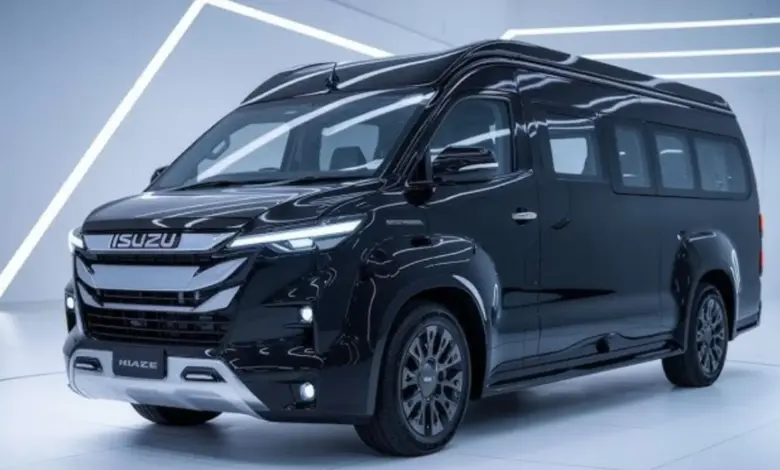
The Isuzu 9-Seater 2026 is being positioned as a passenger commercial vehicle for businesses that need efficiency as much as capacity. In a transport market shaped by rising fuel costs and tight competition, the model is aimed at operators who want lower running expenses without giving up passenger volume.
Its main appeal lies in a combination that matters directly to travel and shuttle businesses: room for up to nine passengers, diesel efficiency, and the flexibility to serve more than one type of operation. For fleet owners, that mix can influence margins, vehicle utilization, and long-term business resilience.
Designed to support daily operations
At the core of the Isuzu 9-Seater 2026 is a diesel turbo engine with common rail technology. That setup is known for balancing fuel efficiency with enough power for passenger-carrying duties, especially in daily commercial use.
The engine’s strong low-end torque also gives it practical value in traffic-heavy conditions. When the vehicle is fully loaded or operating in stop-and-go routes, that characteristic helps it stay usable for shuttle and travel services.
Fuel consumption is one of the biggest business considerations in this segment. When diesel usage stays controlled, operators gain more room for profit while keeping operating costs predictable.
Diesel engines are also widely valued for durability under intensive use. For businesses that keep vehicles on the road for long periods, that reliability can be as important as purchase price.
| Key Point | Business Relevance |
|---|---|
| Up to 9 passengers | Higher earning potential per trip |
| Diesel turbo with common rail | Efficiency and usable power for daily transport |
| Strong low-end torque | Better performance in traffic and with full loads |
| Flexible use | Can support multiple business models |
Cabin comfort is built for passenger service
Isuzu has also placed attention on the cabin, which is designed to feel roomy enough for medium and long-distance trips. Adequate legroom and headroom matter in passenger transport, where comfort can shape repeat business.
For tropical climates such as Indonesia’s, the vehicle comes with double blower air conditioning. The system helps distribute cooling to the rear rows more evenly, a practical detail for passenger satisfaction.
The interior materials are described as durable and easy to clean. For operators, that can reduce downtime for cleaning and minor upkeep while helping the vehicle stay presentable in regular use.
Comfort is also part of the commercial equation in travel, airport shuttle, and pickup services. In those markets, passengers often compare service quality by the ride experience as much as by the route itself.
Not limited to one type of business
The flexibility of the seat configuration is another reason the Isuzu 9-Seater 2026 stands out. It is not only suited to intercity travel, but also to airport shuttles, employee transport, and school operations.
That adaptability becomes valuable when demand shifts. If passenger transport volumes slow down, the unit can still be redirected to light logistics, catering, or project-related needs instead of sitting idle for long periods.
This kind of multi-purpose use allows one vehicle to support more than one income stream. For business owners, that means better fleet utilization and a more efficient return on investment.
In a transport industry that changes quickly, vehicles built for a single purpose can be harder to justify. A unit that can move between functions more easily is often better suited to businesses facing fluctuating demand.
The Isuzu 9-Seater 2026 is therefore more than a standard people carrier. With an efficient diesel engine, nine-seat capacity, a comfortable cabin, and broad operational flexibility, it is positioned as a productive asset for operators looking to keep costs in check while expanding their service reach.
That combination explains why the model is attracting attention in the travel and shuttle segment. It offers a practical formula for businesses that need one vehicle to do more than one job while still supporting consistent revenue generation.