
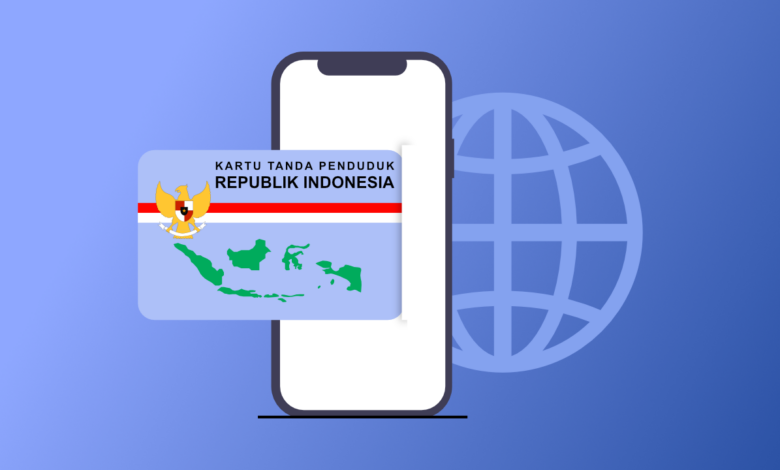
The push toward digital public services has made IKD, or Identitas Kependudukan Digital, increasingly relevant for residents who want easier access to population documents on a phone. But one important detail is often overlooked: activation of the digital ID cannot be completed entirely from home.
That final in-person verification is not a minor technicality. It is the part that helps prevent misuse of identity data and makes the activation process valid in the eyes of the authorities.
What users must prepare first
Anyone who wants to register for IKD needs to have an electronic ID card, or at least have already completed population data recording. A compatible smartphone is also required, along with an active email address and a phone number that is still in use.
These requirements matter because registration starts in the official application. The email and phone number are used to support the account activation process and the identity verification flow.
| Requirement | Purpose |
|---|---|
| Electronic ID card or recorded population data | Confirms basic eligibility for registration |
| Android or iPhone | Used to install and run the official app |
| Active email address | Receives the activation code |
| Active phone number | Supports registration and account verification |
How the activation flow actually works
The process begins by downloading the official Identitas Kependudukan Digital app from the app store. After installation, users fill in their personal details exactly as listed on their identity records.
The app then asks for a facial verification selfie. This step is used as an authentication layer so that only the legitimate owner of the data can proceed.
However, the registration still does not end there. Users must visit a Disdukcapil office or another designated service location to scan a QR code as part of the account activation stage.
After the QR code has been scanned successfully, the activation code is sent to the user’s email. The process can then be completed directly inside the application.
Why the process is not fully online
The direct visit is designed as a data protection measure. It allows officers to confirm that the person activating the account is truly the owner of the identity information being used.
Matching identity records with facial verification also reduces the risk of identity theft. In practice, this layered system is meant to make misuse of personal data much harder.
There is also a practical benefit for users. If the app or device has a problem, officers can provide immediate assistance without forcing the user to repeat the process from the beginning.
Scams to watch out for
Rising public interest in IKD has created room for scams that impersonate Dukcapil services. Residents should be especially cautious when receiving messages or calls that request sensitive information.
OTP codes and PINs should never be shared with anyone. Residents should also reject any request to install an application file sent through a messaging app.
Only the official app and direct service at Disdukcapil should be used for activation. Any request for money or personal data from someone claiming to be an officer should be treated as suspicious.
What IKD means going forward
IKD is expected to expand as public services continue to digitize. Over time, the digital identity is likely to serve not only as a replacement for a physical ID card, but also as a tool for faster and safer identity checks.
Even so, the physical KTP-el still remains useful for certain services. For that reason, residents are still advised to keep their electronic ID card सुरक्षित and in good condition even after activating IKD.