


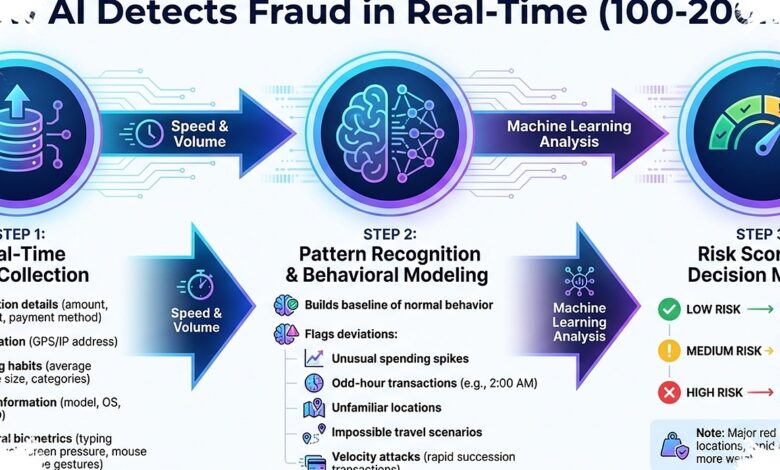
India’s UPI network is heading into a new phase, with artificial intelligence expected to play a central role in both expansion and protection. The focus is no longer only on higher transaction volumes, but also on making the system easier for new users to join.
National Payments Corporation of India CEO Dilip Asbe said AI will be used more effectively in the next stage of UPI, including to reach new users. That direction matters because UPI already processes more than 750 million transactions a day and is aiming to cross 1 billion daily transactions.
Making onboarding simpler
NPCI wants the next wave of growth to be less about scale alone and more about access. One of the main priorities is simplifying onboarding, especially through voice-based tools and multilingual support.
Asbe said voice assistants could help users join the UPI platform more easily. He also stressed the importance of AI-powered voice and multilingual solutions to reduce friction for first-time users.
| UPI AI Focus Area | Planned Use | Reported Status |
|---|---|---|
| User onboarding | Voice assistants and multilingual support | Being developed for easier access |
| Fraud prevention | Detecting fraud and mule accounts | Identified as a key AI use case |
| Credit access | Using digital footprints for lending decisions | Seen as a future possibility |
Some of that direction has already been tested. NPCI launched an interactive voice assistant system in 2023, although Asbe admitted adoption has not yet fully taken off.
UPI itself first launched in India in April 2016 and has since become one of the country’s most important digital payment infrastructures. Its scale now makes ease of use a bigger strategic issue than ever before.
AI is also being eyed for lending and risk control
NPCI sees AI as useful beyond payment initiation, with possible applications in financial services built on user and merchant digital footprints. Asbe said automated AI systems could eventually help provide credit to users and merchants with digital footprints.
That would push UPI further beyond instant payments and into a broader financial access layer. If AI is used to assess eligibility based on digital activity, the payment ecosystem could become a gateway to lending services as well.
At the same time, NPCI is treating fraud prevention as a core requirement. Asbe said AI needs to be used effectively to protect users, detect fraud, and identify mule accounts.
Banking models and tighter oversight
Asbe also said banks, fintech companies, and other players in India’s financial sector have a strong opportunity to build small language models that are sharp, specific, and as deterministic as possible. He said that view is supported by the richness of data available across the country’s financial ecosystem.
The comments come as the Reserve Bank of India has issued a draft guideline requiring a kill switch-like mechanism for all AI tools used by banks and financial institutions. The timing highlights how AI adoption in finance is advancing alongside stronger controls.
NPCI is already using digital tools in other parts of its operations. Asbe said NPCI’s dispute resolution model, FIMI, launched last year, now serves more than 1 million users for mandate cancellations.
Competition inside the UPI app market
While the infrastructure continues to scale, the app layer remains highly concentrated. PhonePe and Google Pay together hold more than 80 percent of the market share.
NPCI plans to enforce a 30 percent market share cap for apps by the end of this year. That policy could reshape competition in the UPI ecosystem, which has long been dominated by two major players.
NPCI’s own BHIM UPI app currently has around 1 percent market share. That gap shows that growth in the core UPI network has not automatically translated into a balanced competitive field at the app level.
For that reason, AI-driven onboarding, voice support, and multilingual services may become important tools for widening the user base. If the strategy works, the next phase of UPI will be defined not only by more transactions, but also by making digital payments easier to enter, safer to use, and broader in reach.