Jakarta’s recurring air pollution problem is increasingly being linked to more than traffic and short-term emergency measures. A growing number of observers say the city will not see lasting relief unless the energy system behind the urban economy also changes.
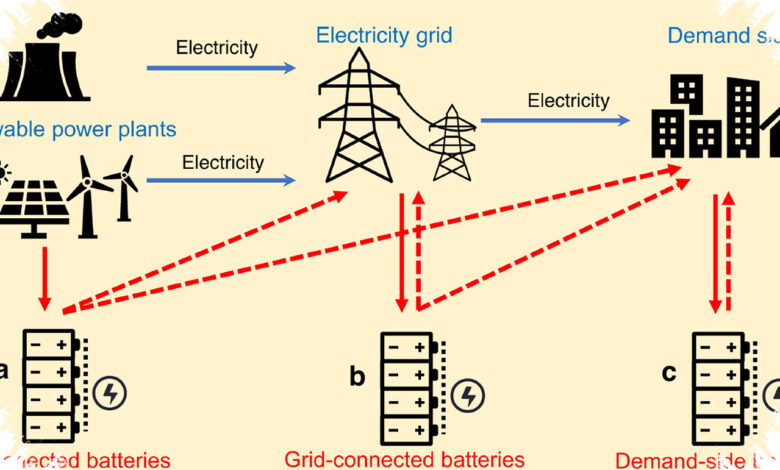
That is why PLTS-BESS, or solar power combined with battery energy storage, is being put forward as a practical part of the answer. The system is seen as capable of easing daytime electricity pressure in dense urban areas while gradually reducing regional PM2.5 emissions.
Why temporary measures are not enough
Authorities have already relied on masks, work from home policies, cloud seeding, vehicle emission testing, and traffic restrictions to respond to worsening air quality. These steps may soften the immediate impact, but they do not address the structural source of pollution.
Syam Basrijal, Director of PT Gema Aset Solusindo, said the repeated nature of the problem shows that Jakarta’s pollution is not only a transportation issue. In his view, the deeper challenge lies in the energy and industrial systems that support national economic activity.
The power grid behind the city
Jakarta sits inside the Java-Bali electricity system, which supplies power for industry, government, transport, ports, and national data centers. In that structure, coal-fired power plants remain the dominant source of emissions that contribute to polluted air.
Syam said coal-fired plants still account for about 70 percent of the Java-Bali electricity system. That level of dependence on fossil fuel combustion, he argued, helps explain why air pollution in Jakarta keeps returning year after year.
| Key Energy Issue | Details |
|---|---|
| Dominant power source | Coal-fired plants in the Java-Bali grid |
| Reported share | About 70 percent of the electricity system |
| Proposed solution | PLTS-BESS, or solar power with battery storage |
| Main expected impact | Lower daytime load and gradual PM2.5 reduction |
Health, quality of life, and economic growth
The pollution problem is now being framed as a public health issue, not just an environmental one. Syam warned that exposure to fine particles has been linked in international studies to heart disease, stroke, chronic lung disorders, and premature death.
He said the issue has also become a matter of human resilience and the future of urban generations. In that sense, the energy transition is no longer just a technical debate inside the electricity sector.
Investment, industry, and the next phase
Indonesia is also entering a major investment window in power infrastructure. Syam pointed to PLN’s 2025–2034 Electricity Supply Business Plan, which projects sector investment needs of around US$183 billion to US$188 billion.
He said the shift toward renewable energy and storage systems should be seen as an economic opportunity as well as an environmental necessity. PLTS-BESS could help create new jobs, strengthen the domestic battery industry, and accelerate downstream development of strategic minerals such as nickel.
According to Syam, the technology could also support investor interest tied to Environmental, Social, and Governance standards. That makes clean energy investment relevant not only for emissions targets, but also for long-term industrial and financing strategy.
Regulation will decide the pace
Syam stressed that technology readiness alone will not determine success. He said faster permitting, clearer regulation, easier grid interconnection, and long-term investment certainty are needed to draw more capital into clean energy projects.
If Jakarta wants to become a healthy, competitive, and livable global city, he argued, support for PLTS-BESS should move from discussion to national priority. For him, the real measure of development is not only economic growth and infrastructure expansion, but also the ability to protect public health through cleaner air.
That position places energy policy at the center of the pollution debate, with the city’s air quality tied directly to how Indonesia powers its economy.