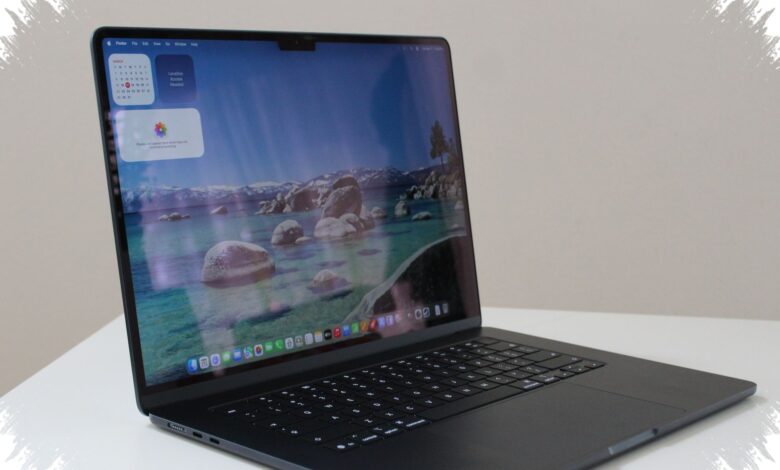
The choice between MacBook Air M5 and MacBook Pro M5 has become more consequential as recent price increases make every upgrade harder to justify. For many buyers, the real question is no longer which model is newer, but which one actually fits daily use without pushing the budget too far.
MacBook Air M5 starts at $1,300, while MacBook Pro M5 begins at $2,000. That gap is large enough to make the Air the safer option for many users, yet the Pro still brings advantages that matter for professionals who rely on their laptop all day.
Price is only part of the decision
The Air remains the more accessible choice, especially for students, frequent travelers, and anyone who wants a lighter machine. At 2.7 pounds and without a fan, it is easier to carry and better suited to mobile work.
The Pro weighs 3.5 pounds and uses active cooling, giving it a sturdier feel and better support for sustained workloads. That design makes it more appropriate for desk-based use and more demanding professional environments.
Performance depends on how the laptop is used
Both models use the M5 chip, but their real-world behavior is not identical. MacBook Pro M5 has the advantage when heavy tasks continue for long periods because the cooling system helps maintain peak performance.
MacBook Air M5 is well suited for everyday productivity and lighter professional work. Browsing, document editing, light content creation, and standard multitasking are all within its comfort zone.
The difference becomes clearer under sustained pressure. During prolonged heavy use, the Air can experience thermal throttling, while the Pro stays more stable for video editing, 3D modeling, and software development.
The display gap is hard to ignore
MacBook Pro M5 features a mini-LED display with up to 1,000 nits of brightness, deeper contrast, HDR support, and a 120Hz ProMotion refresh rate. For visual work, that combination offers a smoother and more accurate experience.
MacBook Air M5 uses an LCD panel with 500 nits of brightness and a 60Hz refresh rate. It remains adequate for streaming, browsing, and document work, but it is not aimed at the same professional visual demands.
For video editors, creative professionals, and users who care deeply about display quality, the Pro has a clear edge. For casual users, the Air still delivers a solid screen for everyday consumption.
| Model | Starting Price | Weight | Cooling |
|---|---|---|---|
| MacBook Air M5 | $1,300 | 2.7 pounds | Fanless |
| MacBook Pro M5 | $2,000 | 3.5 pounds | Active cooling |
Storage, ports, and battery help shape the value
MacBook Air M5 starts with 512GB of storage and can be configured up to 4TB. That flexibility narrows the distance to the Pro for buyers who want a larger-capacity Air setup.
MacBook Pro M5 starts at 1TB and offers faster read and write speeds. For workflows built around large files or complex projects, that difference can matter as much as the raw capacity number.
Connectivity also separates the two models. The Pro includes three Thunderbolt 4 ports, HDMI, and an SD card slot, making it more practical for users who connect multiple accessories or transfer files from memory cards.
The Air offers two Thunderbolt 4 ports, along with Wi‑Fi 7 and Bluetooth 6. That is enough for general use, but professionals will likely find the Pro’s port selection more versatile.
Battery life is strong on both machines for full-day use. The Pro has a slight advantage under heavier workloads, while the Air gains a portability bonus from its smaller and easier-to-carry power adapter.
Audio and microphones also tilt in the Pro’s favor. Its speaker and microphone system is more advanced, which makes it better for playback, video calls, and recording, while the Air remains a solid option for meetings and entertainment.
In the end, MacBook Air M5 makes the most sense for buyers who value portability, lower entry cost, and enough performance for daily work. MacBook Pro M5 is the stronger fit for professionals who need a better display, steadier heavy-load performance, more ports, and a machine built for more serious production.