A weak motorcycle battery rarely fails without warning. In most cases, the first signs appear in everyday use, long before the engine refuses to start.
That matters because the battery powers the starter, lights, horn, instrument panel, and, on modern models, the injection system. When its performance drops, the electrical supply becomes less stable and minor symptoms can quickly turn into a breakdown.
The most common warning signs
A heavy electric starter is one of the clearest early clues. When the starter button is pressed, the motor cranks more slowly than usual and may need several attempts before the engine comes to life.
Dimming lights are another strong signal. The headlamp, turn signals, and rear light can all look weaker when the engine is not running because the battery voltage is no longer optimal.
A fading horn often appears at the same time. Its sound becomes quiet, less sharp, or intermittent when the button is pressed.
What modern motorcycles may show
On fuel-injected motorcycles, the instrument panel can provide extra clues. The digital display may blink without a clear reason, the clock may reset to its default setting, and some indicators may behave abnormally.
A motorcycle that is difficult to start in the morning also deserves attention. After the bike is ridden for a few minutes, it may start more easily again because the battery can still support electrical demand for a short time.
When a heavy starter, dim lights, and a weak horn appear together, inspection should not be delayed. That combination usually suggests the battery is no longer storing and delivering power properly.
Why batteries weaken over time
Most motorcycle batteries last around two to three years on average. Even so, usage patterns and the quality of the charging system can make that decline happen sooner or later.
Corrosion at the terminals can also interfere with current flow. White or greenish residue around the positive or negative posts blocks power distribution across the vehicle’s electrical system.
Motorcycles that are rarely used can lose voltage gradually as well. This often happens to vehicles that are ridden only occasionally, making the charging process unstable.
Excessive accessories can accelerate battery wear too. Additional lamps and electronic devices demand more electrical supply, so the battery works harder if the system capacity is not enough.
How to check the battery more accurately
The charging system plays a major role in battery health. Components such as the stator, regulator-rectifier, and wiring should be checked regularly because faults there can prevent the battery from receiving a full charge.
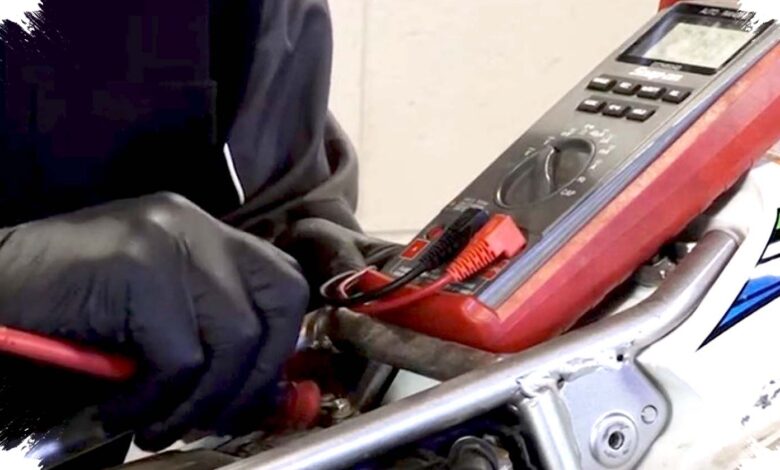
Replacing the battery will not solve the problem if the original fault has not been repaired. For that reason, a multimeter or battery tester is more useful for identifying the real condition.
A normal battery voltage is around 12 volts when the engine is off. When the engine is running, the voltage rises as charging takes place and the reading can show whether the battery is still fit for use.
Simple maintenance that helps extend battery life
Battery care is not complicated. The terminals should be kept clean, the motorcycle should be used regularly, and accessories that exceed the electrical system’s capacity should be avoided.
For a wet battery, the water level should also be checked periodically to keep it within the manufacturer’s recommended range. Routine servicing makes it easier to monitor battery condition and prevent deeper problems.
When early signs such as a heavy starter, dim lights, or a weak horn begin to appear, inspection should happen immediately. Acting quickly is safer than waiting until the motorcycle stops completely and has to be pushed.