


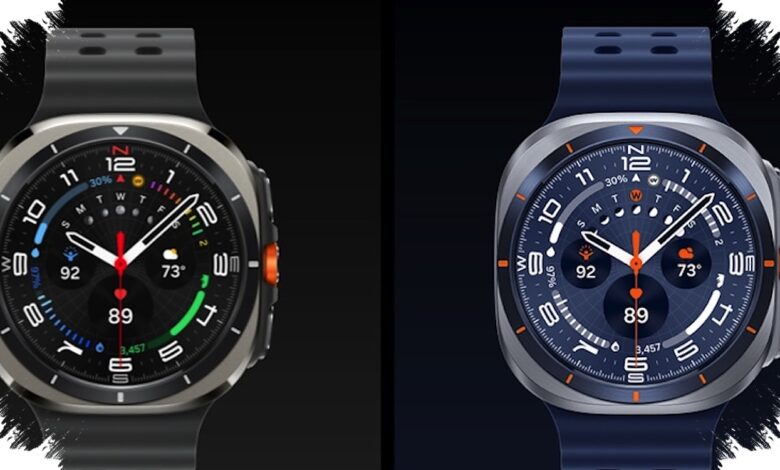
Samsung’s next premium smartwatch is shaping up to be more than a routine refresh. The Galaxy Watch Ultra 2 is expected to arrive at Galaxy Unpacked on 22 July with a stronger focus on endurance, speed, and health monitoring.
That direction matters because the device is being positioned for users who want a serious upgrade rather than a small yearly update. A larger battery, a new chipset, and additional health metrics are the main changes drawing attention.
Bigger battery, faster platform
The most noticeable hardware change is the battery, which is said to grow to 800 mAh. That would mark a roughly 35% increase over the 590 mAh cell used in the previous model.
Samsung is also reported to pair that battery with the Qualcomm Snapdragon Wear Elite chipset. The combination is intended to improve runtime and efficiency, especially during GPS use and all-day health tracking.
Memory and storage also appear generous for a smartwatch. The Galaxy Watch Ultra 2 is said to include 2 GB of RAM and 64 GB of internal storage, giving it more room for apps, music, and personal data.
Connectivity is also being updated. The watch is expected to support Wi-Fi 5, Bluetooth 5.4, and dual-band GPS with compatibility for Baidu, Galileo, GLONASS, and L1/L5 positioning.
Built for visibility and durability
On the outside, Samsung is said to use Armor Aluminum 2 to keep the watch light while still giving it a rugged character. That fits the Ultra line’s positioning for outdoor activity and demanding daily use.
The display is expected to be a 1.5-inch round Super AMOLED panel with a peak brightness of 3,000 nits. Such brightness should help readability in direct sunlight as well as in dim environments.
| Key Spec | Galaxy Watch Ultra 2 | Reported Detail |
|---|---|---|
| Battery | 800 mAh | About 35% larger than the previous model |
| Chipset | Snapdragon Wear Elite | Designed for better performance and efficiency |
| Display | 1.5-inch Super AMOLED | Peak brightness of 3,000 nits |
| Memory / Storage | 2 GB / 64 GB | More space for apps, music, and data |
The strap is also said to be redesigned. Samsung reportedly plans a new 20 mm silicone band with a dual-buckle tongue mechanism for a more secure and comfortable fit during active use.
Color options are expected to be titanium gray and titanium silver, reinforcing the premium but tough appearance of the model.
Health tracking takes a more ambitious turn
The most distinctive changes may come from the health side. The Galaxy Watch Ultra 2 is said to introduce three new metrics that go beyond standard fitness tracking.
AGES Monitoring is designed to track the buildup of advanced glycation end-products in the body. Samsung appears to be using that data to offer a longer-term view of metabolic health and related risk.
The Antioxidant Index is intended to measure the body’s ability to fight oxidative stress. That should give users another layer of insight into overall wellness and resilience.
Vascular Load is the third addition, and it is meant to provide more detailed information on cardiovascular strain. Together, the three tools are aimed at giving users a broader picture of their health status.
Those features will sit alongside familiar smartwatch functions such as heart-rate tracking, sleep monitoring, and SpO2 measurement. In other words, Samsung is adding more depth without removing the core health tools expected in a premium wearable.
Pricing and rollout
Samsung is still expected to keep the premium pricing strategy unchanged. The reported U.S. price for the Galaxy Watch Ultra 2 is $699, the same as its predecessor.
Preorders are expected to open soon after the Unpacked announcement, while retail availability is reportedly set for 5 August. Samsung is also said to be preparing a new Ultra-branded band to go with the watch, giving buyers another option for customization.
If the reported specifications hold, the Galaxy Watch Ultra 2 will not be sold as a minor refresh. It is being framed as a more capable smartwatch for users who care about battery life, durability, and a more advanced approach to health data.