


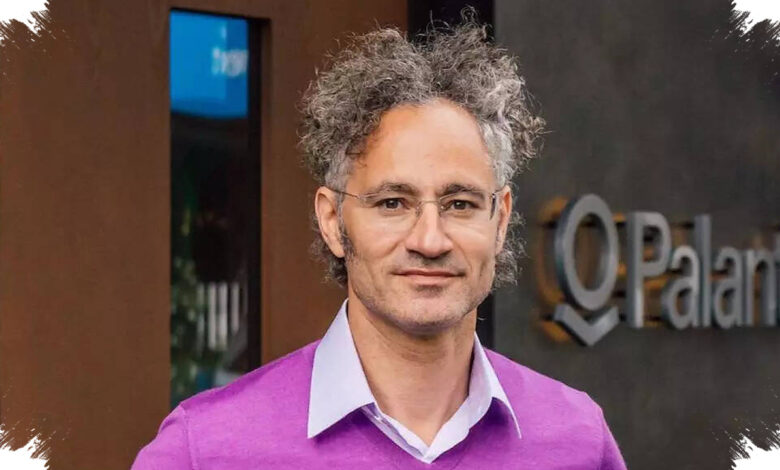
Palantir CEO Alex Karp has sharpened the debate over how major AI companies charge corporate customers. He argued that the token-based pricing model used by firms such as Anthropic and OpenAI is heading in the wrong direction.
The criticism lands at a time when businesses are spending more on AI and demanding clearer returns. As computing costs rise, many enterprise buyers are no longer satisfied with access to the most advanced models alone.
Why enterprise buyers are pushing back
In an interview with CNBC’s Squawk Box on Wednesday, Karp said the industry’s focus on charging by token leaves enterprise customers frustrated. He described the approach as one that can make spending feel like it is going toward token consumption rather than measurable business outcomes.
He said he was not targeting any one company, but he still believed the industry had gone astray. In his view, many customers are simply tired of “wasting time” with tokens.
| Issue | Enterprise Concern |
|---|---|
| Token-based pricing | Costs can rise quickly without a clear business payoff |
| Frontier model usage | Access alone does not guarantee efficiency or control |
| AI spending | Companies want stronger proof of value from each deployment |
Cost pressure is changing buying habits
The pricing debate has intensified as the latest AI models require more computing power and become more expensive to run. That has forced organizations to ask whether the benefits justify the bill.
As a result, many companies are moving away from a simple race to use the most powerful frontier systems. They are looking instead for tools that are more efficient, more specific, and easier to manage.
Interest in open-weight models is rising in that environment. These systems give businesses more room to adapt AI to their own needs without relying entirely on a commercial provider.
For many organizations, the appeal is not only lower cost. Open-weight models are also seen as a way to handle a wide range of tasks with better operational efficiency.
The push for sovereignty
Karp said technical customers now want greater control over their compute, models, data stack, and “alpha.” He argued that companies want to own the means of production for AI rather than hand that leverage to outside vendors.
That idea sits at the center of Palantir’s broader approach. The company has been promoting what it calls “AI sovereignty,” a framework that emphasizes ownership of infrastructure, models, and data.
Shortly before Karp’s interview, Palantir published a nine-point manifesto on X. It criticized a business model it called “tokenmaxxing” and urged organizations to keep control of their data instead of giving providers more influence.
The message behind “AI sovereignty” is that companies and institutions should not behave like passive users of AI services. They are being encouraged to build systems that fit internal workflows more closely and depend less on external platforms.
Palantir and Nvidia move in that direction
Palantir has already expanded that strategy through a partnership with Nvidia. Earlier in the week, the company announced a collaboration to use Nvidia’s AI technology to build customized AI models for U.S. government agencies.
The goal is to create systems that can be tuned to the requirements of each organization. That is a different model from relying on one general-purpose AI system for every task.
The same pattern is spreading across the enterprise market more broadly. Many companies are now building their own AI systems rather than depending only on large general-purpose models.
Smaller proprietary models for specific tasks are often viewed as more efficient in practice. Along with lower operating costs, they can be better matched to particular business needs.
China remains part of the race
Karp also warned that the United States should not underestimate the speed of AI progress in China. He said Chinese companies are improving their models rapidly.
That adds another layer to the enterprise AI debate. The competition is no longer just about who has the biggest model, but who can offer the best mix of performance, cost, and control.
Markets appeared to respond positively to Palantir’s message. The AI software company’s shares rose 8% on Wednesday.
The move suggests investors are paying attention to strategies built around customization, efficiency, and ownership. As companies continue weighing expensive frontier models against more controlled alternatives, Karp’s remarks highlight how token pricing and AI sovereignty have become central questions for corporate buyers.