


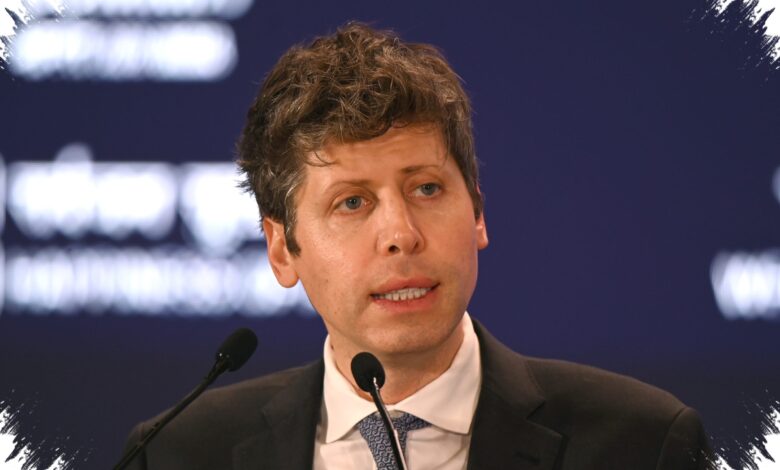
Sam Altman’s reported talks about giving the U.S. government a 5 percent stake in OpenAI have pushed one of the AI industry’s most unusual ideas into the spotlight. The proposal sits at the intersection of public wealth, tighter regulation, and a growing political debate over who should benefit from the surge in artificial intelligence.
According to Financial Times, the discussion is still in its early stages and no agreement has been reached. Even so, the scale is striking: based on OpenAI’s post-funding valuation of about $852 billion, a 5 percent stake would be worth roughly $42.6 billion.
How the proposal is being framed
The concept is not limited to OpenAI alone. Altman and other OpenAI executives are also said to have raised the idea that the biggest AI companies in the United States could each allocate 5 percent of their equity to a government-backed investment vehicle or a sovereign wealth fund.
Anthropic, Google, and Meta were among the companies mentioned in the talks. There is no indication that any of them have agreed to take part.
If such a structure were ever adopted, it would mark an unusual step for private technology companies in the United States. Supporters present it as a way to spread the economic gains from AI more broadly across the public.
Why this idea is surfacing now
The Financial Times report says the proposal follows a series of conversations between Altman and President Donald Trump, Commerce Secretary Howard Lutnick, and Treasury Secretary Scott Bessent. Altman is also said to have met Senator Bernie Sanders in recent weeks.
Sanders has separately pushed for a sovereign wealth fund financed by a one-time 50 percent tax on shares of the country’s largest AI companies. Against that backdrop, OpenAI’s idea appears to be a different route to linking AI growth with direct public benefit.
One model being discussed is the Alaska Permanent Fund, which invests state oil revenues and pays annual dividends to residents. Another version would use “Trump accounts” or a similar investment mechanism to give American households exposure to the growth of AI companies.
Not an entirely new policy line
OpenAI has previously raised a similar argument. Earlier this year, the company published a policy paper saying a “public wealth fund” could ensure that everyone, including people without stock market investments, shares in AI-driven growth.
The same document said returns from such a fund could eventually be distributed directly to the public. That makes the current discussion look less like a sudden turn and more like an extension of a policy narrative OpenAI has already promoted.
Anthropic has also backed a related idea. The company proposed “universal pre-distributive capital accounts” that would prioritize workers most exposed to disruption from AI.
Washington’s tighter grip on advanced AI
The timing is significant because the Trump administration is tightening oversight of advanced AI systems, including decisions about how and when the most powerful models can be released to the public.
The White House is said to be reviewing how OpenAI rolls out its strongest models. The report says the government recently asked OpenAI to release GPT-5.6 in stages, with early access limited to a small group of trusted partners before a broader rollout.
Anthropic has also faced similar pressure. Last month, the company briefly suspended access to its advanced Fable and Mythos models after receiving a government order that restricted foreign access on national security grounds.
Access to those models was restored this week after policy concerns were addressed. The sequence shows that the relationship between major AI developers and the U.S. government is now about more than innovation alone; it also concerns control, security, and how the gains from AI are distributed.
What makes the reaction so divided
The idea of government ownership in OpenAI has drawn mixed reactions. Some investors reportedly see it more as a political gesture than a serious wealth-sharing plan.
Others warn that government ownership in a leading AI company could distort competition. They also fear it could set a precedent that encourages other countries to demand similar stakes in U.S. AI firms.
That is why the discussion goes beyond OpenAI’s shareholder structure. It raises a larger question about who should capture the value created by AI, how far government should go in stepping into top-tier technology companies, and what rules the United States wants to set for the world’s fastest-moving industry.
| Proposal | Target | Key Detail | Estimated Value |
|---|---|---|---|
| 5% stake | OpenAI | Possible allocation to the U.S. government | About $42.6 billion |
| 5% equity allocation | Major U.S. AI companies | Could go to a government-backed vehicle or sovereign wealth fund | Not specified |
The talks remain preliminary, but they underline how quickly AI has become a policy issue as much as a business one. With valuation, regulation, and public benefit now moving into the same conversation, the next phase of the debate may be as consequential as the technology itself.