


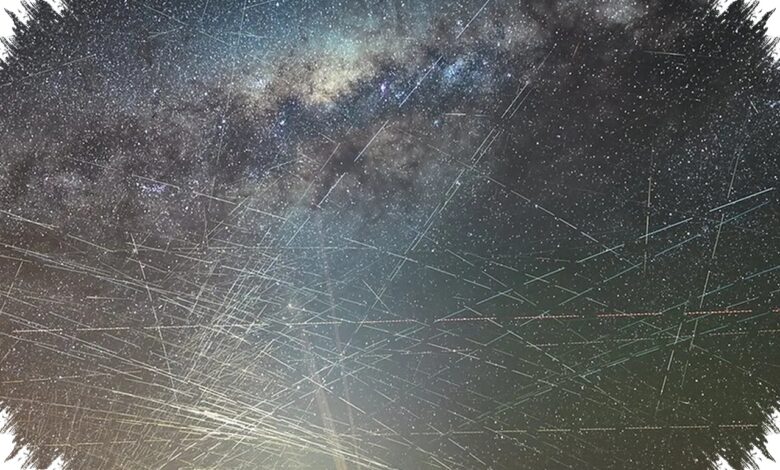
A new wave of proposed data centers in orbit is worrying astronomers, who say the expansion could make ground-based observations far harder to carry out. The concern is not limited to traffic in space, but to the changing quality of the night sky itself.
Scientists warn that if the number of active satellites keeps rising beyond about 100,000, observatories on Earth could face major setbacks from reflected light and bright streaks crossing telescope images. That threshold matters because the impact would not stop at one location; it would affect observatories across the planet.
Two ways satellites disrupt astronomy
Researchers describe two main forms of interference. First, satellite surfaces reflect sunlight and make the night sky brighter, which makes faint celestial objects harder to detect.
Second, satellites can pass directly through a telescope’s field of view. Those bright lines, known as satellite streaks, can damage astronomical images and make some scientific data less reliable or unusable.
Simulations by the European Southern Observatory show that a brighter sky also forces telescopes to use longer exposure times. That reduces observing efficiency, increases operating costs, and cuts the number of studies that can be completed.
| Disruption Type | Impact on Observations |
|---|---|
| Reflected sunlight | Brightens the night sky and makes faint objects harder to see |
| Satellite streaks | Can spoil images and reduce the usability of scientific data |
| Brighter sky overall | Requires longer exposure times and lowers observing efficiency |
Why orbiting infrastructure is drawing attention
The latest concern centers on the idea of data centers in orbit, which would use satellites as computing infrastructure for cloud services and artificial intelligence. Their designs are said to be optimized to reduce reflected light compared with conventional satellites.
Even so, researchers say the risk still has to be assessed at very large scale. Some proposals reportedly point to future launches reaching into the millions of satellites, and that volume could pile up light pollution even if each individual satellite is dimmer.
Remote locations do not offer a complete shield
Astronomers note that light pollution from cities can at least be reduced by moving observatories to remote areas. Satellite interference is different because it circles the entire Earth and cannot be avoided by geography alone.
That means telescopes in the Atacama Desert, Antarctica, and other isolated regions can still be affected. Scientists warn that the consequences could undercut expensive observatories built for long-term research.
Ground-based observatories remain highly valuable
Earth-based telescopes still have several major advantages over space telescopes. They usually feature larger mirrors, lower operating costs, and the ability to observe for long periods.
Because of that, any decline in night-sky quality would have a broad effect on astronomy. The ability of modern telescopes to study extremely faint objects would weaken if the environment above them continues to deteriorate.
At present, about 14,000 satellites are believed to be orbiting Earth. That is still far below the level scientists fear could overwhelm ground-based astronomy, but they say mitigation and regulation need to be in place well before the situation reaches that point.
Regulators are being urged to act early
The international astronomy community is calling for thorough evaluation before approving major orbital projects. Researchers argue that space should be treated as a shared resource, since the effects are felt globally.
Alongside orbital data centers, they are also examining other satellite proposals that could worsen the problem. One example is a plan for tens of thousands of sun-reflecting satellites, which European Southern Observatory simulations suggest could create even more severe light pollution than ordinary communication constellations.
For astronomers, the message is clear: the issue is no longer only about how many satellites can be launched, but about how much of the night sky may be lost to their combined effect.