


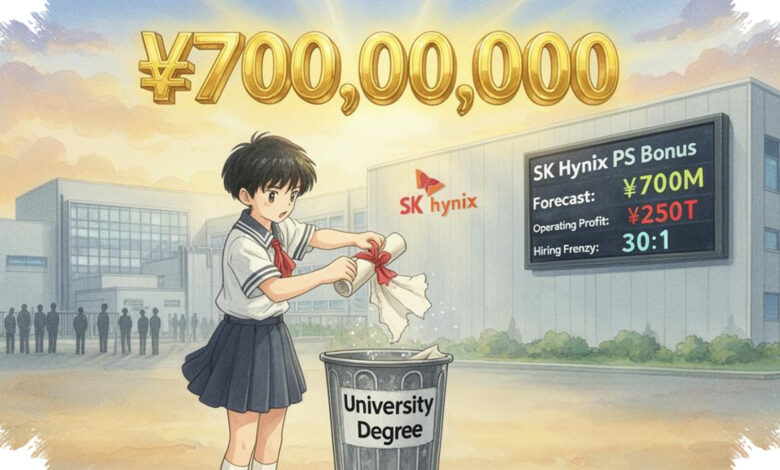
SK Hynix has made a notable shift in hiring by removing the bachelor’s degree requirement from its recruitment process. The change means job seekers can now compete for openings at the chipmaker without being forced to present a four-year degree.
The company is steering selection toward competence, experience, and potential instead of formal education alone. In a market increasingly shaped by artificial intelligence, that approach reflects a wider belief that academic credentials no longer tell the full story of a candidate’s ability.
A Clearer Focus on What Candidates Can Do
A company executive quoted by Korea Herald told KompasTekno that, in a fast-changing AI environment, future talent competitiveness is difficult to judge through a specific degree or standard credential. That view appears to be driving the new recruitment policy.
The updated hiring rules were already in effect for the latest recruitment round opened last week. In the posting, the previous requirement for a bachelor’s degree or higher had been removed.
| Hiring Policy | Before | Now |
|---|---|---|
| Education requirement | Bachelor’s degree or higher required | Degree not required |
| Selection focus | Formal educational background | Competence, experience, and cultural fit |
Under the new system, applicants who are judged to have the right skills, experience, and fit for the company culture may apply. SK Hynix said the policy will also apply to future recruitment processes.
Why the Change Matters in the AI Talent Race
The timing is significant because demand for AI-related workers continues to rise. SK Hynix plays a central role in the industry as one of the main producers of High Bandwidth Memory, or HBM, the high-speed memory used to support Nvidia’s AI accelerators.
The company is also preparing to hire hundreds of new employees for strategic roles. Those positions include development and design work for next-generation chips.
The move aligns with the vision of SK Group Chairman Chey Tae won on the qualities future talent should have. It also stands out in South Korea, where formal education has traditionally carried substantial weight in hiring and social status.
OECD data shows that about 71 percent of South Koreans aged 25-34 have completed higher education. The same data also points to high youth unemployment in the country, driven in part by a mismatch between education outcomes and labor market needs.
On the business side, SK Hynix is benefiting from surging demand for AI chips. The company reportedly hired more than 2,000 workers throughout 2025, signaling continued expansion as the AI semiconductor market grows.
By dropping the bachelor’s degree requirement, SK Hynix is placing itself among major companies that are increasingly judging applicants by real ability rather than paper qualifications. In a labor market being reshaped by AI, that choice may signal a broader shift in how top employers define talent.