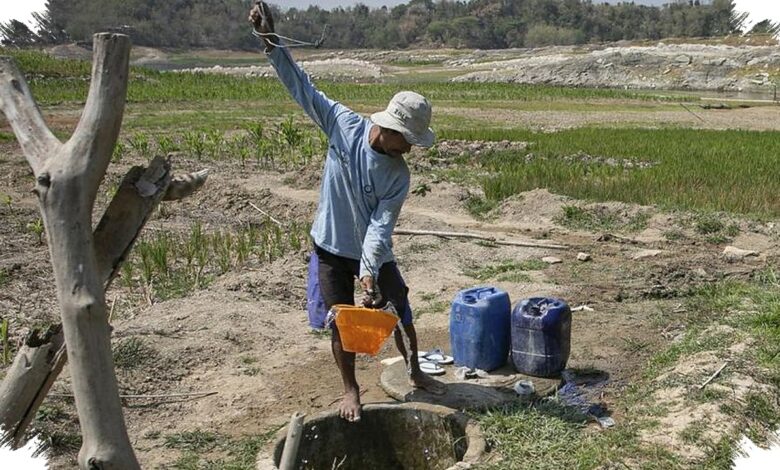
Rain is becoming harder to find across much of Indonesia, and BMKG says the pattern is likely to continue in the coming days. Almost half of the country has already entered the dry season, while the chance of widespread rain remains limited.
The agency’s latest monitoring shows a broader shift toward dry weather conditions. It also records a rising number of observation points experiencing very long rainless periods, underscoring how widespread the dry spell has become.
Dry weather dominates the outlook
At the start of July, 48.9 percent of Indonesia, or 342 seasonal zones, had already entered the dry season. BMKG also recorded that 92.64 percent of the country had the potential for low rainfall, defined as below 50 mm per dasarian.
| BMKG Data | Figure | Explanation |
|---|---|---|
| Areas entering dry season | 48.9% | 342 seasonal zones |
| Potential for low rainfall | 92.64% | Below 50 mm per dasarian |
| Observation points with very long rainless days | 329 points | 31-60 days without rain |
BMKG’s rainfall monitoring also found 329 observation points, or about 6.77 percent of the total, had gone without rain for 31 to 60 days. That category is considered very long and has increased compared with the previous observation.
Southern Indonesia remains drier
Satellite analysis points to dry air moving in from the south of Indonesia, especially around the Indian Ocean south of Java to Nusa Tenggara. This dry air mass can suppress cloud growth and reduce the chance of rain in Java, Bali, NTB, and NTT.
BMKG said the broader dry-season pattern is still supported by El Niño in the Pacific Ocean. In its outlook for 10-16 July, the agency noted a Niño 3.4 index of +1.25 and a Southern Oscillation Index, or SOI, of -24.7.
Local showers are still possible
Even with limited rainfall prospects in many regions, BMKG still sees the possibility of local or regional rain. That chance is influenced by several atmospheric factors, including Madden-Julian Oscillation activity, Equatorial Rossby waves, and the indirect impact of Cyclone Bavi.
For Dasarian II July 2026, BMKG forecasts that rainfall distribution will remain concentrated in the low category. Only 0.04 percent of Indonesia is expected to receive high-category rainfall, while 7.32 percent is forecast in the medium category.
| Rainfall Category | Forecast Share | BMKG Outlook |
|---|---|---|
| High | 0.04% | Very limited |
| Medium | 7.32% | Minor share of coverage |
| Low | Most areas | Expected to dominate the country |
The areas expected to receive low rainfall include Sumatra, Java, Bali, NTB, NTT, most of Kalimantan, most of Sulawesi, North Maluku, Maluku, and parts of Papua. The forecast suggests that rain will remain restricted in many parts of Indonesia even as scattered local showers may still form.
BMKG’s latest outlook shows that the dry season is not just expanding on the map, but also tightening the window for meaningful rainfall across the country. For regions already under dry conditions, the coming period is expected to remain dominated by low rainfall totals.