A rare personal name has emerged from Maya astronomy, turning a long anonymous scientific tradition into something far more human. At Xultun in Guatemala, archaeologists have identified Sak Tahn Waax, a mathematician-astronomer whose name had remained hidden in the archaeological record.
The finding matters because Maya astronomical knowledge has long been admired for its precision, yet the people behind it were seldom known by name. This discovery gives scholars a direct link between complex celestial calculations and an individual who may have helped create them.
A name preserved beside planetary calculations
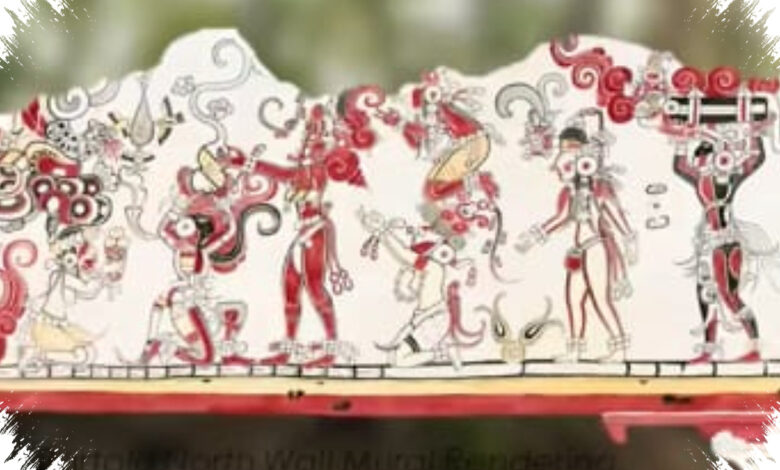
Researchers identified the name from 11 hieroglyphs among more than 50 ancient mathematical texts written on the walls of a small room known as Structure 10K-2. The same chamber also contained calculations related to the movements of Venus and Mars.
The name Sak Tahn Waax is understood to mean “White-Breasted Fox.” Its appearance alongside astronomical material suggests that Maya science was not only highly advanced, but also produced by identifiable specialists working within a broader intellectual tradition.
| Finding | Detail | Significance |
|---|---|---|
| Named individual | Sak Tahn Waax | Means “White-Breasted Fox” |
| Location | Structure 10K-2, Xultun, Guatemala | Small room with murals and ancient writing |
| Contents | 11 hieroglyphs and more than 50 mathematical texts | Included notes on Venus and Mars |
Why Xultun changed what scholars could see
Xultun was part of the Classic Maya period, which flourished from around 250 to 900 AD, and it lies about 40 kilometers from Tikal. That location places the discovery within one of the most important regions of the ancient Maya world.
The room was found after Boston University student Maxwell Chamberlain located a looting tunnel that led to the chamber. Inside, the murals and inscriptions had survived long enough to preserve material that had been hidden for centuries.
Researchers believe the room was used in the 8th century, before the wider collapse that later reduced many Maya cities. That timing makes the wall texts especially valuable for understanding how Maya scholars tracked the sky and measured time.
What makes the identification unusual
David Stuart of the University of Texas at Austin, who helped interpret the discovery, said the finding makes Maya science feel more personal. He compared it to seeing “an old chalkboard in someone’s abandoned office.”
Franco Rossi of MIT, the study’s lead author, said the texts were initially difficult to read, but image-processing analysis revealed clues that pointed to an astronomer’s identity. The study was published in the journal Antiquity and is considered important in the field of archaeoastronomy.
It is still not fully certain whether Sak Tahn Waax created the calculations or was simply associated with them. Even so, the name stands as the first clear link between an individual and this kind of Maya astronomical work, offering a more direct view of how ancient scholars understood Venus, Mars, mathematics, and the sky.