


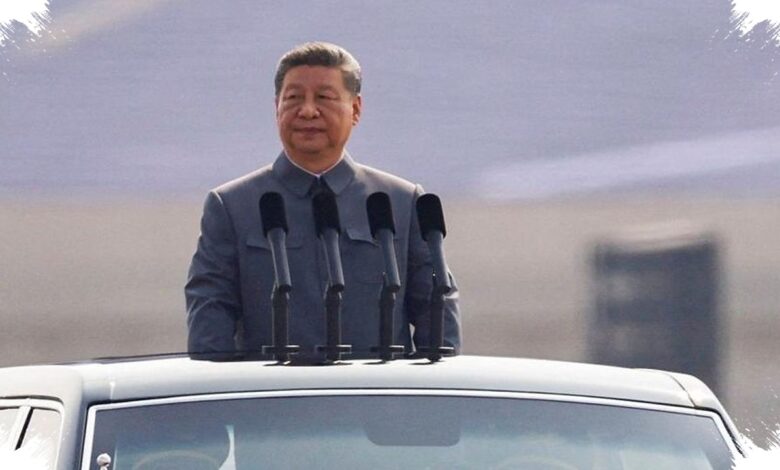
Chinese President Xi Jinping has warned that artificial intelligence should not become the domain of a single country. His message comes as technology competition among China, the United States, and Europe grows sharper.
Xi called for broader international cooperation so developing countries can have a fair chance to build AI capacity. He argued that unequal access to technology could widen global inequality.
The remarks were delivered at the opening of the World Artificial Intelligence Conference, or WAIC 2026, in Shanghai on Friday, July 17. Xi presented China as a country prepared to expand opportunities for collaboration in the AI sector.
“The development of AI should not be a solo stage for one country, but rather a symphony of international cooperation,” Xi said, as quoted by Al Jazeera. He also urged countries to reject the excessive use of national security arguments in the AI field.
The call for cooperation is being made against a backdrop of tighter restrictions on China’s access to advanced semiconductor technology. The United States and Europe have limited imports of Chinese technology on national security grounds.
The dispute has focused particularly on high-end semiconductors needed to operate modern AI systems. These chips have become central to the global contest over computing capacity and AI development.
In May, the US Department of Commerce reinforced restrictions on semiconductor shipments to Chinese subsidiaries located overseas. Washington took the step over concerns that legal loopholes could weaken existing export-control rules.
The guidance stated that export licensing requirements for advanced AI Chips apply to businesses headquartered in China or owned by a Chinese parent company. The restrictions have become one of the obstacles preventing China from accessing the most advanced semiconductors.
China has nevertheless continued to advance its domestic AI ecosystem. The government has made AI a strategic pillar of industrial policy, supporting investment from chip production to consumer-level technology use.
Chinese AI models have also begun to approach capabilities associated with comparable US technology. CNN Indonesia reported that these products have attracted global users in part because they are offered at more affordable costs.
Officials cited by state media said daily AI token consumption in China has surged by as much as a thousandfold over the past two years. Tokens are units used by the industry to measure the use of AI systems.
Energy Capacity as a Strategic Advantage
While access to the latest chips remains constrained, China holds a significant advantage in electricity supply for large-scale data centers. Energy availability has become crucial because AI computing infrastructure consumes power on an enormous scale.
| Infrastructure Type | Electricity Demand | Source |
|---|---|---|
| Standard data center | Equivalent to 100,000 households | IEA |
| Next-generation hyperscale data center | Equivalent to 2 million households | IEA |
The International Energy Agency, or IEA, said a standard data center can consume electricity equivalent to 100,000 households. A next-generation hyperscale facility could require power equal to the consumption of 2 million households.
China is considered well positioned because of its low-cost and abundant electricity supply for such facilities. Its power-generation capacity is said to be more than twice that of the United States, while the government continues to invest in the national energy grid.
This energy advantage may help sustain the expansion of China AI infrastructure even as chip controls tighten. It does not remove the semiconductor challenge, but it strengthens one of the foundations needed for large-scale computing.
Human Oversight Remains Central
Xi also stressed that AI development must remain human-centered and subject to oversight. He called for laws, technology monitoring regulations, early-warning systems, and emergency response mechanisms.
“We must implement laws and regulations for technology monitoring, early warning systems, and emergency response systems to ensure that AI always remains under human control,” he said. Concerns surrounding AI include its possible use in military conflict and abuse by hackers or criminal actors.