


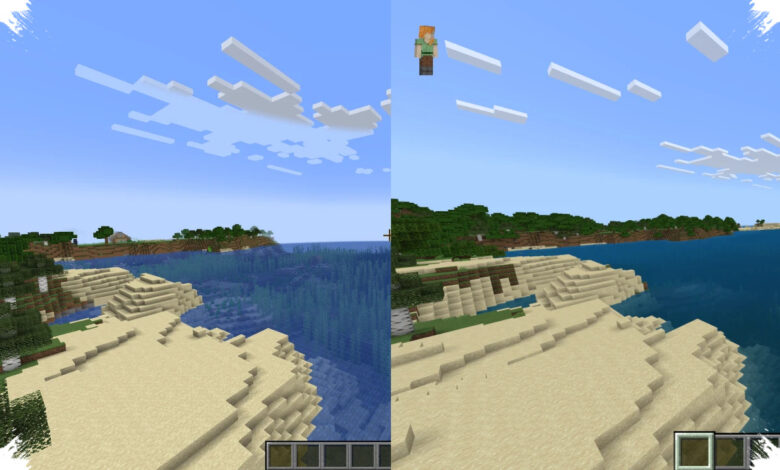
Minecraft Bedrock Edition changes more than the devices players use to enter a world. Its building mechanics allow certain actions that work differently, or do not work at all, in Java Edition.
One notable example is the ability of pistons in Bedrock to push several container-based blocks, including chests and hoppers. That difference can affect how players design automated systems and construction projects.
Bedrock also lets players place blocks in front of their character without first crouching. The mechanic offers a more direct way to position blocks while working around a structure.
Several smaller placement options add to that distinction. Torches, buttons, rails, and bells can be placed on grass path blocks, while leads can be used to attach mobs to walls.
Mechanics that separate the two editions
| Feature | Minecraft Bedrock Edition | Minecraft Java Edition |
|---|---|---|
| Multiplayer | Cross-platform play through a Microsoft account | Limited to Java users on PC |
| Extra content | Official Minecraft Marketplace | No official Marketplace equivalent |
| Character options | Character Creator with 3D accessories | No support for those accessories |
| Modification | Add-ons and Marketplace content | Greater flexibility for mods |
Leather armor provides another Bedrock-specific customization option. Players can dye it in a cauldron by mixing several dyes.
These details may appear minor in isolation, but they can shape everyday survival play and creative building. They also show why world designs cannot always be transferred between the two editions without adjustment.
One world across more devices
The broader advantage of Minecraft Bedrock Edition is its cross-platform multiplayer support. Players on Windows PC, Xbox, PlayStation, Nintendo Switch, Android, and iPhone can join the same world.
A Microsoft account is used to connect players across those platforms. This arrangement can be especially practical for groups whose members do not own the same type of device.
Java Edition takes a different approach to multiplayer. Its online play is limited to other Java users on PC, creating a clearer boundary for groups that include console and mobile players.
For that reason, the choice between editions can be shaped by a group’s hardware rather than by visual preference alone. Bedrock is built around making shared play available across a wider set of platforms.
Marketplace and 3D character options
Bedrock includes the official Minecraft Marketplace, where players can obtain additional content in one integrated system. Available items include skins, adventure worlds, texture packs, mash-ups, and add-ons curated by Mojang.
Mediaindonesia.com noted that this approach can make extra content easier to obtain with a greater sense of safety. It provides a direct route for players who prefer not to search across separate sources.
Character customization is also more extensive in Bedrock through Character Creator. Players can use 3D skins and add accessories such as horns, wings, and tails.
Java character models do not support those types of accessories. Its avatar personalization therefore remains focused on skin texture changes rather than added three-dimensional details.
Minecraft Java Edition continues to stand out for players who prioritize mods and extensive game modification. Bedrock, meanwhile, places its emphasis on accessible cross-platform play, touch controls, integrated add-ons, and a more guided content ecosystem.
The continued development of add-ons and Marketplace content reinforces Bedrock’s appeal for casual players. It offers a practical option for friends who want to play together without being restricted by device type.