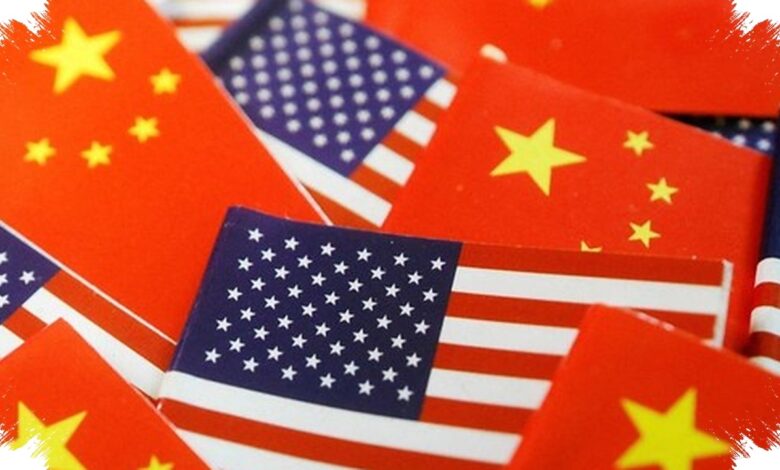
China’s Kimi K3 is reported to have delivered strong results across several important benchmarks, placing it alongside frontier AI models from the United States. Its arrival has intensified concern that China is closing the gap in the global AI race.
The issue extends beyond benchmark performance. China’s broader use of more accessible model releases could reshape who can run, adapt, and build on advanced AI systems.
Access Is Becoming a Competitive Advantage
Chinese AI development has made extensive use of open-source and open-weight approaches, while major US AI companies generally favor closed-source systems. The difference matters because each model-release method gives developers a very different level of access.
| Approach | Developer Access | Main Characteristic |
|---|---|---|
| Open-source | Can inspect, modify, and redistribute the model | Source code is more openly available |
| Open-weight | Can download and run the model locally | Final model weights are published |
| Closed-source | Access and modifications are controlled by the creator | Program code remains private |
An open-source model gives developers access to the underlying “recipe” of an AI system, including the ability to study and alter it. An open-weight model makes the final trained parameters available for local use without necessarily releasing all of the source code.
That distinction puts Kimi K3 in a strategic debate that is wider than raw model capability. A model that can be downloaded and used locally may reach developers through channels that differ sharply from tightly controlled commercial services.
Why US Labs Prefer Control
For companies operating closed systems, restricted access provides greater control over security, user access, and pricing. Anthropic and OpenAI have repeatedly argued that their models are too advanced to be fully released to the public because they could be used for many purposes with limited oversight.
The growth of Open-Weight AI Models from China has therefore created a fresh policy question. The concern is not only whether the models perform well, but whether their distribution can be managed once the technology is available locally.
DeepSeek Set the Earlier Warning
Kimi K3 follows DeepSeek R1, which had already drawn attention in Silicon Valley. DeepSeek R1 stood out because it was developed at a low cost while being viewed as comparable in performance to advanced AI models from the United States.
DeepSeek’s emergence also weighed on the shares of several major US technology companies. Investors were concerned that extremely expensive AI development had yet to produce clear returns while Chinese competitors could offer similar capabilities at lower cost.
CNBC Indonesia identified openness as a central divide between the Chinese and US strategies. The contest is increasingly shaped by the availability of the models, not merely by which laboratory reaches the highest benchmark result.
Regulation Becomes Part of the Contest
Dean Ball, a former senior AI adviser to President Donald Trump and now OpenAI’s head of strategy, argued that highly capable open Chinese models carry potential risks. In a post on X cited by Business Insider through AOL, he said the open-weight strategy could lead to “full AI communism.”
Ball suggested that the Trump administration could eventually see major regulatory risk around Chinese open-weight models as a useful strategy. He later clarified that this was a prediction rather than a policy recommendation, and said he still supports open-source models while AI remains below a dangerously capable level.
David Sacks rejected the idea of using regulatory uncertainty as a competitive weapon. He said the practice was “completely unacceptable” and argued that the AI industry had reached an important policy turning point.
Sacks said closed-source laboratories forming a revenue duopoly in AI models want the government to remove open-source competitors. He identified OpenAI and Anthropic as that duopoly, underscoring how China US AI Competition is now also a dispute over access and regulation.