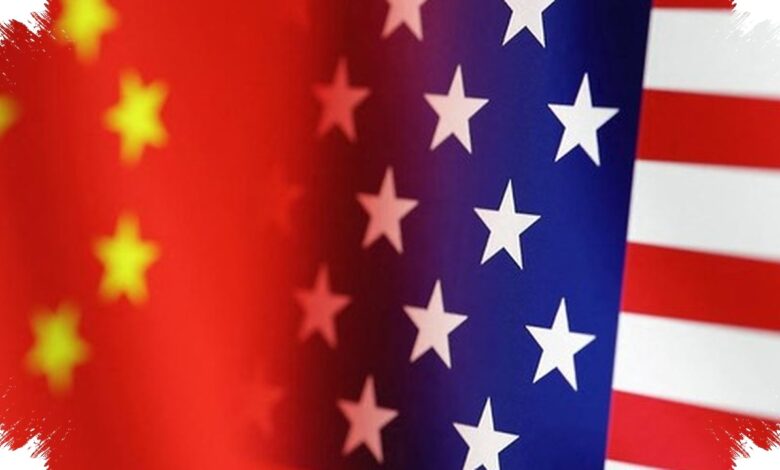
The Trump administration is considering sanctions against Chinese AI models suspected of using technology from US companies. The possibility was raised as Chinese open-weight models become increasingly competitive with leading American AI products.
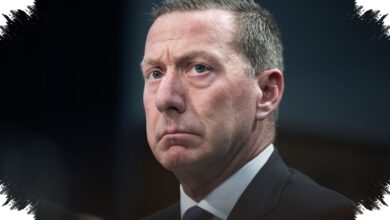
US Treasury Secretary Scott Bessent said the government would not support intellectual property theft. He indicated that evidence of foreign models taking from major US technology companies could provide grounds for sanctions.
Watermarks Raise the Stakes
Bessent said US authorities had found watermarks from American large language models, or LLMs, in many Chinese models. He described the finding as unacceptable and said it would be followed up in the coming days or weeks.
The alleged watermarks have shifted the dispute beyond a conventional contest over model performance. They have also intensified concerns in Washington about the protection of strategically important AI technologies.
CNBC Indonesia reported that Bessent made the remarks in an interview with Fox Business. He said the United States had the ability to impose sanctions if foreign models were found to be stealing from major American technology companies.
What Model Distillation Means
The practice at the center of the dispute is known as distillation. It allows a smaller and less capable model to be built by using outputs from another, more powerful model.
Open-weight models have become a key part of the debate because their final parameters can be made available for public download. Their source code and the training data used to create them can nevertheless remain private.
The issue has gained urgency following Moonshot AI’s release of Kimi K3 earlier this month. The model was said to outperform products from several US companies in a number of industry benchmarks.
AI Intellectual Property Disputes
| Party | Development | Dispute Context |
|---|---|---|
| Alibaba | Accused of a major distillation attack | Allegation made by Anthropic to a US Senate committee |
| Anthropic | Agreed to pay US$1.5 billion in September | Settlement of a class-action lawsuit by writers |
| OpenAI and Microsoft | Sued by The New York Times in 2023 | Alleged use of media intellectual property in AI training |
Anthropic previously sent a letter to the US Senate Committee on Banking, Housing, and Urban Affairs. In that letter, it accused Alibaba of carrying out the largest distillation attack known against the company so far.
However, intellectual property disputes in AI are not limited to Chinese companies. Anthropic, OpenAI, and Microsoft have also faced legal challenges over materials used in AI development and training.
Anthropic agreed in September to pay US$1.5 billion to settle a class-action lawsuit brought by a group of writers. The plaintiffs accused the company of illegally downloading books from pirated databases.
The New York Times sued OpenAI and Microsoft in 2023, alleging copyright infringement through the use of its intellectual property to train AI models. These cases underline how unresolved legal questions now affect companies on both sides of the AI race.
US-China AI Talks Remain Planned
Despite the sanctions threat and allegations of distillation, the United States and China still plan to hold AI talks in September. Reuters reported that Bessent will represent the United States at the meeting.
The discussions are set to take place as competition between Chinese and American AI models grows closer. Watermarks, training data, copyright, and model distillation are likely to remain central points of tension between the two countries.