


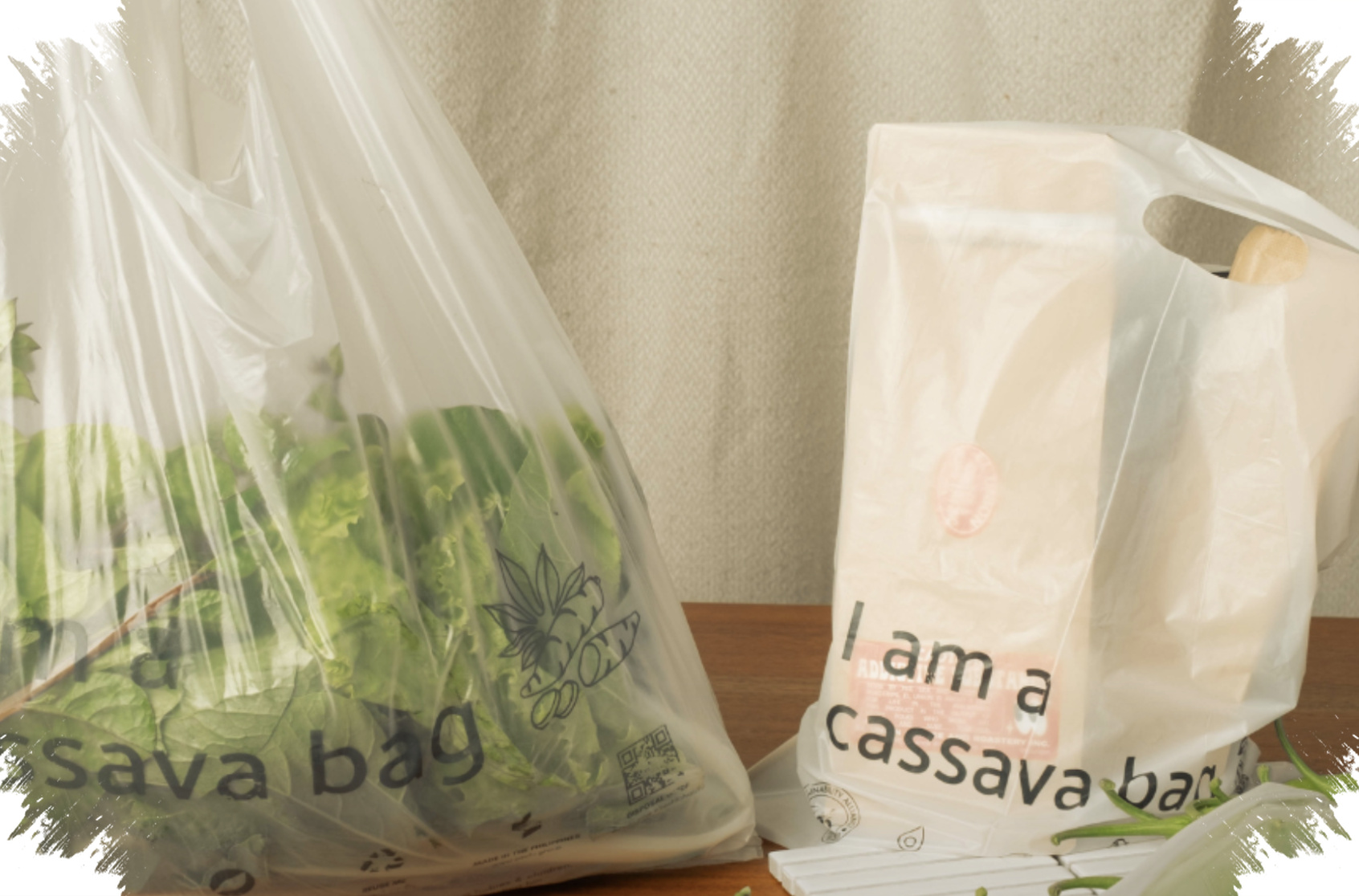
Plastic waste remains one of the most persistent environmental threats because consumption stays high and much of it still ends up in oceans and waterways. In response, an Indonesian innovation has drawn attention for offering a possible alternative to single-use plastic bags: a bag made from cassava starch that is designed to break down naturally.
The product was developed by Kevin Kumala, a biologist from Bali, and it has gained interest because of a striking claim: if it enters the ocean, it may be eaten by fish without causing harm. That idea has made the cassava-based bag a symbol of how local materials can be used to address a global pollution problem.
A Bag Made From Cassava Starch
The bag uses cassava starch as its base material, which gives it different properties from petroleum-based plastic. Unlike conventional plastic that can remain in the environment for decades or longer, this material is intended to dissolve in water and decompose more easily.
In demonstrations, the bag has been shown to dissolve in hot water, and the resulting liquid can be consumed, according to the claims attached to the product. Its developers say the material does not contain the same harmful substances often linked to traditional plastic packaging.
Why the Fish Claim Matters
The idea that fish can eat the material without being harmed has become the most talked-about feature of the innovation. That claim directly targets one of the biggest concerns around plastic pollution: the damage caused when waste reaches the sea and enters the food chain.
Marine plastic pollution is a major global issue, with millions of tons entering oceans each year, according to widely cited international environmental assessments. Plastic bags are especially problematic because they are lightweight, easy to discard, and difficult to recover once they spread through natural ecosystems.
What Supporters See in the Innovation
Environmental advocates have welcomed the cassava bag as a promising step toward reducing dependence on disposable plastic. They see it as part of a broader shift toward materials that can reduce long-term harm if they are discarded improperly.
The product also reflects a wider trend in sustainable packaging, where companies and inventors are exploring plant-based alternatives. These solutions are attracting attention because many governments and consumers are looking for practical ways to cut plastic use without completely changing modern retail systems.
The Challenges Are Still Significant
Even with strong interest, large-scale adoption remains difficult. The biggest obstacles are production cost, manufacturing capacity, and the need to compete with conventional plastic, which remains much cheaper and widely available.
There is also a need for clear scientific evaluation. Claims about safety, biodegradability, and marine impact must be tested under real-world conditions, not only in controlled demonstrations, so regulators and consumers can judge the product fairly.
What Will Determine Whether It Can Grow
Several factors will shape the future of cassava-based bags and similar alternatives:
- Lower production costs so the product can compete in mass markets.
- Government policies that support low-waste packaging and reduce dependence on single-use plastic.
- Private-sector investment to scale manufacturing and distribution.
- Consumer acceptance, since demand often decides whether new packaging survives in retail.
- Independent environmental testing to verify biodegradability and safety claims.
Indonesia’s cassava bag shows that solutions to plastic waste do not always have to come from complex high-tech systems. Sometimes, a plant-based material developed with scientific methods can offer a practical path toward reducing the damage caused by everyday packaging.
As pressure grows worldwide to phase down single-use plastics, innovations like this continue to attract attention because they connect local resources with a global need. The real test now is whether the idea can move from a compelling prototype to a product that is affordable, verified, and widely used.