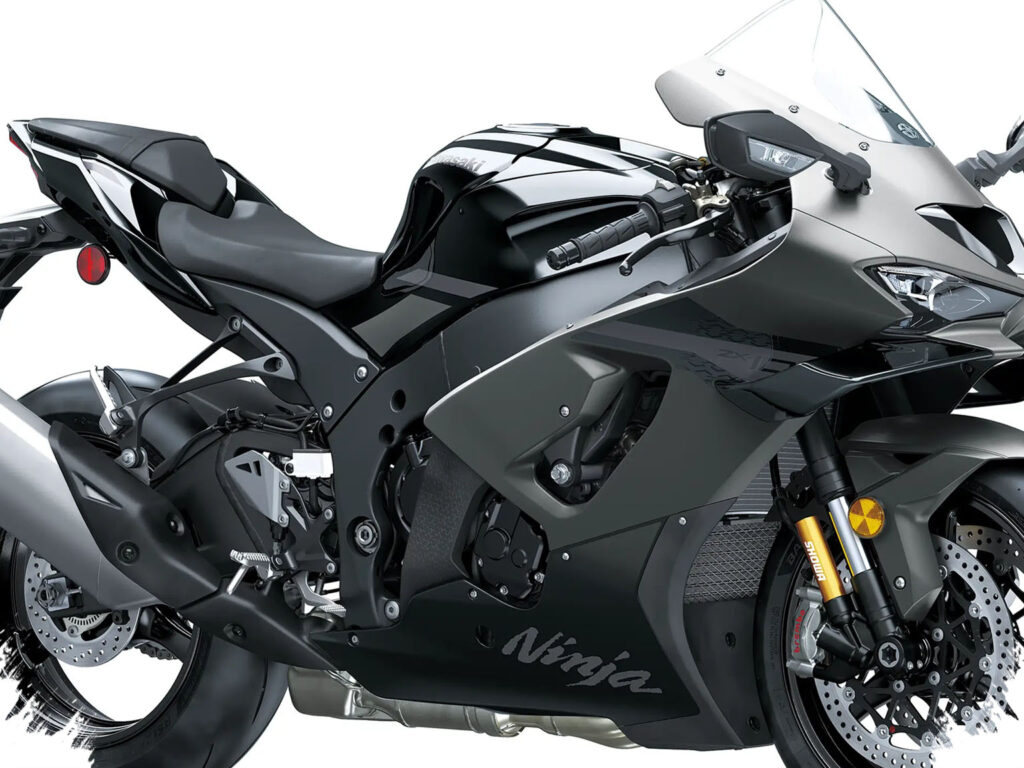
Kawasaki is keeping the Ninja ZX-10R firmly in the spotlight for 2026, and the formula remains as serious as ever. The superbike continues to use a 998cc inline-four engine, while its claimed output of more than 200 hp keeps it in the same conversation as the most performance-focused road-legal bikes on the market.
The message is clear: this is not a cosmetic update built to attract attention alone. Kawasaki appears to be doubling down on the ZX-10R’s racing identity with sharper aerodynamics, premium chassis components, and a deeper set of electronic features that match what modern superbike buyers now expect.
Aerodynamics That Look Built for Speed
The most visible changes are tied to the bodywork, which now looks more aggressive and more wind-cheating. The front fairing carries integrated winglets, a detail increasingly common in high-performance motorcycles because it helps improve downforce at speed.
That matters because stability becomes crucial once a superbike starts pushing hard on fast straights and through quick direction changes. The winglets are not just for style, since they help support the bike’s planted feel when power delivery rises and speed builds quickly.
The LED headlight design also adds to the sharper look while improving visibility. Kawasaki has kept the riding position sporty, but it still aims to preserve enough practicality for street use, which gives the ZX-10R a broader appeal than a pure track-only machine.
998cc Engine Still Does the Heavy Lifting
At the center of the package sits the familiar 998cc, four-cylinder, DOHC, liquid-cooled engine. The setup is widely associated with strong top-end power, rapid acceleration, and the kind of character that suits both circuit riding and aggressive road riding.
The claimed output of over 200 hp places the ZX-10R in a very demanding segment. It is a figure that signals serious intent, especially since Kawasaki has continued to hold onto the model’s high-performance identity instead of softening it for broader comfort-oriented appeal.
For riders, that means the ZX-10R remains a machine designed around speed and precision. The engine’s layout also supports the type of linear but forceful power delivery that superbike riders tend to value when exiting corners or building pace on open roads.
Suspension and Brakes Match the Power
Kawasaki pairs the engine with hardware that fits the bike’s purpose. The front uses a Showa Balance Free Fork, while the rear is fitted with a Showa Balance Free Rear Cushion, both components known for their ability to support high-speed stability and sharp handling feedback.
The braking system also reflects the bike’s premium positioning. Brembo monobloc calipers supply the stopping power, and that matters because a motorcycle with more than 200 hp needs brakes that can deliver consistent performance under repeated hard use.
Here is a simple look at the standout mechanical package:
- 998cc inline-four, DOHC, liquid-cooled engine
- Claimed output of more than 200 hp
- Showa Balance Free Fork at the front
- Showa Balance Free Rear Cushion at the rear
- Brembo monobloc braking hardware
Digital Features Add Everyday Relevance
The ZX-10R is not relying on mechanical performance alone. Kawasaki has also fitted a TFT digital instrument panel, which brings a more modern interface and helps the bike feel current in a segment that now values connectivity as much as raw power.
The system works with the Kawasaki Rideology App, letting riders monitor trip data, adjust riding modes, and check the bike’s status in real time. That kind of integration reflects how superbikes have evolved, since many buyers now want performance machines that also offer data, customization, and easier ride management.
This is one reason the ZX-10R remains relevant beyond track-day discussions. It combines race-inspired engineering with features that can make daily interaction easier, even if its core mission still leans heavily toward performance.
Positioning and Market Appeal
In Indonesia, SUMEKS.CO noted that the Kawasaki Ninja ZX-10R is estimated to sit in the Rp 500 million to Rp 600 million range on the road, depending on variant and region. Converted directly, that roughly places the model around $31,000 to $37,000, using an approximate exchange rate.
That pricing puts it squarely in premium superbike territory, where buyers usually compare not only horsepower numbers but also chassis quality, electronics, brand reputation, and racing heritage. Kawasaki’s long association with World Superbike competition continues to support the ZX-10R’s image as a machine with authentic track roots.
The 2026 Kawasaki Ninja ZX-10R therefore arrives with a combination of aggressive styling, a high-revving 998cc engine, premium suspension, Brembo brakes, and connected electronics that give it both emotional appeal and technical depth. For riders who want a road-legal superbike with a clear race-bred personality, the ZX-10R still looks ready to challenge expectations.