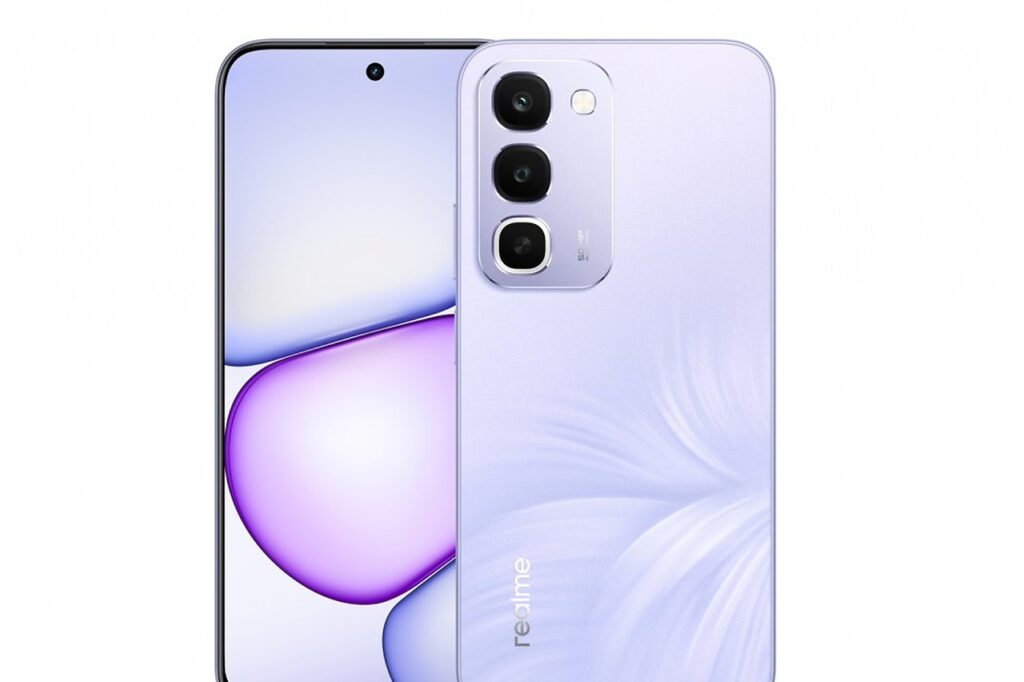
Realme C100 has officially launched and is already drawing attention in the entry-level smartphone segment. The phone combines a 144Hz display, a 7,000 mAh battery, and a modest price positioning that could make it one of the most interesting low-cost devices of the year.
Its appeal is clear for buyers who want long battery life, smoother screen movement, and hardware that feels more modern than most phones in the same class. In a segment where many devices still rely on 60Hz or 90Hz panels, Realme is pushing a package that looks unusually ambitious.
A simple design with added durability
Realme C100 uses a straightforward design that focuses on practicality rather than flashy styling. The body is built to support daily use, while the large battery does not appear to compromise basic comfort in handling.
One of the more notable additions is the MIL-STD-810H certification. This standard suggests better resistance to drops and tougher usage conditions, which can be useful for users who need a phone for travel, work, or outdoor activities.
144Hz display stands out in the budget class
The main highlight is the 6.8-inch IPS LCD display with a 144Hz refresh rate. That specification is rare at this price level and gives the phone a clear advantage in scrolling, menu movement, and general interface fluidity.
The panel uses HD+ resolution, so it is not built for high-end sharpness, but the experience should still feel smooth for everyday tasks. Realme also claims peak brightness of up to 900 nits, which should help visibility when the screen is used under direct sunlight.
Dimensity 6300 targets everyday performance
Under the hood, the Realme C100 runs on the MediaTek Dimensity 6300 chipset. The chip is positioned as an efficient solution for light to moderate usage, including messaging, social media, video streaming, and casual gaming.
The phone comes in 4GB and 6GB RAM variants, while storage options go up to 256GB. There is also microSD expansion, which adds flexibility for users who keep large numbers of photos, videos, and downloaded files on their devices.
Camera setup keeps things basic but usable
Realme equips the C100 with a 50MP main rear camera, paired with a 0.3MP depth sensor. This setup is aimed at simple daily photography rather than advanced imaging, but it should be sufficient for quick snapshots and social sharing.
On the front, the phone includes a 5MP selfie camera. That makes it a straightforward option for video calls, selfies, and basic face-to-face communication through apps.
7,000 mAh battery could be the biggest selling point
The massive 7,000 mAh battery may be the strongest reason to consider the Realme C100. For many users, that capacity means extended screen time and less dependence on frequent charging throughout the day.
Here are the key points that make the device stand out in its segment:
- Large 7,000 mAh battery for longer everyday use.
- 144Hz display, which is uncommon in affordable phones.
- MIL-STD-810H certification for extra durability.
- Dimensity 6300 chipset for efficient daily performance.
- Storage expansion through microSD support.
Price and possible Indonesia release
In the global market, the Realme C100 is offered in 4GB/128GB and 4GB/256GB variants. Based on current information, its official pricing sits around the equivalent of the $180 to $190 range, depending on storage configuration and local market taxes.
For Indonesia, market expectations suggest the phone could land closer to the entry-level sweet spot if Realme sets the price near the $130 to $150 level. If that happens, the C100 could become a strong option for buyers seeking a cheap phone with a high refresh rate screen and a battery that can last through heavy daily use.
Launch timing and market potential
Realme C100 first launched in Thailand in April 2026 and is now appearing through local e-commerce channels there. For Indonesia, Realme has not announced an official launch date, although the device reportedly has already appeared in TKDN data.
That signal matters because TKDN registration often becomes a key step before a phone reaches the Indonesian market. A local release would place the C100 in a highly competitive segment, where battery life, screen smoothness, and pricing often decide buyer interest more than premium design language.