Rising friction between Iran and the United States has put global markets back on alert, with investors turning more cautious as the possibility of a wider disruption to energy flows comes into focus. In that kind of environment, digital gold is drawing renewed interest, while global equities and other risk assets face the prospect of sharper swings.
The main concern is no longer limited to headlines about diplomacy. Market participants are now watching whether tensions could interfere with oil supply channels, and that is why sentiment has become more fragile across multiple asset classes.
Hormuz becomes the market’s main watchpoint
The Strait of Hormuz has returned to the center of attention because it functions as a critical route for the world’s energy distribution. If traffic through the area is disrupted, oil prices could jump quickly and create a chain reaction that reaches inflation expectations far beyond the region.
That concern has intensified after reports described U.S. military steps that began a blockade of strategic Iranian ports. For markets, the immediate issue is not only the military escalation itself, but the risk that a narrow waterway could turn into a broader energy crisis.
When oil prices rise sharply, inflation outlooks often change with them. That is one of the reasons investors tend to move toward assets seen as more resilient when purchasing power is under pressure.
Gold keeps attracting demand despite small pullback
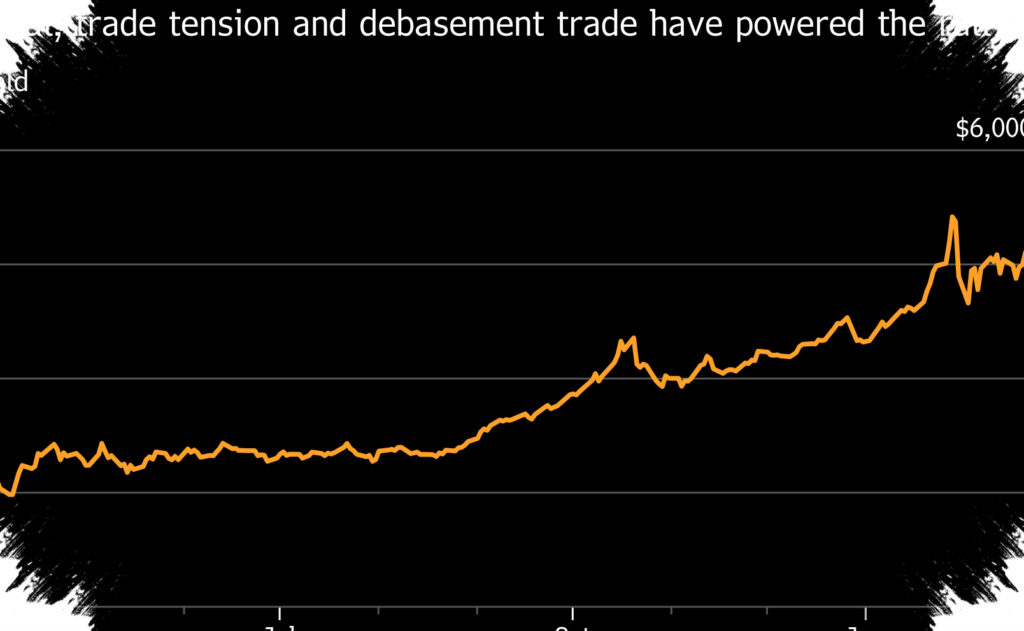
Even after a slight correction at the close of the previous week, gold remains on a positive path. Demand for the metal has stayed firm because investors continue to view it as a relevant hedge when geopolitical risk rises and equity markets feel unstable.
Capital usually rotates toward gold when risk appetite weakens. The current Middle East tensions are acting as a short-term catalyst, especially for investors seeking protection from abrupt market volatility.
At the same time, the move higher has not been smooth. Gold still faces technical resistance and remains sensitive to the direction of the U.S. dollar, which often influences the pace of trading.
US$4,800 to US$4,850 is the key technical barrier
From a technical perspective, the US$4,800 to US$4,850 zone has emerged as an important hurdle. This area is seen as a psychological ceiling that needs to break convincingly before the rally can gain stronger confirmation.
If price action fails to clear that level with consistency, gold may spend more time moving sideways in a consolidation phase. Until a clear breakout appears, trading is expected to remain within a broad range between US$4,400 and US$5,000.
The U.S. Dollar Index, or DXY, is also being closely monitored. A strong and aggressive dollar advance could restrain gold, since the two often move in opposite directions.
Volatility spreads beyond metals into equities
The tension in the Gulf is not only supporting gold; it is also weighing on global stocks. Higher energy costs can pressure corporate margins and raise inflation concerns, which makes equity markets more vulnerable to sudden sentiment shifts.
In that setting, investors often become more selective about where they place capital. Defensive assets usually look more attractive than higher-risk instruments that can react sharply to geopolitical headlines.
For short-term traders, volatility can still create opportunities. But fast market moves also demand discipline and strict risk management, especially when the drivers are tied to energy supply fears and geopolitical uncertainty.
Digital access makes fast monitoring easier
Because sentiment can change quickly, real-time market tracking has become increasingly important. Through digital platforms such as Nanovest, investors can monitor digital gold, global stocks, and crypto assets within a single application.
That convenience can help market participants respond faster without moving across multiple platforms. Nanovest is also said to provide layered asset protection through support from Asuransi Sinarmas.
The platform is further described as being registered and licensed by the Financial Services Authority, or OJK, and related authorities as a digital financial asset trader. In a market shaped by volatility, regulation, protection, and portfolio diversification remain key considerations for investors trying to navigate the pressure.
Source: id.mashable.com